12 Chicken Run Roof Ideas: From Tarps to Tin
The roof is the hardest-working part of a chicken run. It decides whether the ground is dry or soup, whether hens get shade or a sauna, and whether hawks see an open buffet or a closed door. These twelve chicken run roof ideas run the full range — from a tarp you can fit this afternoon to an insulated build-up that turns a run into a three-season room — each with a spec card covering the roof's span, cost, difficulty and best use.
Three rules apply to every roof below. Give it slope: at least 1 inch of fall per foot for solid roofs, so water and snow leave instead of sitting. Keep ventilation: leave a mesh band open at the top of the walls under the eaves, because a sealed run goes damp faster than an open one. And mind the structure underneath — a roof is only as good as the frame carrying it, so match these ideas to the wooden and metal frame lists, and keep the finished build up to the predator standard. Costs are per-roof estimates for a typical 8′ × 12′ run at 2026 prices.
1. The Corrugated Metal Roof (Tin, Done Properly)
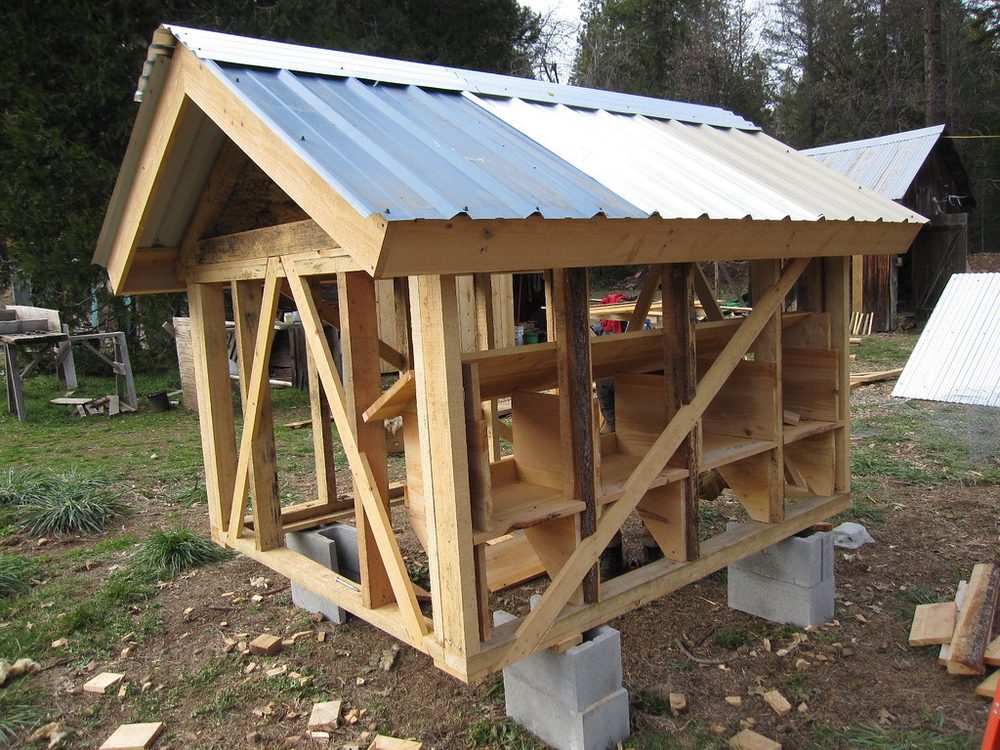
Corrugated galvanised or coated steel is the default serious roof: light, strong, cheap per year of life, and available everywhere. Sheets span between purlins without decking, shed water and snow beautifully, and a coated finish in a pale colour reflects summer heat instead of storing it. On a framed run it is the roof most likely to still be there, unchanged, in fifteen years.
Fit it like a roofer, not a camper. Screws go through the crowns of the corrugations with sealing washers, sheets overlap one corrugation sideways and at least 6 inches end-to-end up the slope, and the low edge overhangs the wall so drips clear the mesh. Rain on tin is loud — hens adjust within days, but if the run sits under a bedroom window, you might not. That, and sharp cut edges (fold or trim them), are the whole list of drawbacks.
2. The Colour-Matched Painted Metal Roof
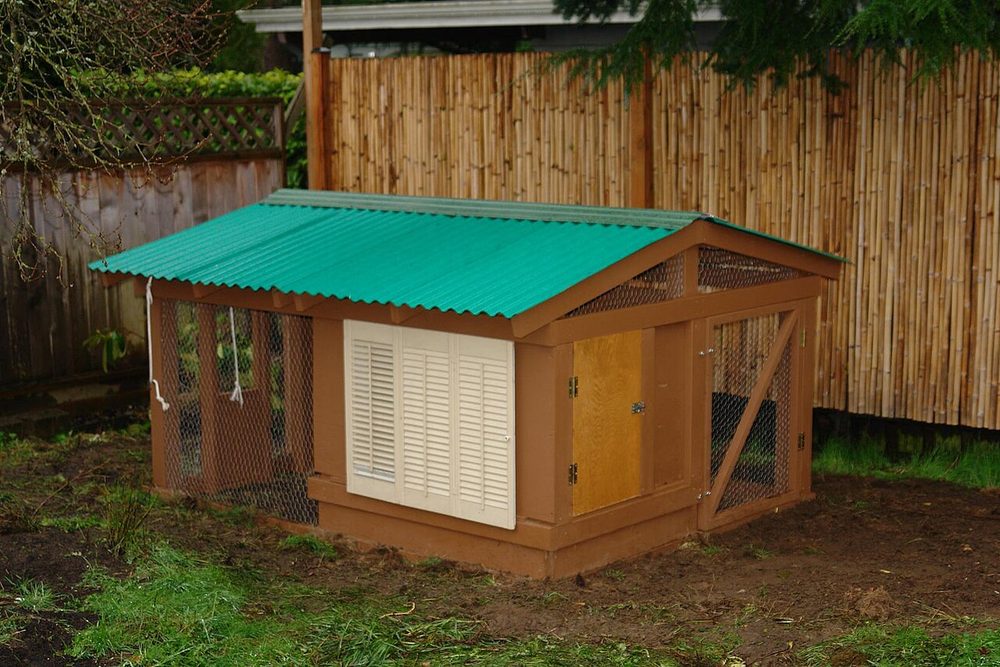
Factory-coated metal roofing in green, charcoal, brick red or black turns a run roof from farm equipment into garden architecture — the difference between a structure neighbours tolerate and one they compliment. The coating also outlasts site-applied paint by years and adds a layer of corrosion protection over the galvanising.
You pay a modest premium over bare galvanised, and it is worth it anywhere the run is on show. Match the roof colour to the coop or the house and the whole setup visually shrinks. One practical note: dark colours genuinely heat up in sun, which matters if the roof is low over the hens — pale and mid tones run cooler, and the ventilation band under the eaves matters more, not less, with a dark roof.
3. Classic Farm Tin on a Small Coop Run
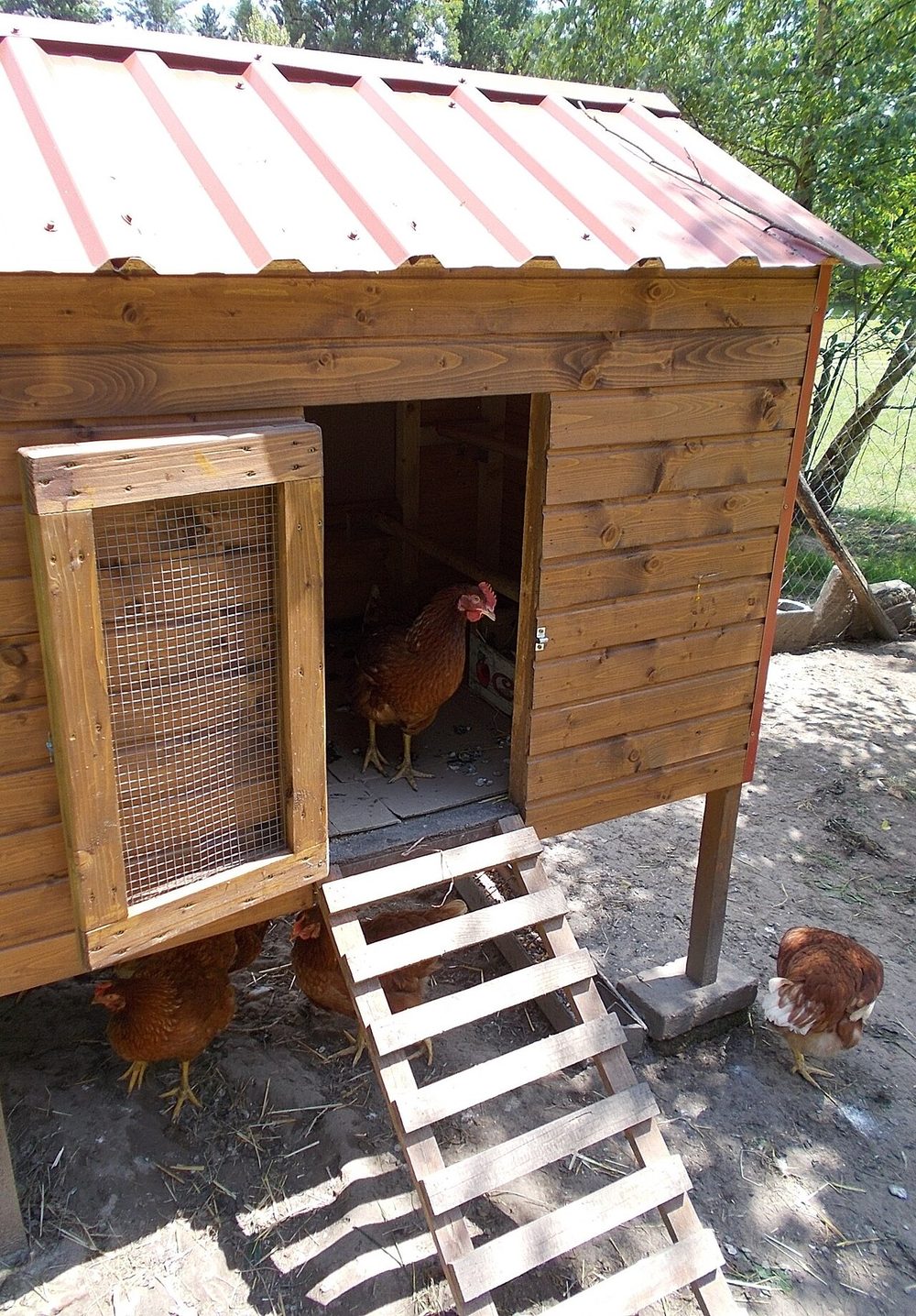
On small spans — an ark, a coop-and-run combo, a veranda — corrugated tin is the beginner's friend: one or two sheets, a handful of screws, and the roof is done in an hour. It is also the easiest roof to source second-hand, and reclaimed sheets with sound galvanising have decades left in them.
Small roofs fail at the edges, not the middle. Cap the ridge if the roof is pitched (a folded strip of flashing stops wind-driven rain walking up and over), close the corrugation gaps at the eaves with foam strip or a shaped batten so sparrows and wasps do not move in, and never leave a cut edge at hen height. For the small attached builds in our coop-attached ideas, this is usually the right roof.
4. Clear Corrugated Panels (Light Without the Wet)
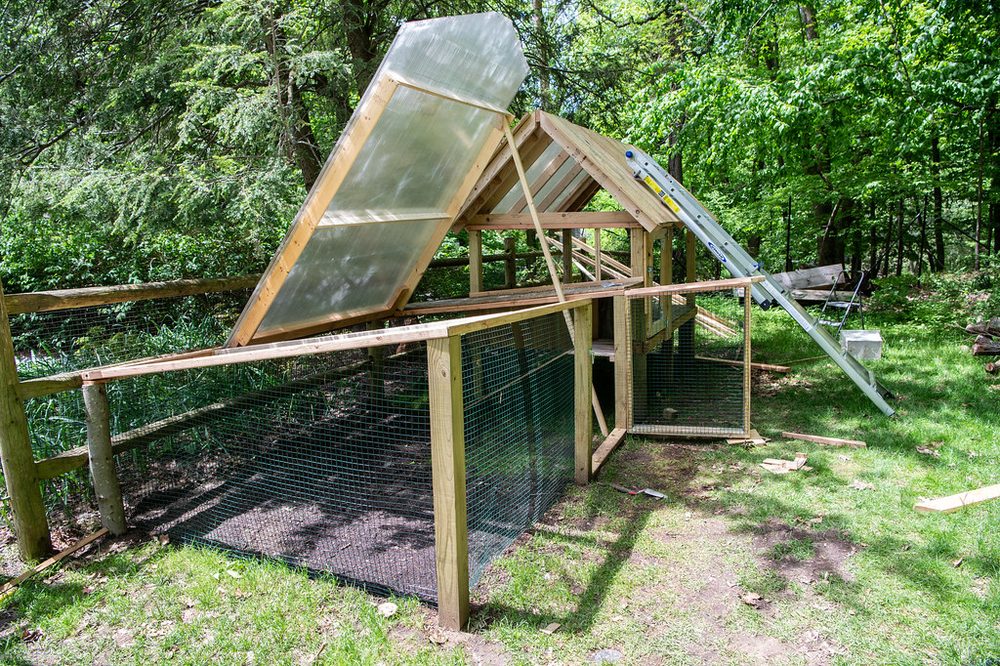
Clear corrugated polycarbonate does the one thing no other solid roof can: it keeps the rain off and lets the light through. Runs in shaded gardens, and all runs in winter, stay bright instead of cave-like, the ground dries from sun as well as shelter, and hens keep a natural day length, which laying follows. As half a roof — clear panels over one section, solid over the other — it is close to perfect.
Respect its two weaknesses. In full summer sun a fully clear roof can overheat a run, so pair it with shade (a solid section, shade cloth, or a tree) and generous eaves ventilation. And polycarbonate needs its fixings done right: pre-drilled oversize holes, screws with large sealing washers, and purlin spacing to the maker's spec, or panels crack at the screws and lift in storms. Buy UV-stabilised sheets; cheap PVC clear sheet goes yellow and brittle in a few seasons.
5. Translucent Panels over a Framed Run
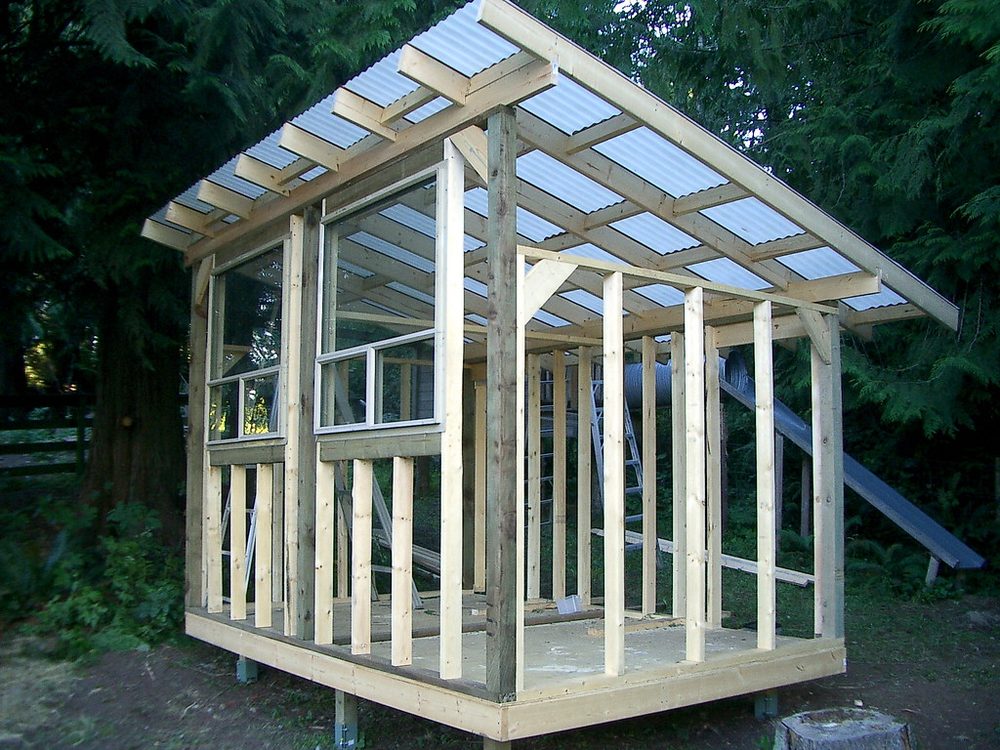
Translucent (opal or frosted) panels split the difference between tin and clear: most of the light, none of the glare, and a softer, diffused brightness that hens prefer to hard sun patches. On a run under trees or facing north, a full translucent roof keeps the space usable and dry without the greenhouse spike that clear panels can produce at midday.
Flat or gently sloped installations are where translucent panels shine — the light is even and the look is calm, more greenhouse than shed. Use the same fixing discipline as clear polycarbonate, and overlap sheets generously on shallow slopes, because shallow pitches are where wind-driven rain finds the laps. If your run doubles as a growing space in spring — and many do — this is also the roof that seedlings would vote for; see the greenhouse run ideas for structures that lean fully into that dual life.
6. The Insulated Roof (for Coops That Roost Under It)
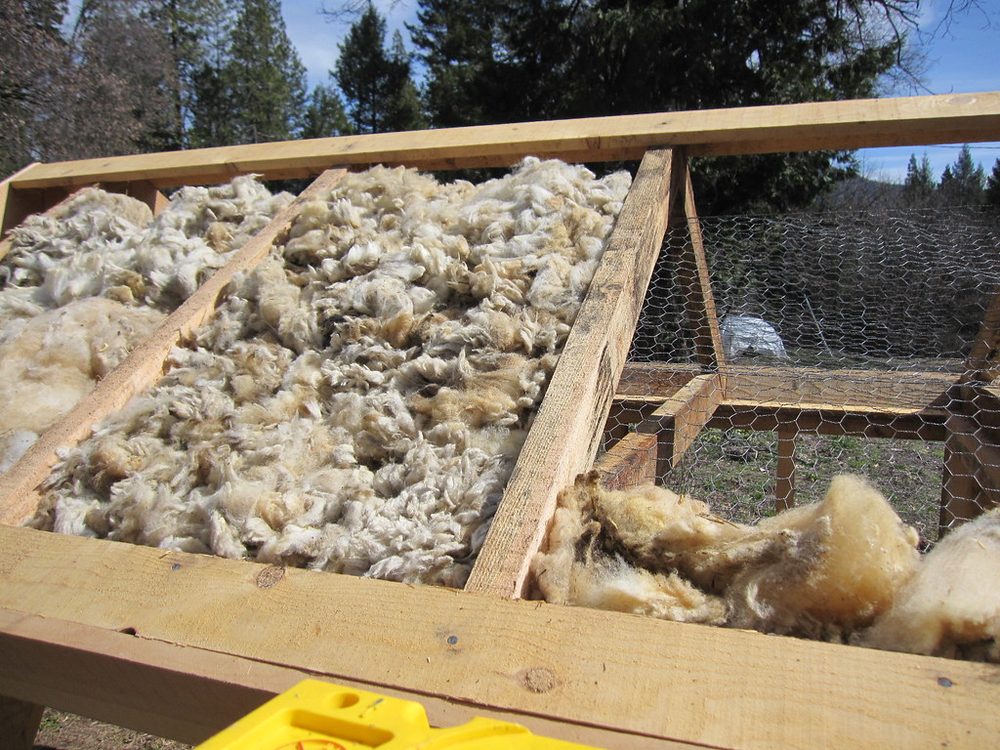
Insulation under a roof earns its place in exactly two situations: where hens roost directly beneath it (a combined coop-run roof), and where a low metal roof would otherwise radiate brutal heat or drip condensation all winter. A layer of insulation — board, or natural wool as pictured — sandwiched under the roof skin kills the drip line, softens rain noise, and takes the edge off both frost and heatwave.
Seal it away from the birds. Hens peck exposed insulation, and some types harbour mites if they get damp, so the build-up is always: roof skin, insulation, then a solid lining board the hens can see but not reach through. Ventilation still applies — insulation is not a substitute for the eaves air band, and a sealed, insulated, unventilated roof is a damp box with better marketing. For a pure run roof with no roosting under it, save the money and buy slope and overhang instead.
7. Open Purlins and Strapping (the Roof-Ready Frame)
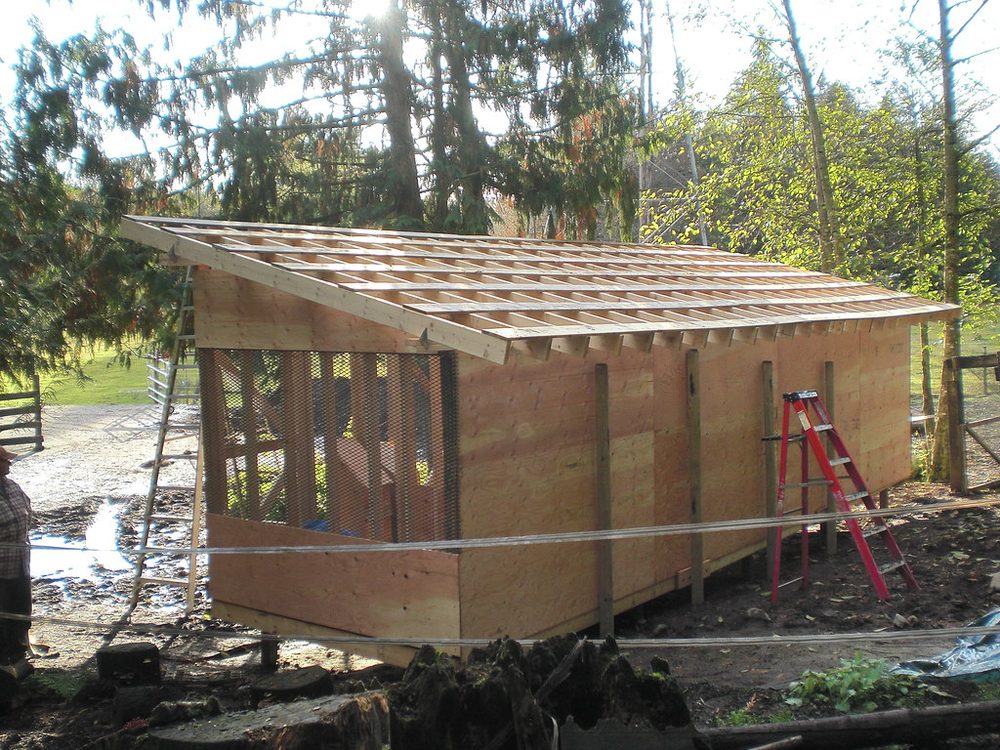
Not every run needs its finished roof on day one. Building the roof as proper purlins and strapping — sized and spaced for standard sheets — gives you a structure that carries mesh or shade cloth today and takes corrugated panels the weekend you are ready, with no re-framing. It is how a budget build becomes a roofed run in stages instead of in one painful invoice.
Space purlins to the sheet maker's spans (commonly around 2–3 feet for corrugated profiles), keep them level and in plane, and the later sheeting job becomes an hour of screwing instead of a day of shimming. While the roof is open, run mesh under the purlins so the run is predator-closed from the start; the sheets, when they come, are weather, not security. Our budget guide is built around exactly this kind of staging.
8. The Humble Tarp Roof
Every keeper should own the tarp roof's honesty: it is not a roof, it is a pause button. A tarp buys a dry run this month while you decide on the permanent build, rescues a leaking roof in a storm week, and prototypes shade so you can learn where the sun actually falls before committing to panels. Fitted well, a tarp lasts a season; fitted badly, it lasts until Tuesday.
Fitting well means slope and tension. A tarp needs more fall than a rigid roof — a flat tarp ponds, and a ponded tarp weighs hundreds of pounds and then fails all at once. Tension it over a ridge or a high side, fix through the eyelets with bungees that can flex in wind rather than rope that saws through them, and expect to replace it: UV eats tarps, and the budget line for this idea is a recurring one. Judge it as a tool, not a roof, and it never disappoints.
9. Shade Cloth Roof
In a hot climate the roof's job is not rain — it is shade with airflow. Knitted shade cloth (70–90% density) stretched over the top of a run cuts the sun, lets heat rise straight through, and does not flap itself to death the way solid tarps do in wind. Hens underneath stay measurably more comfortable than hens under a low solid roof in the same heat.
Be clear about what it does not do: rain passes through, so the ground plan still needs a sheltered section (the coop, a solid-roofed bay) for wet days. Shade cloth also fades as a hawk barrier in the mind of the keeper — it is one, visually, but a determined raptor can tear light cloth, so keep proper mesh beneath it if hawks are a real pressure. As a summer layer over a mesh roof, swapped in and out with the seasons, it is close to unbeatable value.
10. The Living Green Roof
A sedum or wildflower roof over a run is the prettiest option on this page and the most demanding: a waterproof membrane, a drainage layer, a shallow growing medium and low planting, carried on a frame built for real weight. Done well, it insulates summer and winter, swallows rain instead of shedding it onto paths, and turns the run into a piece of the garden.
Respect the load. Saturated growing medium is heavy — this roof needs a frame designed for it, not a standard run with plants hopefully added, and shallow slopes only. Keep the membrane edges and the eaves detail meticulous, because a green roof that leaks is a demolition job, not a repair. It suits a permanent, visible, much-loved run — the garden henhouse style of build — and it is the wrong answer for anything you might move, extend or re-roof on a budget.
11. Mesh-Only Roof (the Hawk Ceiling)
Sometimes the right roof is no roof — just mesh, closing the top against hawks, climbers and escapees while leaving sun and rain to do what they do. In dry climates, and for runs with plenty of ground cover and a good coop, a mesh ceiling is a complete answer, and it is the cheapest way to make a tall run secure.
Use real mesh, not netting, where raccoons are the threat: a raccoon walks a mesh roof like a floor and tests every fixing, so hardware cloth or welded panels, fixed as carefully as the walls. Fruit-cage netting is acceptable only where the risk is purely from the air. Sag is the enemy on wide spans — a centre ridge wire or a light rafter every few feet keeps the ceiling tight and stops it becoming a trampoline for the local cats.
12. Lift-Off and Hinged Roof Panels
On a low run, the roof is also the door. Making it in hinged or lift-off panel sections — framed mesh or corrugated sheets on light frames — means the whole top opens for cleaning, catching birds and refreshing bedding, then closes and latches back to a secure, weather-shedding lid. It turns the low run's biggest weakness (access) into its biggest strength.
Keep panels light enough for one person, hinge them along the high side so they open against the slope, and fit a positive latch on every section — an unlatched panel is a raccoon's invitation and a storm's sail. Overlap panel edges so rain sheds section to section, and add a prop or chain so an open panel cannot slam on your head or a hen. For bantam runs, arks and grow-out pens, this is the roof that makes daily life easiest.
How to choose a chicken run roof
Start with your weather. Wet climates need a solid, sloped roof over at least the busiest part of the run — corrugated metal (#1) for permanence, clear panels (#4) where light is scarce. Hot climates need the opposite instinct: shade and airflow, from shade cloth (#9) or a high, ventilated solid roof. Snow country needs slope and strength above all — steep corrugated or an arch, never a flat tarp.
Then be honest about the stage you are at. A tarp (#8) or an open purlin frame (#7) is the right answer while a layout is still proving itself; the finished roof is a year-two purchase on many good runs. Finally, match the roof to the run's job: mesh-only (#11) for security in dry places, lift-off panels (#12) for low runs, insulation (#6) only where birds roost beneath. Whatever you fit, keep the eaves ventilation band open — it is the detail that separates a dry run from a damp one — and plan for winter when you fit it, using our winter run ideas as the checklist.
Chicken run roof FAQs
Does a chicken run need a roof at all?
It needs a closed top — mesh at minimum — wherever hawks, owls or climbing predators are a risk. A solid roof is a comfort and ground-management choice rather than a safety one: it keeps ground dry, gives shade, and makes winter bearable. Many excellent runs are partly roofed: solid over the busy end by the coop, mesh over the rest. That hybrid is the right answer for most backyards.
What is the cheapest run roof that actually works?
A tarp is cheapest this month and most expensive per year. The cheapest roof that works long-term is usually corrugated metal bought once and fitted properly, or clear corrugated panels where light matters. If the budget will not stretch yet, build the purlin frame (idea #7) and cover with mesh or a tarp — the upgrade later becomes a small job instead of a rebuild.
How much slope does a run roof need?
For rigid sheets, at least 1 inch of fall per foot of span; more is better in snow country, where 2–3 inches per foot sheds loads before they build. Tarps need more slope than rigid roofs, not less, because they flex and pond. On a flat-looking roof, water will find the low spot, sit there, and shorten the life of everything underneath it.
Will a metal roof frighten the hens with noise?
Rain on an unlined metal roof is loud, and new hens may startle for the first few storms. They habituate quickly — within days for most flocks — and the run below stays dry, which matters more. If the run is close to the house, the noise is more likely to bother you than them; lining the underside with boards, or choosing panels over a decked section near the house, softens it considerably.
Can I roof a run with leftover house materials?
Often, yes — offcuts of corrugated roofing, spare polycarbonate, and sound reclaimed sheets all work if they are clean, unbroken and free of lead paint or asbestos (never use old asbestos cement sheets; if in doubt, do not use it at all). Check reclaimed metal for rust at the laps and cut edges, and treat or trim back to sound material. The roof does not care that it is second-hand; the hens care that it does not drip.
How do I stop condensation dripping from a metal roof?
Condensation forms when warm, damp air from the run meets a cold roof skin. The fixes are ventilation and separation: keep the eaves band open so damp air leaves, and where dripping persists, add a lining or insulation layer under the skin (idea #6) so the cold surface is no longer exposed to the run's air. A roof that drips on hens at dawn is almost always a ventilation problem wearing a roof costume.
Ready to build one properly?
Our free starter plan — the Backyard Run, 8′ × 16′ — is framed to take a solid roof from day one, with the full materials list, tool list and step-by-step build outline for up to 12 hens.
Keep planning
Winter Chicken Run Ideas
The roof is winter upgrade number one — here is the rest of the list.
15 Wooden Chicken Run Ideas
Frames worth roofing, from arks to walk-in gabled runs.
Chicken Run on a Budget
Where the roof money goes — and where it can wait.
Pin it for later