13 Winter Chicken Run Ideas to Keep Hens Dry and Busy
Winter does not usually kill backyard hens — cold is rarely the problem. Mud, wind, boredom and frozen water are. These thirteen winter chicken run ideas are about fixing the run itself for the cold months: keeping ground dry, breaking the wind, giving hens work to do on short days, and making your own twice-daily chores bearable in the dark. Every idea has a spec card with footprint, hens, a 2026 cost estimate and difficulty.
Healthy adult hens in good feather handle serious cold well; what they handle badly is damp and draught at roost height, and a run that turns to soup. So the winter run is a drainage and shelter project first, and a heating project almost never — most keepers need no heat at all, and this page adds none. Size still matters in winter, because the flock spends more hours in the run's sheltered parts: check your space against the sizing guide, and keep the whole setup finished to the usual predator standard — hungry predators work hardest in winter. If your run is attached to the coop, the coop-attached layouts include a fully winterised design.
1. The Fully Roofed Run (Dry Ground All Winter)
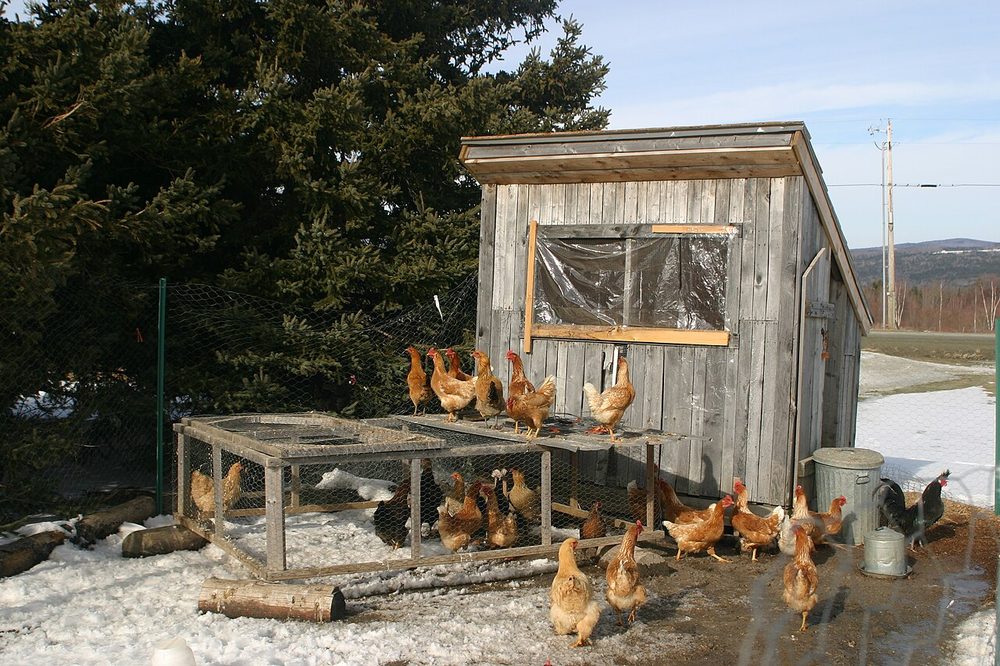
If you change one thing before winter, roof the run. A solid roof turns the season's worst problem — ground that never dries — into a non-issue: hens get a permanently dry, workable floor for scratching and dust bathing, bedding stays dry instead of composting in place, and you stop forking mud. It is the single biggest winter quality-of-life upgrade for birds and keeper alike.
Roof it properly: real slope so snow slides or can be pushed off, panels overlapped away from the wind, and a mesh ventilation band left open at the top of the walls under the eaves. A sealed box goes damp and stale, which is worse than cold. Clear or translucent panels over part of the roof keep the run bright on short days — the full material rundown is in our chicken run roof ideas.
2. The Wrapped Run (Clear Sheeting Windbreaks)
Wrapping the windward walls of a run in clear sheeting — greenhouse plastic, clear tarp, or even shower-curtain-grade vinyl — turns a draughty cage into a calm sun-trap in one afternoon. Hens use wrapped runs in weather that would keep them in the coop all day under a bare mesh wall, and clear material keeps the light that coloured tarps steal.
Wrap the bottom two-thirds of the windward sides and leave the top open: the goal is to stop wind at hen height while letting damp air escape above. Fix sheeting with battens or washers and screws, never bare staples, because winter wind works fixings loose and a flapping sheet terrifies the flock and then removes itself. Take it down in spring — wrapped plastic left on into summer turns the run into an oven and degrades into brittle strips.
3. Straw-Bale Windbreak Walls
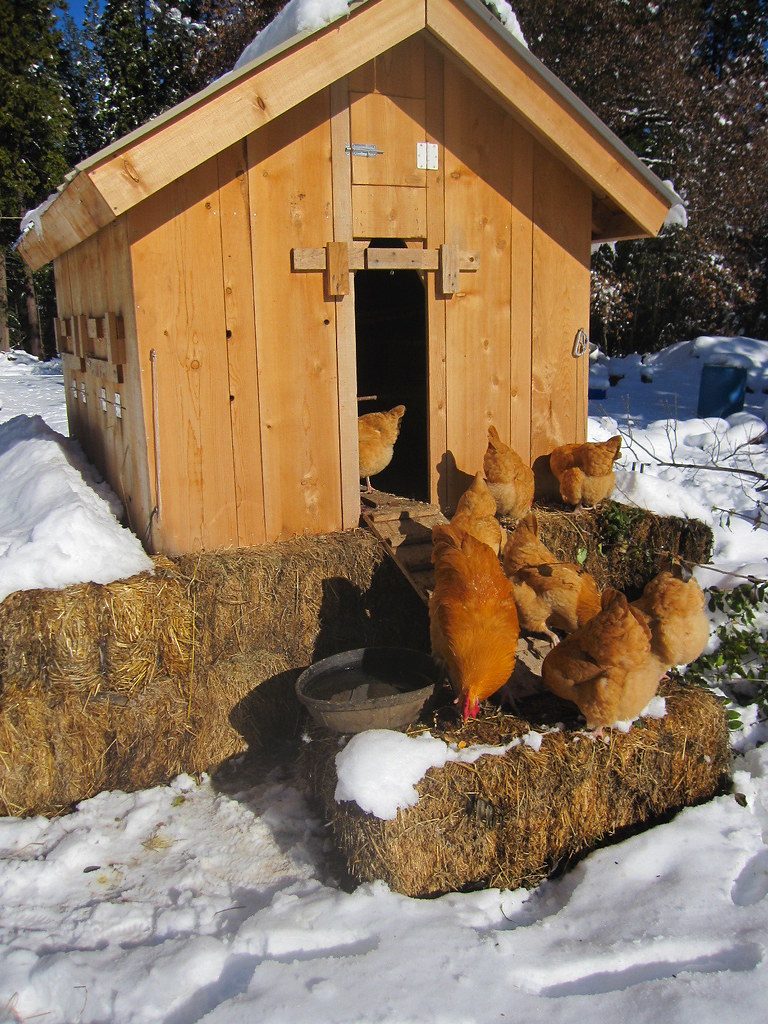
A row of straw bales stacked two high along the outside of the windward fence is a windbreak you can build in twenty minutes with no tools, and it works three jobs at once: it stops the wind, it insulates, and it gives hens a perch, a pecking project and a slow-release supply of spilled seeds and insects. Come spring, the bales go straight onto the garden as mulch.
Put bales outside the mesh, not inside — hens will dismantle an inside bale into the bedding within days, which is fun for them and a mess for you, while an outside bale survives the season. Keep bales off wet ground on a pallet or a gravel strip or the bottom bale wicks up water and rots. And buy straw, not hay: hay's seed heads and richer leaf mould faster in a damp run, and straw is usually cheaper anyway.
4. The South-Facing Sun-Trap Run
In the northern hemisphere, a run's winter comfort is decided by which way it faces. A run arranged so its long, open side catches the low southern sun — with the coop or a solid wall at its back — gains hours of usable warmth on clear days, dries faster after storms, and gives hens the sunbathing spots they will queue for in January.
You cannot always re-site a run, but you can usually re-arrange one: move the shelter section to the north side, open the south side to mesh only, and put the dust bath and perches where the sun lands at midday. Dark ground helps — a deep woodchip or soil floor absorbs and re-radiates more than pale gravel. If you are planning a new build, orientation costs nothing at the design stage and pays out every winter; it is the cheapest idea on this page.
5. The Deep-Litter Winter Floor
Deep litter turns the run floor into a managed compost bed: start autumn with 6–8 inches of woodchip, straw and leaves, add a fresh layer whenever the surface looks tired, and let the hens do the turning. Done right, the floor stays friable instead of muddy, smells earthy rather than sour, generates a whisper of warmth as it composts, and gives the flock hours of scratching work every single day.
The rules are simple but not optional. Keep it dry from above — deep litter under an open sky in a wet winter becomes a swamp with extra steps, so pair it with at least a partial roof. Add carbon (dry material) whenever you smell ammonia, and fork out the finished compost in spring for the garden. Skip sawdust and fine shavings as the main ingredient; coarse woodchip is the backbone that keeps the structure open and drained.
6. The Sheltered Huddle Corner
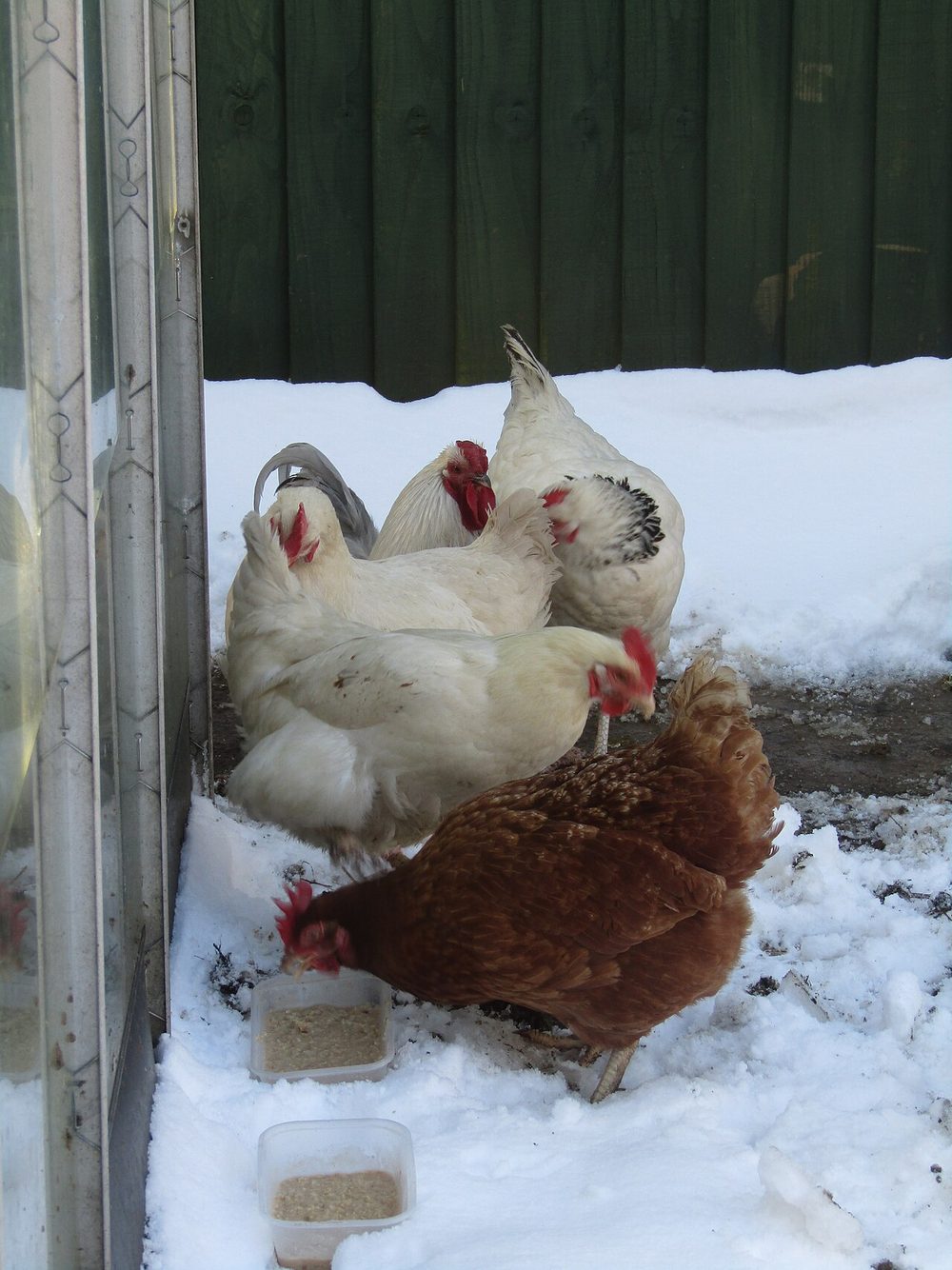
Watch hens on a bitter day and they will show you exactly what they need: one corner, out of the wind, in whatever sun there is, where the whole flock can pack in together. Building that corner deliberately — two solid sides, a low roof or a board overhead, deep dry bedding on the floor — gives the flock a winter living room instead of leaving them to improvise in the draughtiest spot in the run.
A pallet on edge, a sheet of board, an old door: the materials are whatever you have, arranged on the corner that is sheltered from your prevailing wind. Put a low perch across it and the huddle becomes a roosting annex on milder nights. The test is simple — on the worst morning of the year, this corner should be the calmest, driest patch of ground in the run. If it is not, move it; the hens will vote with their feet within the hour.
7. Snow-Load Hoop Run
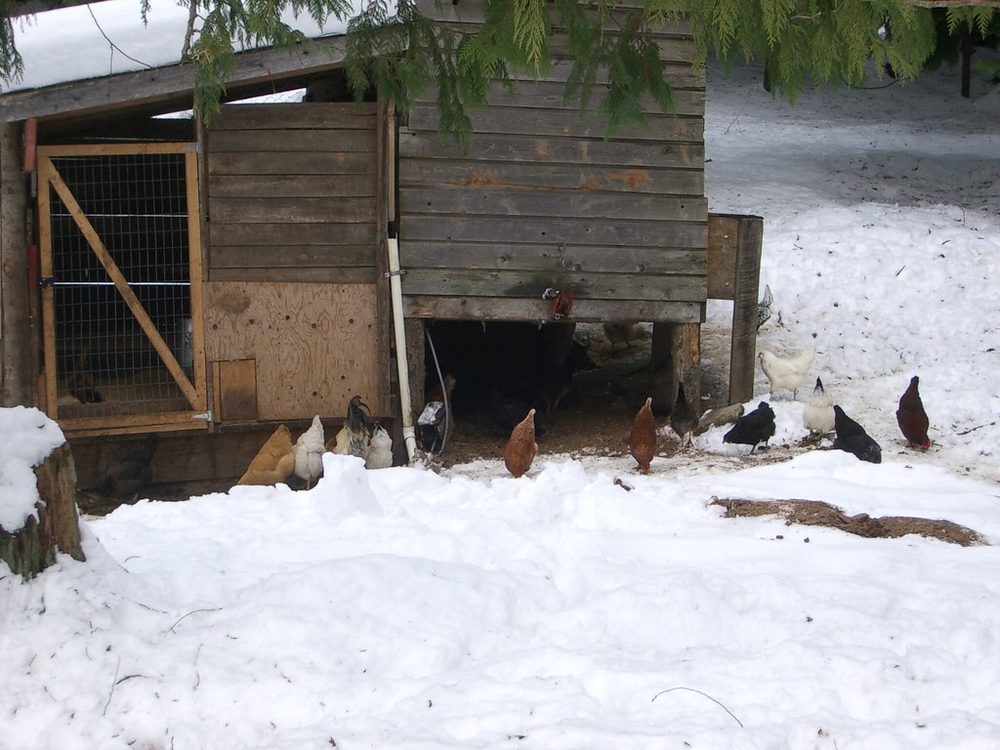
Where snow arrives in feet rather than inches, run roofs fail in two ways: flat ones collapse, and weak ones shed their load onto the mesh. The hoop shape is the winter answer — a cattle-panel or framed arch sheds snow off its shoulders all season, and the curved profile has no flat spot for a drift to build on. Keepers in snow country standardise on hoops for a reason.
Still plan for the big storm: site the hoop so you can reach its sides to knock off wet, heavy snow before it turns to ice, and brace the ridge if your panels span wide. Snow load is also an argument for the roofed section being the strong section — put feeders, water and the huddle corner under the arch's strongest third. Our greenhouse run ideas cover hoop and tunnel structures in depth, most of which double as snow-country runs.
8. The Keeper's Path and Gate Plan
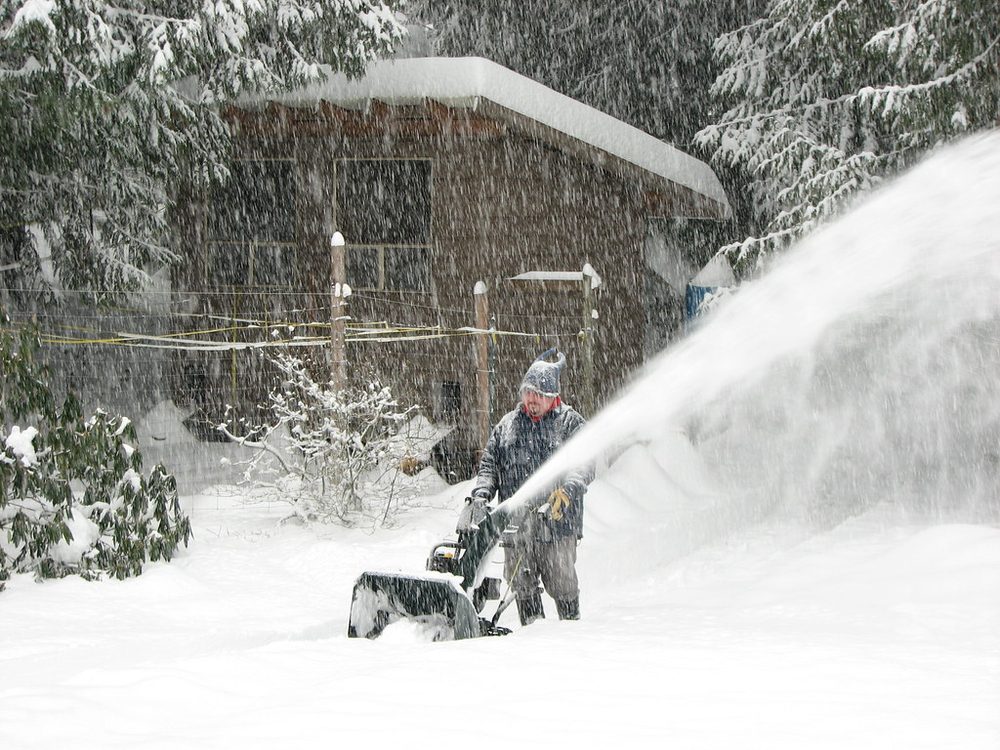
Winter runs fail their keepers before they fail their hens. A gate that freezes into the mud, a path that becomes an ice rink, a latch that needs bare hands at −10°: these are the things that make people dread the morning round, and dreaded chores get skipped. A winterised keeper's route — gravel or slabs on the path, a gate that swings clear of the ground, a latch operable in gloves — is a genuine welfare feature.
Do it in autumn, in daylight, at leisure. Raise or re-hang any gate that drags, because frozen ground will lift and grab it by December. Swap fiddly latches for big, glove-friendly bolts (keeping the two-step security rule from the predator guide). Lay a board or a bale by the pop door for the icy weeks. Your hens will never thank you, but your February self will.
9. Frost-Free Water Station
Hens can be perfectly warm and still suffer in winter if their water is ice. A winter water station is a small system, not a product: the drinker raised on blocks or a stand so bedding stays out of it, set in the most sheltered, sunniest corner of the run, with a spare drinker rotating indoors so one is always thawed and full.
The routines matter more than the gear. Fill with warm (not hot) water morning and evening; a black drinker in sun gains a few degrees and delays freezing; a wide, shallow rubber trug freezes slower at the edges and lets you pop the ice out whole, unlike brittle plastic. If you use a heated base or a heat lamp anywhere near the run, follow the maker's instructions exactly and keep cables where hens and rodents cannot reach them — or skip powered options entirely and run the two-drinker rotation, which has worked for a century.
10. The Windbreak Porch at the Pop Door
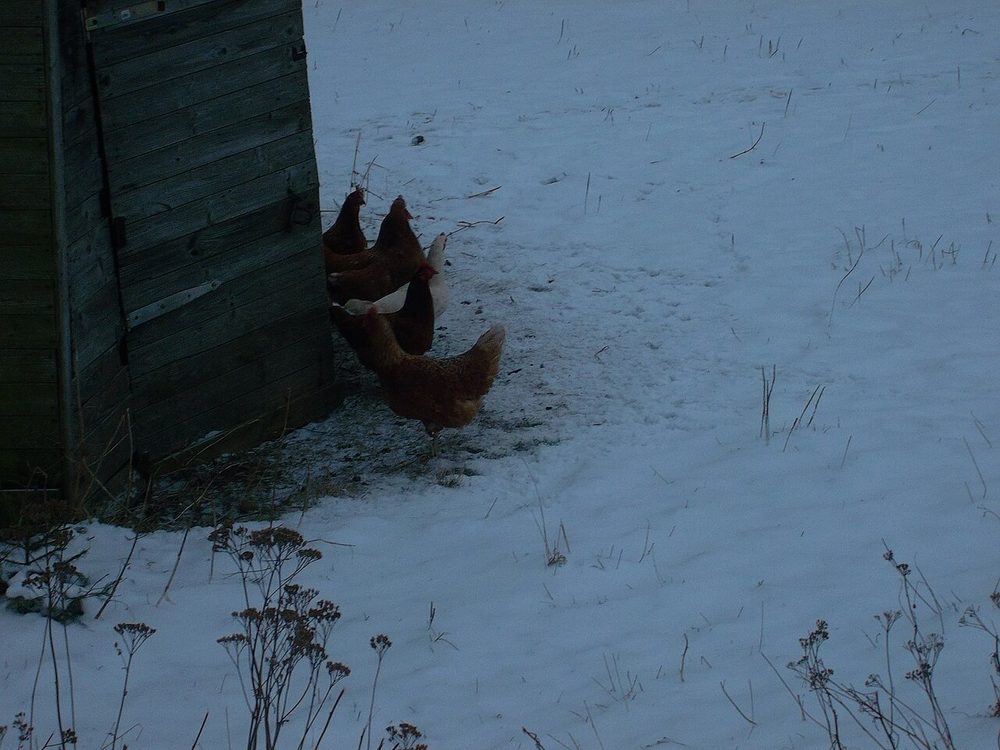
On the worst mornings, hens take one look out of the pop door and go back to bed — and a flock that will not come out does not eat, drink or move enough. A small roofed porch over the pop door changes the calculation: the first step out is dry, calm and sheltered, and from the porch the run looks manageable. It is the same vestibule idea used in attached layouts, aimed squarely at winter.
Build it like a miniature lean-to: two posts, a sloped solid roof, mesh or board sides on the windward faces, deep bedding on the floor. Hens will use it as a staging area all winter and a shade porch all summer. If your pop door faces the weather because the coop cannot move, the porch is not optional decoration — it is the fix. More on the porch pattern in the coop-attached ideas.
11. The Covered Dust Bath (Winter Edition)
Dust bathing is not a summer luxury — it is how hens manage mites and feather condition, and winter is when mite pressure in the coop builds. A bath that stays dry all winter is therefore a health feature. Site it in the run's driest corner (under the roof, in the huddle zone, or in its own little shelter), fill it with dry soil, sand and wood ash, and it will be occupied within the hour.
The container matters less than the dryness: a shallow wooden frame, a cut-down barrel, or a tyre all work if the contents stay powder-dry. Refresh the ash after wet spells and sieve out droppings weekly. On the darkest weeks, the dust bath is also enrichment — a flock with a working bath, a deep-litter floor to scratch and a bale to dismantle is a flock too busy to feather-peck, which is the real winter behaviour battle.
12. The Snow-Fenced Paddock
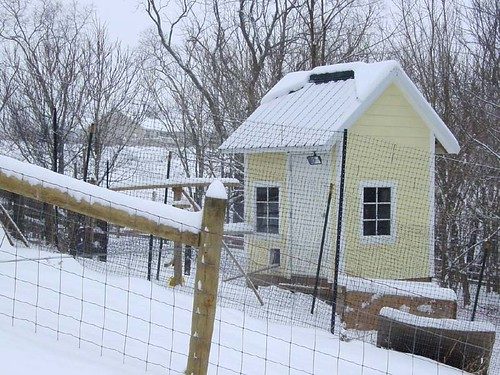
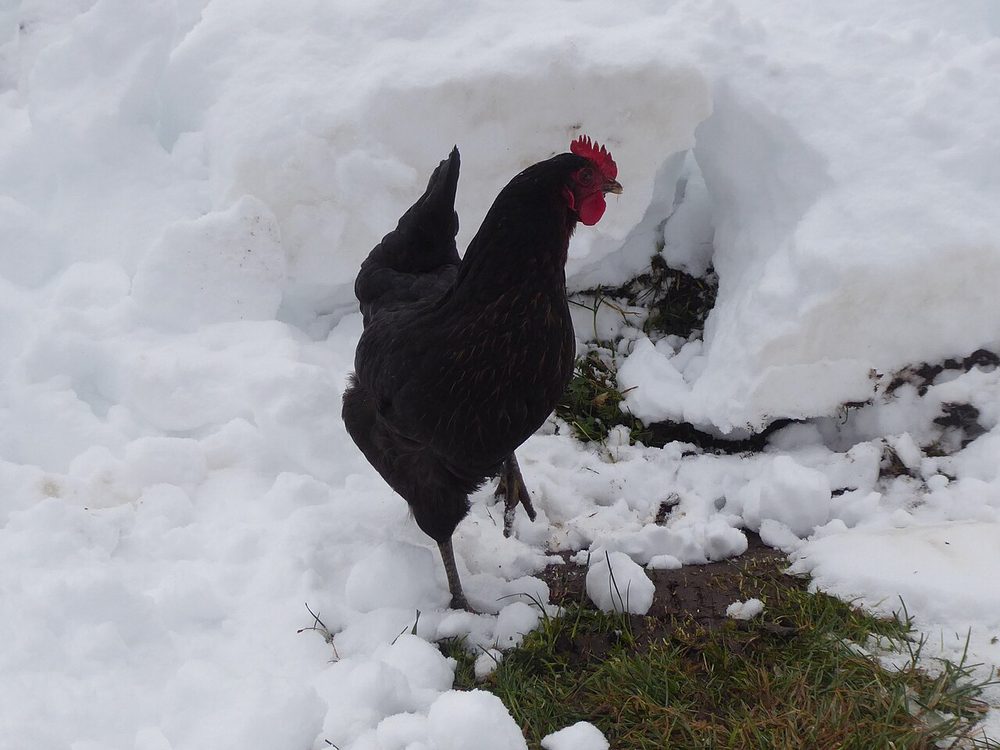
Not every winter flock lives in a roofed run — on open land, a fenced paddock with a solid shelter section is a legitimate winter system, provided the shelter is genuinely good. Hens range the snow on calm days (many enjoy it, picking at exposed grass along fence lines), and retreat to a deep-bedded, draught-free shelter when the weather turns.
The fence line is your friend in snow country: drifts form predictably along it, leaving scoured, grass-exposed strips the flock can work. Keep the water and feed inside the shelter, not out in the paddock, so no hen has to cross a blizzard for breakfast. And accept the honest limit — in a real storm this system depends entirely on the shelter, so build that part like a coop, not like a shed you found.
13. Mud-Control Flooring for the Thaw
Every winter run has a worst fortnight: the thaw, when frozen mud becomes liquid mud and the high-traffic zones — gate, pop door, feeder — turn into a slurry that coats eggs, feet and keepers. Targeted flooring fixes just those zones: gravel pads at the gate and door, a run of slabs or a boardwalk to the feeder, and coarse woodchip everywhere feet land.
Lay gravel deep (4 inches over a membrane) or it migrates into the soil and vanishes by spring. Slabs want a sand bed and a slight fall away from the coop. The strategic point is that you do not need to floor the whole run — hens range the deep litter happily; it is the pinch points that need engineering. Do this one in autumn with the path work in idea #8 and the thaw becomes a non-event.
How to choose your winter upgrades
Diagnose before you spend. If your run's winter problem is mud, the answer is drainage and cover: roof the run (#1), start deep litter (#5), and floor the pinch points (#13). If it is wind, wrap the walls (#2), stack the bales (#3), and build the huddle corner (#6) and porch (#10). If it is behaviour — feather pecking, restlessness, hens that will not come out — the answer is work and shelter: a dry dust bath (#11), a sun-trap layout (#4), and ground the flock can scratch all day.
Do the keeper's work too: the path and gate plan (#8) and a sane water routine (#9) are what keep the whole system running when the weather is at its worst. And if you are building new rather than upgrading, several of these ideas arrive built-in with the right structure — a hoop or tunnel run (#7) from the greenhouse ideas, or a fully winterised attached unit from the coop-attached list.
Winter chicken run FAQs
Do hens need a heated run in winter?
Almost never. Healthy adult hens in full feather are comfortable well below freezing if they are dry and out of the wind; their feathers and flock huddling do the work. Heat brings real risks (fire, and birds that never acclimatise) and solves a problem most flocks do not have. Spend the money on roofing, windbreaks and dry ground instead — comfort comes from dry and calm, not warm.
How do I stop the run turning to mud in winter?
Keep rain off it and give water somewhere to go. A roof or partial roof is the biggest single fix; deep litter or coarse woodchip over the floor is the second; gravel pads at the gate, pop door and feeder handle the pinch points. If the whole site drains into the run, no floor will save it — cut a shallow diversion channel uphill of the run before winter.
Will hens actually go outside in snow?
Most will, once the first shock passes — many hens pick happily along fence lines and cleared patches, and some clearly enjoy a bright snowy day. What they avoid is wind and being unable to reach shelter, food or water without crossing open snow. Keep those essentials inside or beside the shelter, clear a small patch by the pop door, and let the flock choose; choice is the whole game.
How often should I clean the run in winter?
Less deeply, more lightly. Deep-litter floors want fresh dry material added regularly and no full clean-out until spring. Roofed, bedded runs want droppings hotspots (under roosts, by the pop door) tidied weekly. Frozen droppings are honestly easier to chip out than summer's — the miserable job is the thaw, which is why the spring clean is the big one.
What bedding works best in a winter run?
Coarse woodchip is the backbone for earth floors — it drains, resists compaction and lasts. Straw adds insulation and scratching value on top, and leaves are a free autumn layer hens love to work through. Avoid fine sawdust outdoors (it mats and holds water) and avoid hay as a main layer (it moulds faster than straw). Whatever you use, the rule is dry on top: if the surface stays damp, add more carbon or more roof.
How do I keep drinking water from freezing?
Routine beats gadgets: two drinkers in rotation, filled with warm water morning and evening, usually keeps liquid water available through all but the harshest spells. A wide rubber trug lets you pop ice out whole; a black drinker in sun delays freezing; a sheltered station out of the wind helps everything. Powered heated bases work too — follow the maker's instructions exactly and keep cables out of reach.
Ready to build one properly?
Our free starter plan — the Backyard Run, 8′ × 16′ — is a framed run designed to take a roof from day one, with the full materials list, tool list and step-by-step build outline for up to 12 hens.
Keep planning
Chicken Run Roof Ideas
From tarps to tin — the roof is the winter upgrade that matters most.
Greenhouse Chicken Run Ideas
Tunnels and hoop houses: the warmest winter runs of all.
Predator-Proof Chicken Run
Hungry predators work hardest in winter. Finish your run properly.
Pin it for later