15 Wooden Chicken Run Ideas
Wood is still the material most backyard runs are built from, and for good reason: it is forgiving to cut, easy to repair, and cheap to source second-hand. These fifteen wooden chicken run ideas cover everything from a weekend A-frame ark to a walk-in gabled run you will still be using in ten years. Every idea carries a spec card with footprint, hen count, an honest 2026 cost estimate and a difficulty rating, so you can compare builds at a glance.
Two rules apply to every timber build below. First, size from the flock, not from the lumber pile: allow at least 10 square feet of run per hen, and more if the birds are in the run all day. Second, wood alone never made a run safe — the mesh, apron and latches do that, and our predator-proofing guide covers the standards every one of these frames should be finished to. If you would rather start from a drawn design, the free 8′ × 16′ starter plan is a wooden frame run with the full materials list written out.
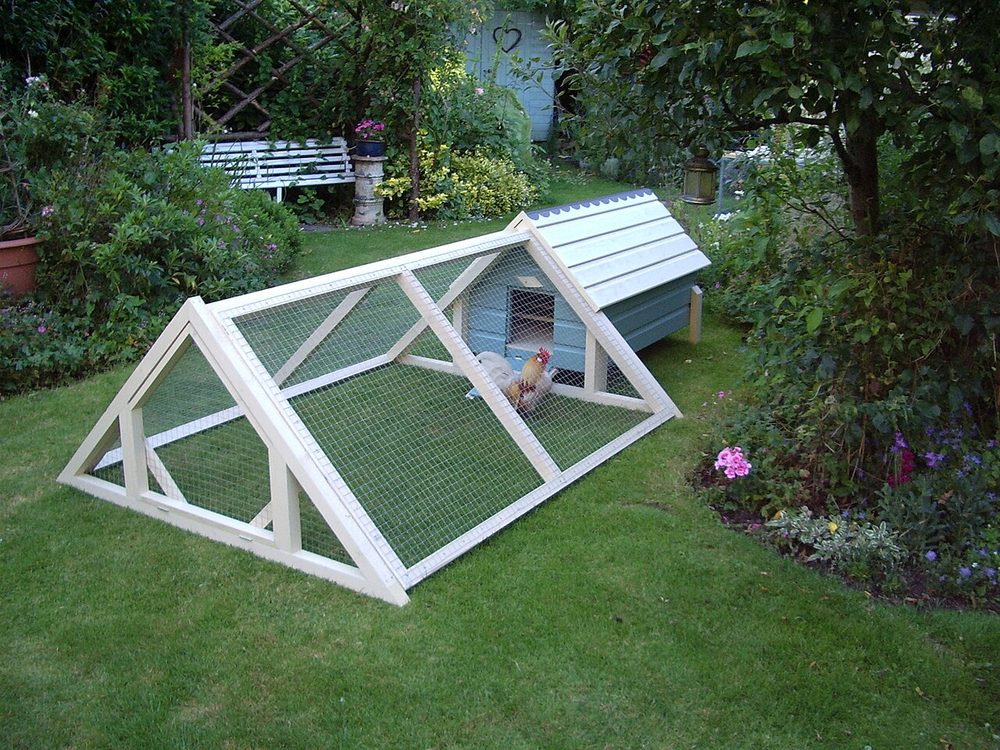
1. A-Frame Ark Run on Skids
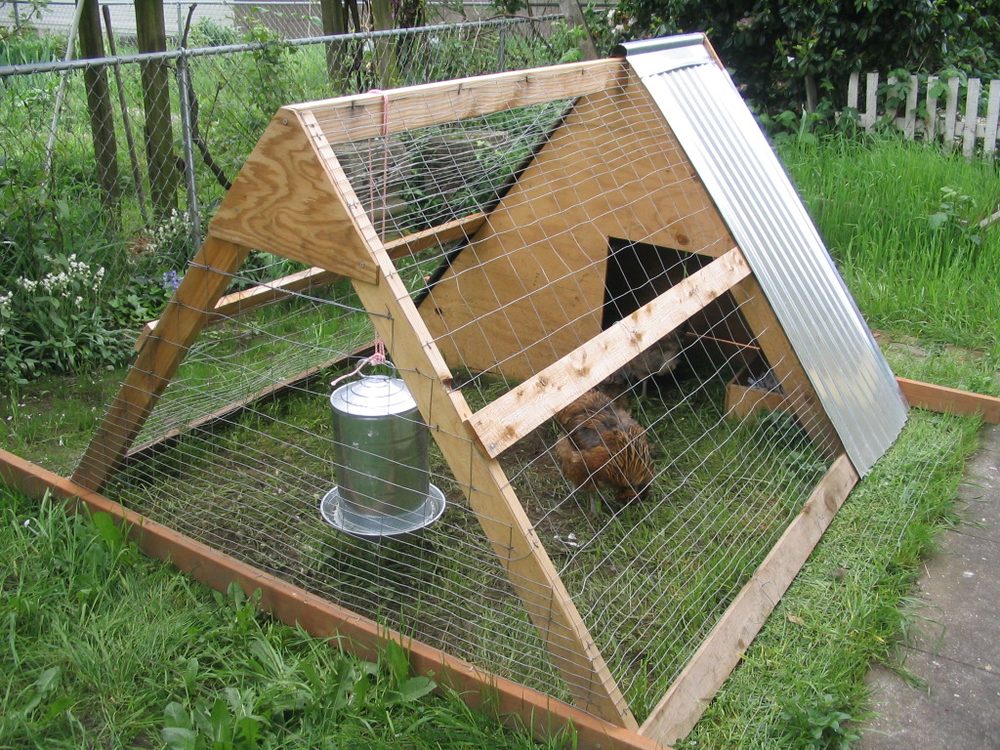
The ark is the original wooden run: two sloping mesh sides meeting at a ridge, a boarded shelter section at one end, and skids or small wheels so the whole thing shuffles forward every day or two. The steep slopes shed rain, hens get fresh ground constantly, and no patch of lawn is scratched bare. Build the frame from 2×2 or 2×3 stock to keep it light enough for one person to move, and keep the ridge around 4 feet high.
The common mistake is building an ark like furniture — heavy 2×4 framing, thick cladding — and then never moving it because it takes two people and a bad back. An ark that does not move is just a small, awkward run. The second mistake is skipping the floor-level skirt: on uneven lawn there will be a gap somewhere, and that gap is where a hen gets out. A 6-inch flap of hardware cloth hinged along each side closes it as the ark settles.
2. Walk-In Gabled Run
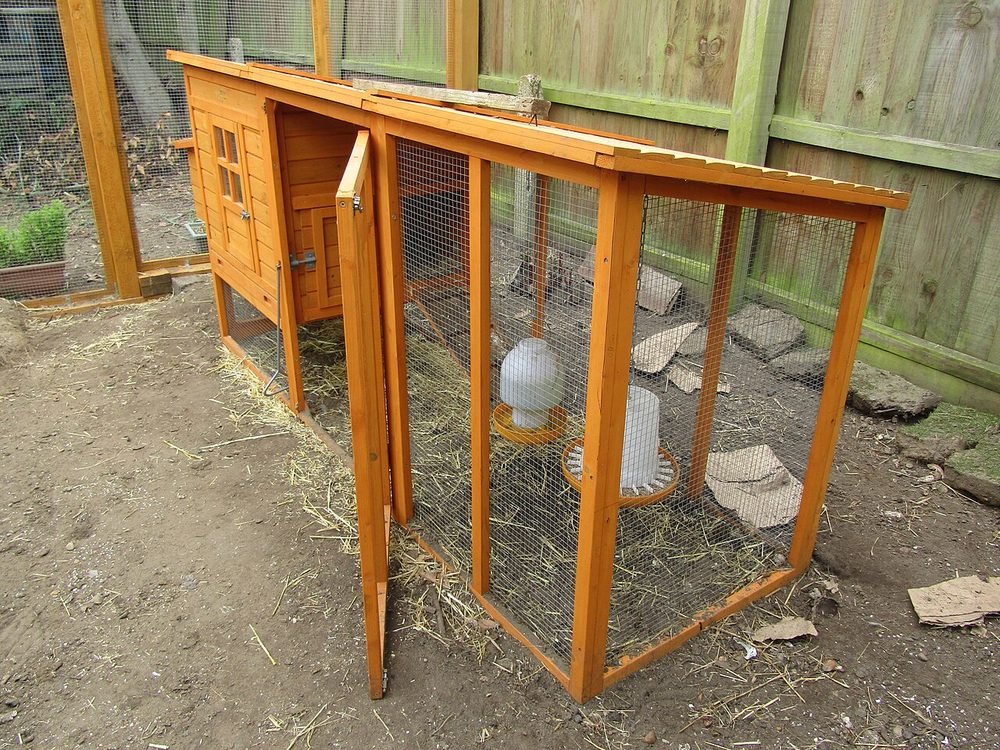
A full-height framed run with a pitched, mesh-or-panel roof is the build most keepers end up wishing they had started with. You walk in upright to clean, hang feeders at back height, and catch a hen without a chase. Frame it with posts every 4 feet, a mid rail to keep mesh taut, and a door wide enough for a wheelbarrow — 30 inches minimum, 36 is better.
Timber choice matters more here than anywhere else on this page, because this run should last a decade. Use pressure-treated lumber for anything touching the ground and regular framing lumber above it, and paint or oil the outside before the mesh goes on — you will never reach those faces again. Slope the roof at least 1 inch per foot so leaves and snow slide instead of sitting and rotting the frame.
3. Low Coop-and-Run Combo for Small Gardens
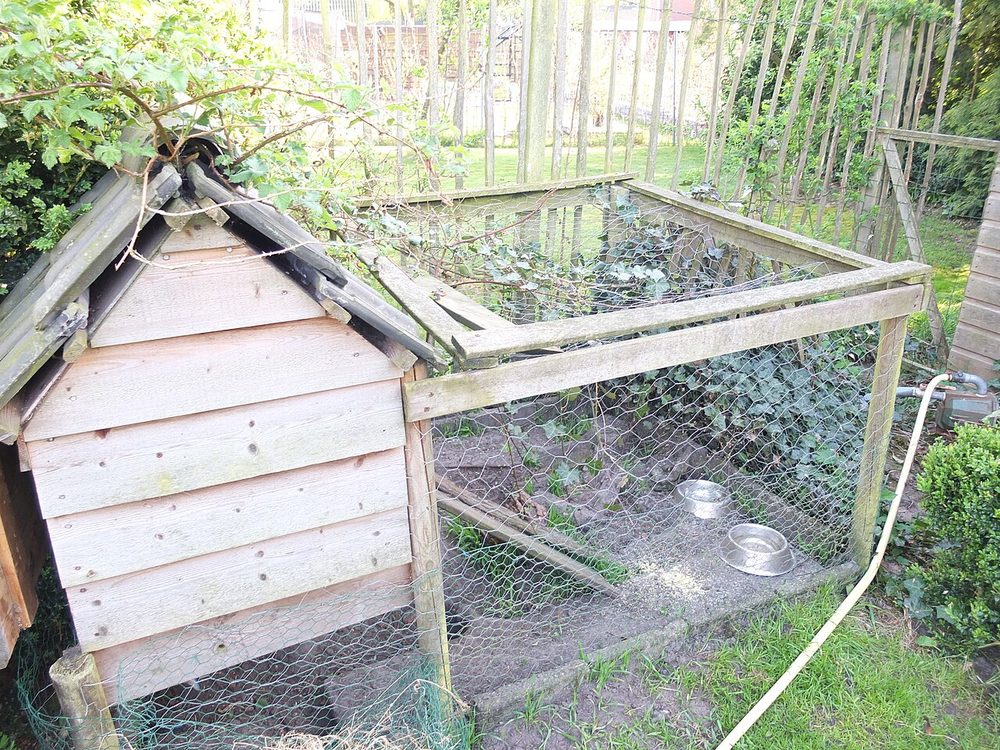
The all-in-one combo — a small raised coop at one end, a low run stretching out from it — is the classic first build for a trio of hens, and it suits a small garden better than any separate coop-and-pen arrangement. Everything is in one footprint, the run roof doubles as the coop's weather protection, and the whole unit can sit on a patio or a gravel pad.
Be honest about its ceiling, though. A low run you cannot get into is a run you clean from the top, so make the run roof in two hinged sections that lift fully — the day you have to crawl in after a broody hen, you will understand why. Combos also cap your flock hard: three or four hens is a real limit, not a suggestion.
4. Board-and-Batten Coop with an Enclosed Run
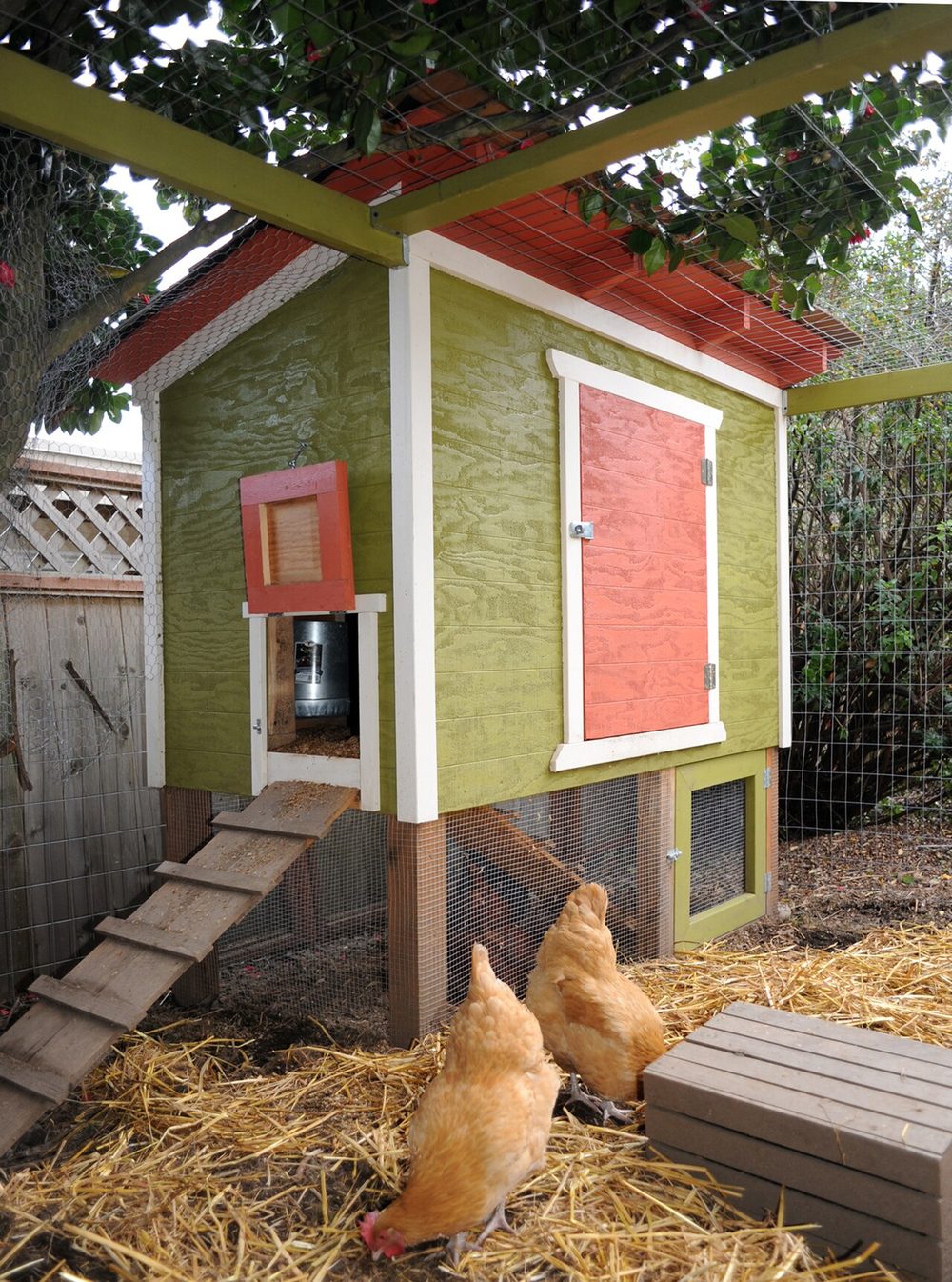
Some runs have to earn their place in a tidy garden, and a board-and-batten coop with a neatly framed enclosed run does that better than any other wooden design. Vertical boards with narrow battens over the seams give the coop a barn look, the run panels are framed like fence sections, and the whole thing reads as a garden building rather than a cage.
The craft is in the panel work: build each run wall as a separate framed panel on the ground, mesh it, then stand and screw the panels together. Paint before assembly, and use exterior screws throughout — nails work loose in battens within a couple of winters.
5. The Garden Henhouse Run (a Permanent Feature)
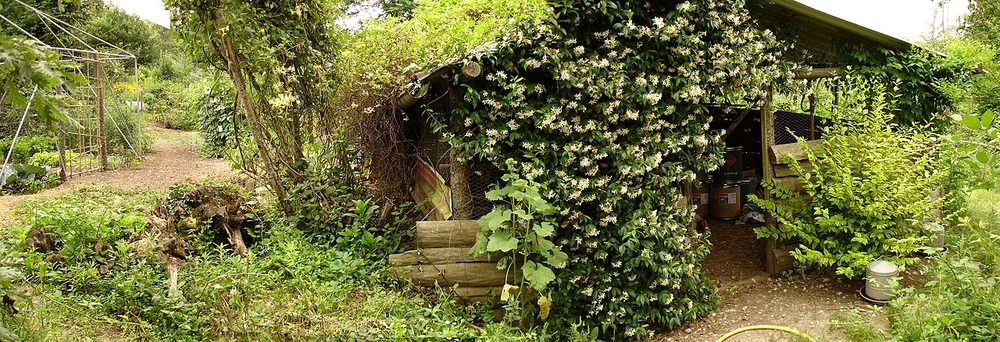
Given a few seasons, a wooden run in a planted garden stops looking like an enclosure and starts looking like a henhouse that grew there. Climbing plants on the outside of the mesh (never the inside — hens strip anything within beak range), a gravel or bark floor, and a coop tucked against a hedge make this the most forgiving design for gardens that are looked at as much as used.
Plan the planting as carefully as the framing. Anything growing through the mesh from outside will be pruned to the wire by the flock, which is fine for tough climbers and fatal for young plants, so guard new planting with a temporary fence line a foot outside the run for its first season. Choose shade planting deliberately: a run that gets afternoon shade from a hedge or climber-covered wall is worth several degrees in a heatwave.
6. Movable Pasture Day Pen
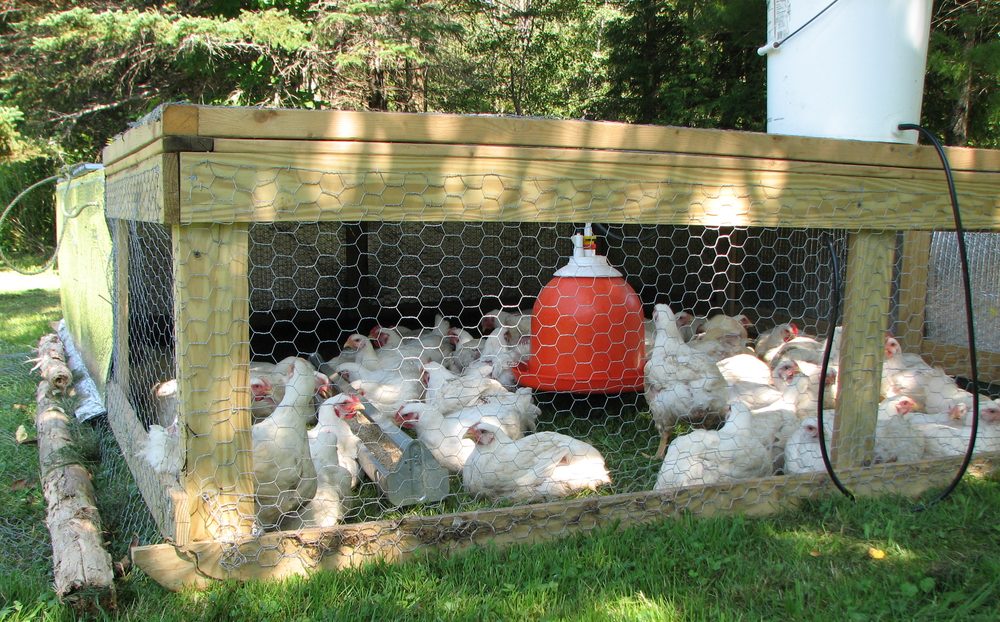
A floorless wooden pen — low walls, a mesh top, no shelter section — is not housing; it is a movable grazing cage, and judged that way it is excellent. Birds go out to grass in the morning, the pen drags to a fresh patch every day or two, and the flock comes back to a proper coop at night.
Keep the height honest: 18–24 inches is enough for hens to stand and flap, and keeps the pen light and low against the wind. Add shade as part of the design, not an afterthought — a boarded third of the top or a tarp corner, because a floorless pen on open pasture has nowhere for a hen to escape midday sun. And never leave birds in a day pen overnight in predator country; the pen's whole safety model is that a keeper moves it and empties it daily.
7. Lean-To Run Along a Fence
A lean-to run uses the fence as its back wall and a single sloped mesh roof from fence-top down to a low front rail. You frame three sides instead of four, the fence gives wind shelter for free, and a dead strip of side yard becomes the most productive part of the property. It is one of the cheapest wooden runs per square foot there is.
Two checks before you build. First, the fence itself becomes a run wall, so it must be hen-tight and predator-tight at ground level — most garden fences are neither, and the fix is a hardware-cloth lining along the fence side, budgeted from the start. Second, drainage: a lean-to catches everything the fence sheds, so dig a shallow gravel trench along the front rail or the run will be a gutter in winter.
8. Pergola-Top Run
Frame the run like a pergola — four or six chunky posts, open rafters across the top — and stretch mesh over the rafters instead of a solid roof. Hens get dappled shade and full airflow, hawks get a hard no, and the run looks like a garden structure from every angle. In hot climates this is the most comfortable run design on the page, because heat escapes upward all day.
The trade-off is rain: a pergola top keeps out nothing wet, so the ground plan has to do the work — a deep woodchip floor, a covered shelter section at one end, and feeders under the coop overhang. You can also cheat the seasons: clear corrugated sheets laid over the rafters in autumn turn it into a roofed run for winter, and come off again in spring. Build the rafter spacing to match standard sheet widths and that swap takes twenty minutes.
9. Split-Level Run for a Sloped Yard
Slopes defeat most run designs, but a terraced wooden run turns the slope into two flat, usable levels joined by a ramp or wide steps. Hens genuinely use both levels — the top for sun, the bottom for shade and dust bathing — and terracing stops the whole run's floor from migrating downhill every time it rains.
A doubled 2×8 or a small sleeper wall is about right. Drainage runs across a slope, not down it, if you cut a shallow channel behind the top tier — do that first, before framing, or the top tier becomes a dam and the bottom tier a pond.
10. Run with a Solid Boarded Back Wall
Three mesh walls and one solid boarded wall, set against the prevailing wind, is the simplest comfort upgrade in wooden run design. The boarded wall kills the wind chill, gives hens a calm corner in any weather, and provides a mounting surface for feeders, a dust-bath shelter and a perch rack that mesh walls cannot hold.
Use vertical boards with small gaps or feather-edge boards overlapped, and leave the top 6 inches of the solid wall as mesh under the roof line so air still moves — a fully sealed corner goes stale and damp. More on keeping hens comfortable in bad weather in our winter chicken run ideas.
11. Wide-Gate Utility Run
Most run doors are built for a person; this one is built for the work. A pair of wide framed gates — 5 or 6 feet of total opening — lets you back a barrow or a garden tractor straight in for the spring clean-out, drive posts for repairs, and deliver a bale of bedding without a wrestling match. For larger flocks, gate width is the difference between a twenty-minute clean and a half-day one.
Wide gates sag, so build them like gates, not doors: a full perimeter frame, a diagonal brace running from the bottom hinge corner to the top latch corner, and three hinges per gate, not two. Set the threshold flush with the ground inside and out, and fit a bolt or drop-pin in the centre where the two gates meet.
12. Bent-Pole Hoop Run
Before PVC, hoop runs were bent from wood — hazel, willow or young ash poles pushed into the ground or socketed into side rails and arched over. The result is a hoop run with a hand-made, garden-grown look that plastic pipe cannot match, and if you have coppice or straight saplings to cut, the frame is nearly free.
Green wood bends; seasoned wood snaps. Cut poles fresh, bend them the same week, and lash or screw a ridge pole along the top to hold the arch. Expect a shorter life than any other frame here — five to eight seasons is realistic before poles soften at the ground line — and treat it as the price of the look and the low cost. The mesh does the predator work as always; our PVC run guide covers the same hoop geometry if you want the comparison before choosing.
13. Low Starter Run for Bantams and New Keepers
A low wooden run — 2 feet high, fully meshed top in lifting sections — is the right scale for bantams, a grow-out pen for young birds, or a first build to learn on before committing to a walk-in. Everything is reachable from above, materials are short offcuts rather than full lengths, and a mistake costs an afternoon, not a weekend.
Build the top in two hinged halves with real hinges and a latch each, not loose panels you lift off and lean somewhere; loose panels get left ajar, and ajar is all a cat or crow needs. It is a starter and a nursery, and at those two jobs it is perfect.
14. Deep-Eaves Run (the Dry-Edges Design)
Runs rot from the edges in: rain drips off a flush roof straight down the mesh and pools along the walls. The deep-eaves design pushes the roof 18–24 inches past the walls on every side, so the drip line lands well outside the run, the bottom rails stay dry, and hens get a shaded, rain-free strip around the inside perimeter.
The extra roof area costs a little more in panels and framing, and it is the best money in the whole build if your winters are wet — dry bottom rails are the difference between a ten-year run and a five-year one.
15. Two-Bay Run with a Divider
Frame one long run and divide it across the middle with a mesh partition and its own small gate. Most of the year the gate stands open and the flock has the whole space; when new hens arrive, a broody needs separating, or half the ground needs resting and re-grassing, you close the gate and the run becomes two. It is the most flexible wooden layout there is, and the divider costs one extra panel.
Put a pop door from the coop into each bay if you can — that is what makes the split genuinely usable for introductions, because both groups can go to roost without meeting. If you are weighing wood against other frames before committing, our metal chicken run ideas cover the same layouts in steel.
How to choose between these wooden runs
Start with how long you will keep hens. If this is a two-season experiment, build cheap and light — the ark (#1), the low starter run (#13) or the pasture pen (#6) — and spend the savings on good mesh. If hens are a ten-year fixture, the walk-in gabled run (#2) is the honest answer: it costs the most and annoys you the least, every single day, for a decade.
Then look at your ground. Slopes want the split-level (#9); narrow side yards want the lean-to (#7) or a corner layout; wet ground wants deep eaves (#14) and a roof; windy ground wants a solid back wall (#10). Whatever you choose, price the mesh first — on wooden builds the hardware cloth routinely costs more than the timber, and our budget breakdown shows where every dollar goes.
Wooden chicken run FAQs
What is the best wood for a chicken run?
Pressure-treated lumber for anything at or below ground level, because that is where rot starts, and ordinary kiln-dried framing lumber for the structure above it. Cedar and larch resist rot naturally and are lovely to work, but cost noticeably more; they make most sense for the visible parts of a garden run. Avoid reclaimed wood of unknown treatment for anything hens can peck, and never use old railway sleepers inside a run.
How long will a wooden chicken run last?
A framed run with treated ground-contact timber, a roof or eaves keeping the rails dry, and mesh fixed with screws should last ten years or more. The usual failure points are bottom rails sitting in wet soil and untreated posts rotting at the ground line — both are design choices, not bad luck.
Should I paint or treat the wood inside the run?
Outside, yes — paint, oil or stain keeps weather off the frame. Inside, leave timber bare or use a plain, fully cured exterior finish; hens peck at flaking paint, so anything you do use inside must be sound and completely dry before birds move in. Never apply creosote or old-style preservatives anywhere near a run. The mesh line is where hens actually make contact, so keep finishes off the wire side where you can.
Is a wooden run strong enough against predators?
The wood is rarely the weak point — a framed 2×4 wall is stronger than most predators. Runs fail at the mesh (chicken wire instead of hardware cloth), at gaps around doors, and at the ground line where digging starts. Frame in wood by all means, but finish to a predator standard: ½-inch hardware cloth, a ground apron, and two-step latches, as set out in our predator-proofing guide.
Can I build a wooden run on a concrete base?
Yes, and it solves rot and digging in one move — a slab or a ring of slabs under the walls keeps bottom rails dry forever. The trade-off is the floor itself: bare concrete is hard on hens' feet and cold in winter, so cover it with a deep layer of woodchip, sand or straw that you can fork out and replace. Many keepers slab just the perimeter under the walls and leave the middle as earth, which is the best of both.
How much does a wooden chicken run cost to build?
For a mid-size walk-in run, expect roughly $320–$520 in 2026 prices with new lumber and hardware cloth, and far less with reclaimed timber — the ideas above range from about $80 for a low starter run to $550 for a large two-bay build. Mesh is typically 40–60% of the total. All figures here are estimates; lumber prices vary a lot by region and season.
Ready to build one properly?
Our free starter plan — the Backyard Run, 8′ × 16′, a wooden frame run with hardware cloth and a walk-in door — gives you the full materials list, tool list and step-by-step build outline for a run that holds up to 12 hens.
Keep planning
15 Cheap DIY Chicken Run Ideas
Every cheap build worth considering, in wood and everything else.
Metal Chicken Run Ideas
The same layouts in steel panels, mesh and netting.
Run Ideas with the Coop Attached
Coop-and-run combos where the two are designed together.
Pin it for later