12 Corner Chicken Run Ideas That Use Dead Fence-Line Space
Every yard has a corner that does nothing — too shady for vegetables, too awkward for a shed, mown out of habit and used by no one. Hens are the perfect tenants for it. These twelve corner chicken run ideas turn dead fence-line space into working runs, using the two fences you already own as half the structure. Every idea carries a spec card with footprint, hen count, a 2026 cost estimate and difficulty.
The corner bargain is simple: two walls already exist, so a corner run needs roughly half the framing and mesh of a freestanding one. The catches are just as simple, and this page will keep naming them — the existing fences become run walls, so they must be hen-tight and predator-tight; corners collect water and fallen leaves; and the inside corner is where predators test first. Size still follows the rule of 10 square feet per hen, and the finish should meet the predator standard. For full-yard layouts, compare the wooden and metal run lists.
1. The Urban Fence-Line Corner Run
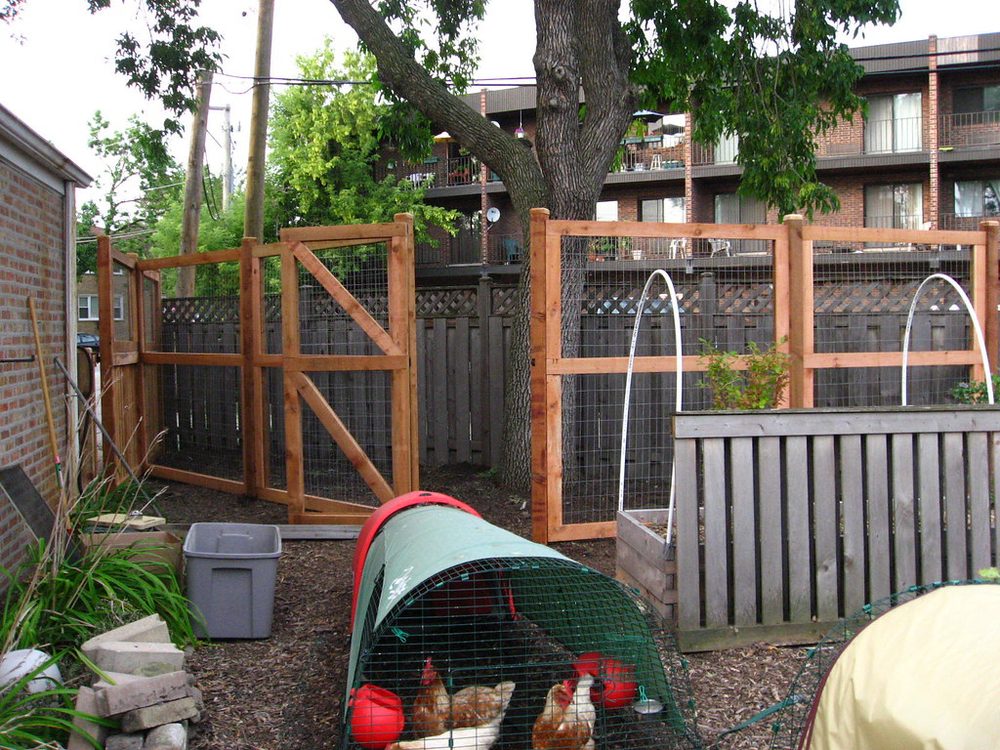
The standard corner build: framed mesh panels across the open side of a garden corner, a gate at one end, and the two boundary fences forming the back and side. In a small urban garden this is often the only place a real run fits, and because it sits against the boundaries it leaves the lawn and beds untouched in the middle where the family actually lives.
Panels are the right construction here — build them flat, mesh them, and screw them between posts, so a future fence replacement (yours or the neighbour's) does not demolish the run. Check whose fence is whose before you fix anything to it, and leave the run's own mesh a couple of inches inside the boundary line if the fence is the neighbour's. Urban corners also collect next door's tree shade, which the flock will thank you for in August.
2. The Picket-Fence Corner Pen
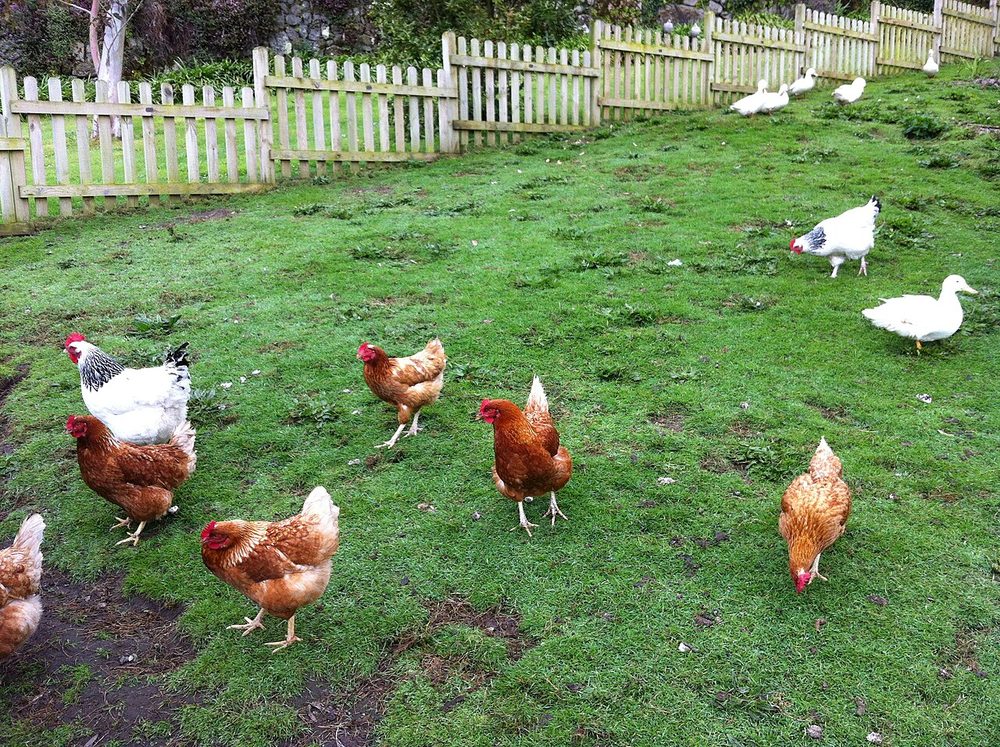
A picket-fenced corner makes the most charming chicken pen in the world and, unmodified, one of the least secure: pickets pass hen heads, puppy bodies and raccoon arms with ease. The fix is invisible — line the inside of the pickets with fine mesh or hardware cloth, and the corner keeps its looks while becoming an honest barrier.
Treat this layout as a ranging pen with a coop attached or adjacent, not a standalone fortress, unless you also mesh the top. Grass survives surprisingly well in a corner pen used by day, because hens concentrate their scratching along the fence lines and under any shrub you plant for them. Plant the outside of the pickets, not the inside — the flock prunes everything within beak reach to a neat, nibbled line.
3. The Stone-Wall Corner Run
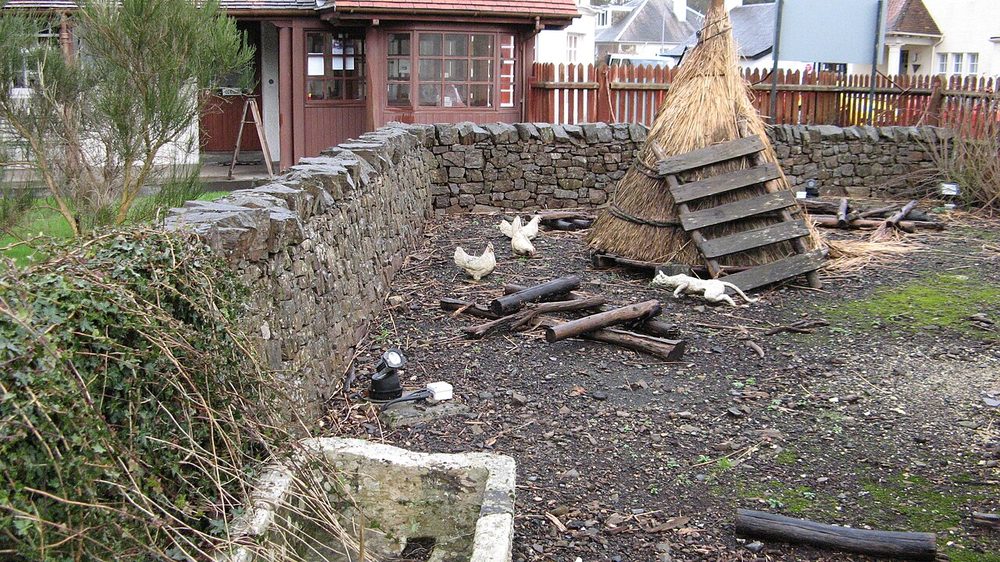
Where a garden corner is walled in stone, you inherit the best run walls there are: draught-proof, chew-proof, climb-resistant and centuries old. Stone holds the day's warmth into the evening and makes a corner that is calm in any wind. Many old cottage and farm gardens have exactly this corner waiting, currently storing a compost heap and a broken mower.
Stone's weaknesses are at the top and the bottom. The top needs a mesh or panel roof with the edges sealed to an uneven wall — a timber wall plate bedded along the stones gives you a true line to fix to. The bottom needs checking for gaps and mouse holes, which in an old wall are also weasel doors: point them up or mesh them. Do those two jobs and a stone corner is the lowest-maintenance run on this page.
4. Stone Corner with a Mesh Roof
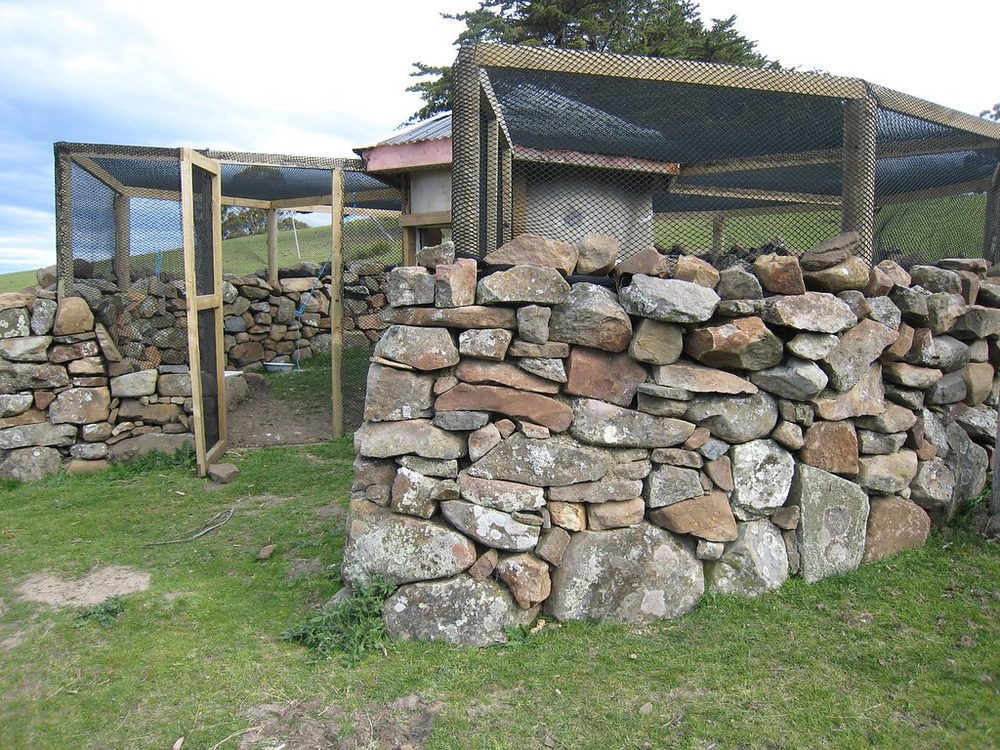
Add a mesh roof across a walled corner and the enclosure becomes a complete aviary-grade run: nothing flies in, nothing climbs in, and the hens own a shady, stone-cooled room outdoors. In hawk country this is the corner build to copy, and the roof also keeps wild birds out of the feed — a hygiene win that open runs cannot match.
Span the roof on a light timber or tube frame rather than fixing mesh directly wall-to-wall; a frame holds tension, sheds leaves, and can be lifted for the annual clean. Leave one roof panel hinged or removable above the gate end so you can get a barrow and a ladder in. Stone corners run cool, so in cold climates pair this with the driest bedding you have — the full cold treatment is in our winter run ideas.
5. The Five-Bar Gate Corner Yard
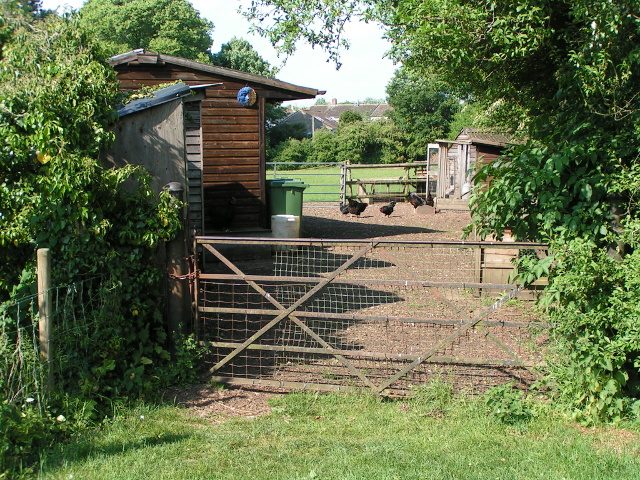
On farms, the corner where two field fences meet — closed by a five-bar gate — has been a poultry yard for centuries, and the pattern still works: stock fencing or rails on the open sides, the gate as the entrance, a coop or shelter in the corner itself. It is a yard, not a cage, sized for a proper flock and worked from a vehicle if needed.
Rails and stock netting alone are a day boundary, not a night one — hens roost in a secure coop inside the yard, and the yard's job is ranging room. If predators are bold, a strand of electric wire on offsets around the outside transforms the yard's security for very little money. This is the corner idea that scales: double the fence lengths and the same drawing serves forty birds.
6. The Gravel-Floored Wall Corner
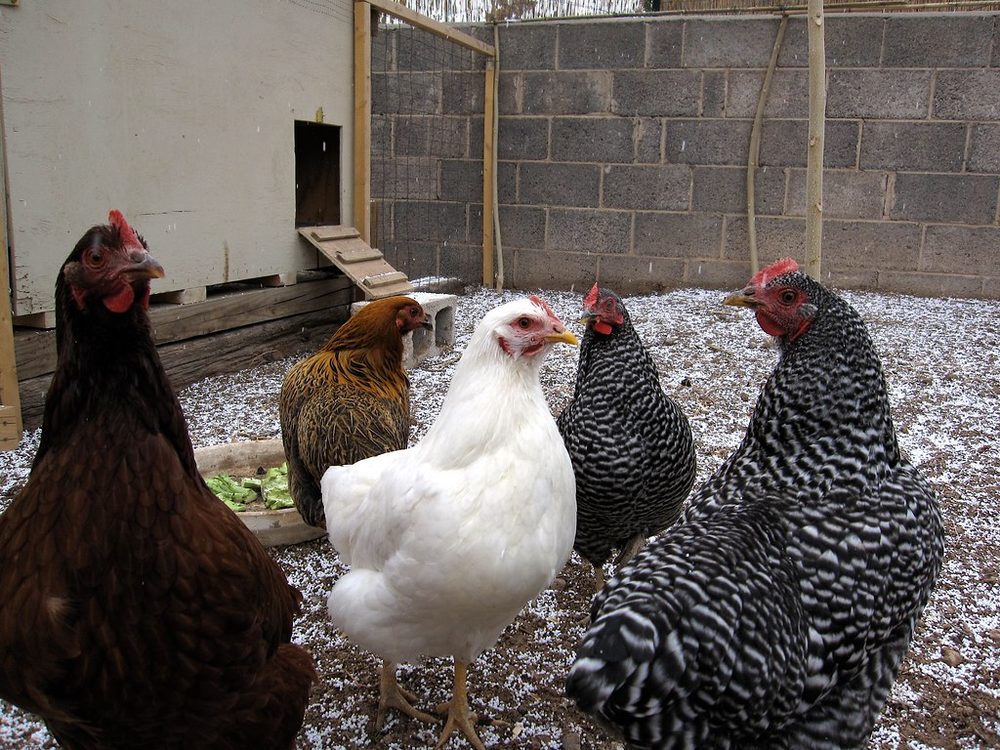
Some corners are wet because everything drains to them. Rather than fighting it, floor the corner properly: a membrane, 4 inches of coarse gravel, and mesh walls against the building or wall. Gravel drains instantly, hoses clean, never turns to mud, and hens work it happily for spilled feed and grit. It is the pragmatic answer for the corner by the downpipe.
Give hens a soft section too — a deep tray or a corner box of soil and sand for dust bathing, because gravel alone is hard living for feet and offers no bathing. Hose the gravel down in dry spells to keep dust and smell settled. And check the wall itself: a building wall used as a run side wants a sacrificial board or a gravel margin at its base, so scratching and splashing never reach the render or siding.
7. The Garden-Wire Corner (Flower-Bed Edge Run)
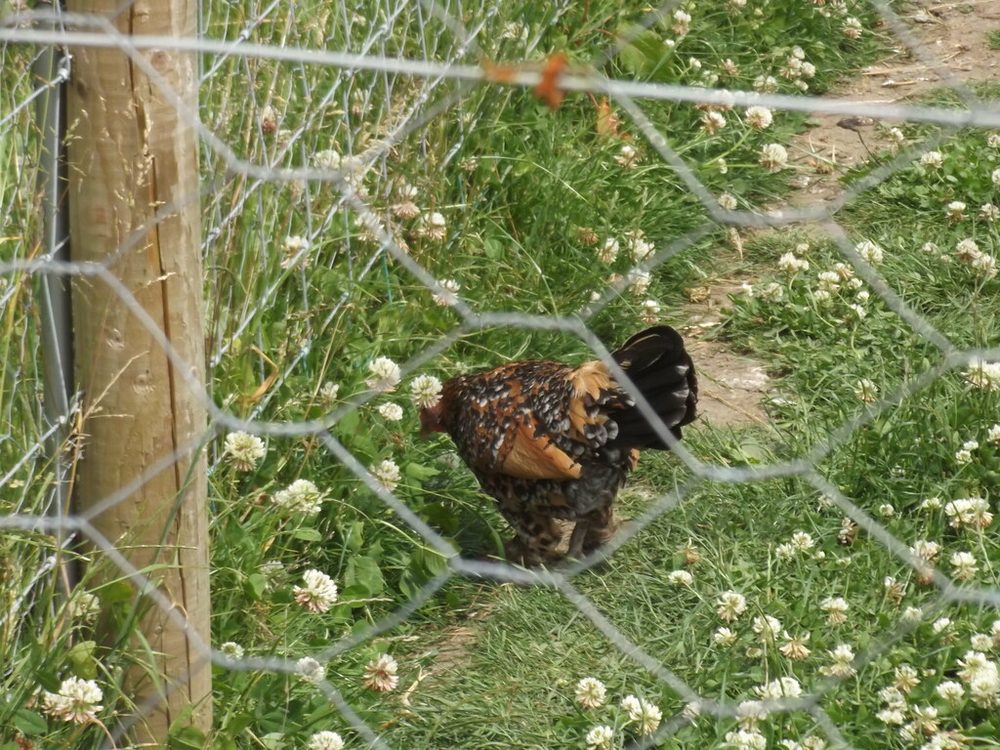
Run the flock along the back of the flower borders, in the dead strip between bed and fence, and the hens become the garden's pest patrol — slugs, snails and fallen fruit vanish, while the wire keeps beaks off the plants. It is the smallest useful run shape there is, and in a tiny garden it may be the only one that fits without taking the lawn.
Keep the strip at least 4 feet wide so hens can pass each other without squabbling, and put a small shelter or the coop at one end. Garden wire and light mesh are day barriers; this run assumes a secure coop at night, and the strip's planting side should expect a nibbled edge — hens harvest anything that leans through the wire, which most gardeners count as pruning.
8. The True Triangle Run
When the corner is tight, fence the hypotenuse: a triangular run with the two fences as its sides and one long mesh wall across the diagonal. You lose the far point of the corner — which was dead space anyway — and gain a run with a surprisingly usable area, because hens live in the wide two-thirds and use the point as a shelter nook.
Count the area honestly: a triangle with 12-foot legs holds 72 square feet, not the 144 of the full square, so size the flock to the triangle you have. The diagonal wall is long and wants a mid post and a top rail to stay true. Put the coop or shelter across the wide end, the gate in the diagonal wall, and a dust bath in the point, where it stays driest. It is the most space-efficient shape in this list, square foot for square foot of garden sacrificed.
9. Corner Run with a Diagonal Gate
Most corner runs put the gate at one end of the front wall. Moving the gate into the corner itself — a diagonal gate across the inside corner, or a wide gate in the diagonal wall — changes how the whole run works: you enter into the middle of the space, hens part around you instead of mobbing a single doorway, and a barrow comes in without a three-point turn.
A diagonal gate needs care to stay square: hang it from a real post, not from the mesh wall, and brace the frame corner-to-corner. The payoff is daily — feeding, cleaning and catching are all shorter jobs from the centre. If your corner also serves as the route to a compost heap or a back gate, this layout keeps the human path and the chicken space from fighting over the same yard of ground.
10. The Shady Tree Corner
The corner under the big tree — too shady for grass to thrive, too rooty to dig — is premium chicken real estate. Hens get deep shade in summer, a canopy that breaks rain and hawk sightlines, and leaf litter that arrives free every autumn and keeps a flock busy for weeks. What the tree takes from the gardener, it gives to the hens.
Build around the tree, not into it: keep fixings on your own posts, leave the trunk room to grow, and expect the mesh roof question to answer itself — a tree canopy is not a barrier, so if hawks hunt your area, the run still needs its mesh ceiling under the branches. Roots make apron-digging miserable; lay the ground apron flat and pin it instead of burying it. In return, this corner needs the least summer help of any run here.
11. The Corner Shelter Nook (Dust Bath and Shade)
Not every corner idea is a whole run. The corner of an existing run is usually its most neglected ground — and its most valuable, because a corner is where shelter works best. Roof a triangle of it, board the windward side, and floor it with dry soil and ash, and you have built the flock's favourite address: a permanent dry dust bath with a windbreak, in the spot that was previously just mud and a fence post.
This is the highest-value small project in this article, and it improves every run it touches, corner-shaped or not. Keep the bath contents dry and topped up, and hang a perch across the corner above it — the nook becomes a two-storey shelter. If your run has one good corner and one bad one, you have just learned which is which, and why: corners are microclimates, and hens read them better than we do.
12. Two-Fence Corner with a Chunnel Exit
Give the corner run a tunnel — a low mesh chunnel running from its gate along the fence line or around the vegetable beds — and the flock's world doubles without another fence being built. The corner stays home base with the coop; the tunnel is the commute to the pest-patrol grounds, closable at night with a simple flap or door.
Build tunnel sections in 6–8 foot lengths of bent welded wire so you can lift them for access and re-route them as beds rotate. The corner end of the tunnel is the security point: frame it into the run wall properly, with a door you can shut, because an open tunnel at dusk is a corridor for everything that hunts. The main ideas list covers chunnel construction in more depth — as an add-on to a corner run, it is the most fun per dollar on this page.
How to choose a corner run
Start by grading your fences, because in a corner build the fences are the run. Sound, tall, tight fences argue for the simple panel-across layouts (#1, #8, #9). A weak or shared fence argues for building the run as its own structure a few inches inside the line, so its security never depends on timber you do not own. Stone walls, where they exist, are a gift — take ideas #3 or #4 and spend the savings on the roof.
Then read the corner's microclimate. Wet corners want gravel (#6) or a raised floor; shady corners want the tree layout (#10) or a ranging pen (#2) rather than a permanent mud-prone run; windy corners want solid sides and the shelter nook (#11) built in from the start. And wherever the corner, walk the drainage after rain before you build — corners collect water exactly as reliably as they collect leaves, and it is far easier to route a run around a puddle on paper than to drain one under a finished fence. For comparison with full-yard builds, the coop-attached layouts include an L-shaped wrap-around that borrows the same corner logic.
Corner chicken run FAQs
Can I use my existing fences as run walls?
Yes, if they pass three tests: no gaps a hen can squeeze or a predator can reach through at ground level, enough height (or a mesh top) to stop climbers and fly-overs, and sound enough to stay that way for years. Most garden fences fail the first test, and the fix is standard — line the fence side with hardware cloth and add a ground apron. If the fence is your neighbour's, build your own mesh wall just inside it instead of fixing anything to their property.
Are corner runs big enough for a flock?
They are exactly as big as their square footage — corners are not smaller by nature, they are just shaped differently. A 10′ × 12′ corner is 120 square feet, enough for up to 12 hens at the standard 10 square feet each; a triangle holds half of its bounding square, so count it honestly. The shape costs you the far point; the flock size should be set by the area you actually fence.
How do I stop a corner run getting muddy?
Corners collect runoff, so plan for it: watch where water goes in the first heavy rain, cut a shallow channel to lead it around the run, and floor the worst zones with gravel or deep woodchip. A roof or partial roof over the corner helps more than any floor. If the corner is a genuine sump that floods, believe it, and choose a different corner — no run design wins against standing water.
Do corner runs have predator problems?
Corners concentrate predator attention because two walls meet and cover is usually nearby — but the same geometry helps you: there are only two open sides to build well, instead of four. The inside corner post and the fence bases are the test points. Build them to the standard in our predator-proofing guide — hardware cloth, apron, two-step latches — and a corner run is as secure as any shape.
What about neighbours and rules for fence-line runs?
Many local ordinances set coop setbacks from property lines, and a fence-line run sits exactly on that line — so check your local rules before building, not after a complaint. Talk to the neighbour on the other side of the fence early, too: a corner run touches their boundary, and a conversation (and the offer of eggs) prevents most disputes. None of this is a reason to avoid the corner; it is a reason to do the paperwork first.
How much does a corner chicken run cost?
Typically less than a freestanding run of the same area, because two sides already exist — the ideas here run from about $90 for a simple garden-wire strip to $360 for a roofed stone corner, at 2026 estimate prices. The saving is real but easy to overstate: if the fences need lining with hardware cloth (they usually do), that mesh is a significant line item, and it is not one to skip.
Ready to build one properly?
Our free starter plan — the Backyard Run, 8′ × 16′ — gives you the full materials list, tool list and step-by-step build outline for a run that holds up to 12 hens, and its framed panels adapt neatly to a corner layout.
Keep planning
15 Wooden Chicken Run Ideas
Timber builds, including the lean-to that loves a fence line.
Run Ideas with the Coop Attached
Including the L-shaped wrap-around for corner plots.
Chicken Run on a Budget
Corners are the budget layout — here is how to split the money.
Pin it for later