15 Small Chicken Run Ideas for Small Backyards
You do not need a big yard to keep hens happily — you need an honest footprint, dry ground and a layout that uses every corner. These 15 small chicken run ideas are sized for real suburban lots: under-coop runs, strip runs, corner builds and pretty little runs that will not start a feud with the neighbours. Every idea has a spec card with footprint, hens, a 2026 cost estimate and difficulty.
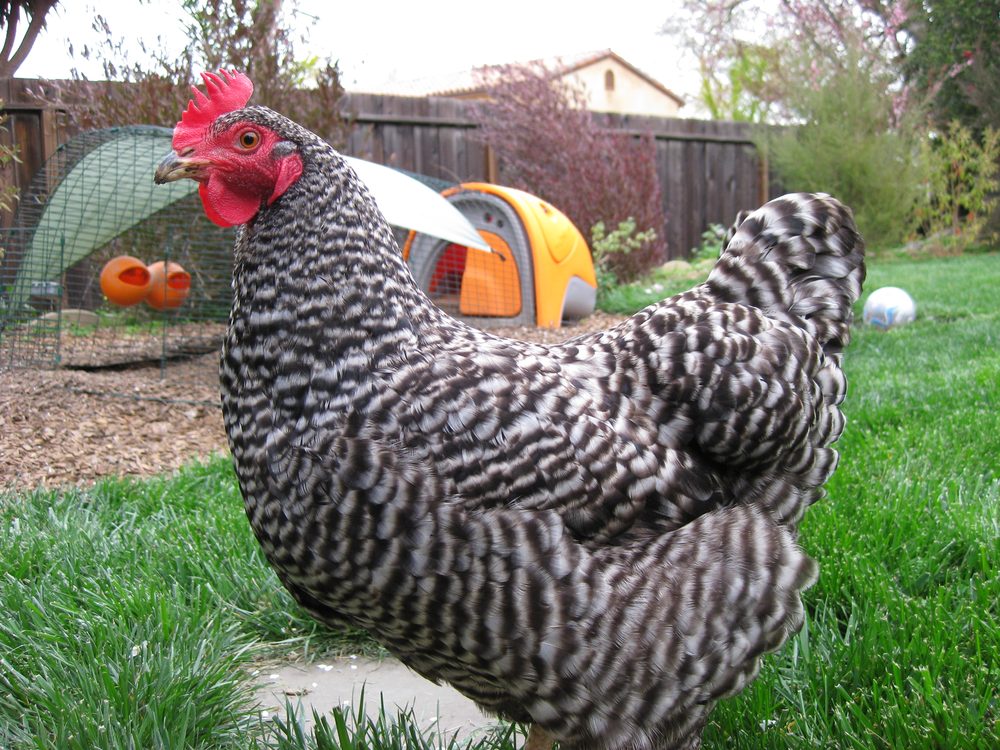
One honest warning first: small runs only work if the stocking rate stays honest. The floor is 10 square feet per hen for birds that also get out sometimes, and more like 15 if the run is their whole world. Every hen count below follows that maths — if an idea says three hens, a fourth is not a rounding error, it is the start of feather-pecking. Small also means predator-proofing matters more, not less: read the predator-proofing guide before building.
The 15 small run ideas
1. Run Beneath a Raised Coop
If your coop stands on legs, the shaded space underneath is run area you already own. Enclose it with hardware cloth, add a small access door, and hens will spend half their day there — it is dry in rain, cool at noon and feels safe from hawks. Raise the coop at least 18 inches so a hen can stand and flap underneath, and make one mesh panel removable on hinges: you will need to reach the far corner for the eggs that inevitably get laid there. This is the cheapest square footage in chicken keeping, and paired with even a modest outside pen it makes a complete home for a pair or trio.
2. A-Frame Ark on the Lawn
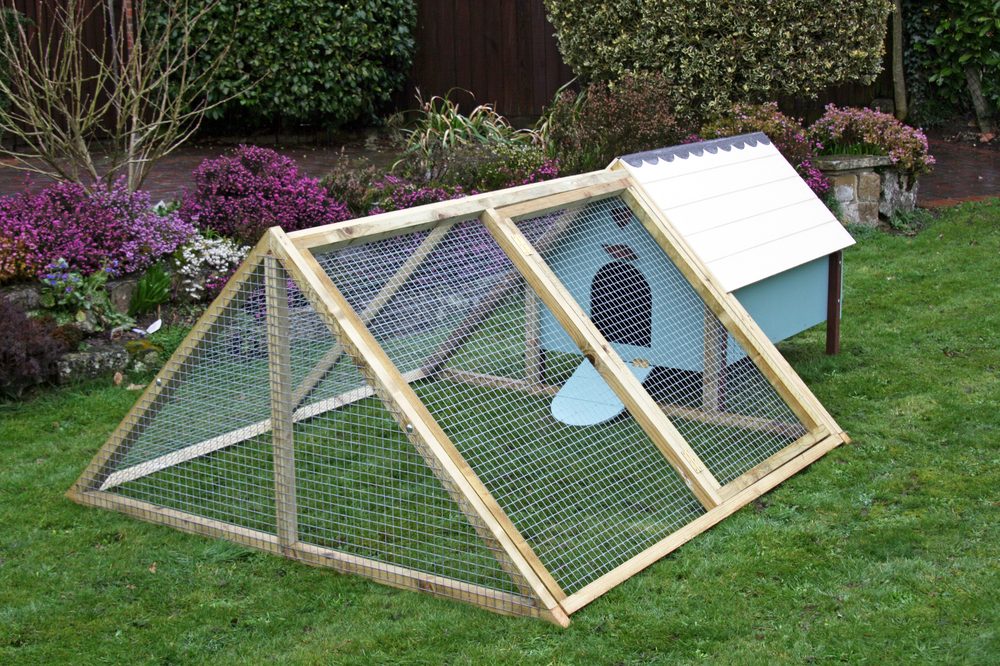
The classic ark — a triangular prism with a coop box at one end — is the small run that looks like it belongs in a garden magazine. The steep mesh slopes shed rain, the whole thing drags to fresh grass, and the footprint suits a trio. Build it lighter than feels right: arks fail socially, not structurally, when they get too heavy to move and the grass underneath dies. Wheels or rounded skid rails at one end make the daily shift a one-person job. In predator country, park it at night against the house or add a mesh floor skirt — an ark is a run, not a fortress, unless you line it properly.
3. Corner Triangle Micro-Run
Two fence lines plus one diagonal wall of mesh turn a useless corner into a run, and the diagonal ends up the longest wall — perfect for a perch and a hanging feeder. Corners collect leaves and stay damp, so lay a deep bed of coarse wood chip and treat drainage as the first job, not an afterthought. A triangle is awkward to roof; the usual answer is mesh over the top with a small solid shelter box in the corner itself, which the hens will adopt as their weather headquarters. Check the existing fences at ground level before trusting them — a corner run is only as secure as the worst gap in either fence.
4. Side-of-House Strip Run
The strip between house and fence is dead space for everything except bins — and hens. At 3½ feet wide, hens can pass each other comfortably and you can walk it with a bucket if you keep the height at 4 feet and duck, or frame it to full height if the strip allows. Use the house wall as one side and fit a sacrificial base board along it, because hens scratch and peck at ground level and siding loses. Roof at least the half near the coop with a sloped panel so the house wall's drip line does not turn the strip into a gutter.
5. Mini Walk-In With a Real Door
Shrink the walk-in idea instead of abandoning it: 5 feet wide, 8 long, 6 feet tall at the door with a simple sloped roof. You give up the second door and the storage, but you keep the one thing that changes daily life — standing upright while you clean. At this size, frame the walls as two flat panels on a hard surface and stand them up; small frames rack easily when built in place on soft ground. If your flock might grow, build it against the coop with a pop door positioned so a future extension bolts straight on — see the extension ideas for how that plays out.
6. Bantam Run With Curved Iron Shelters
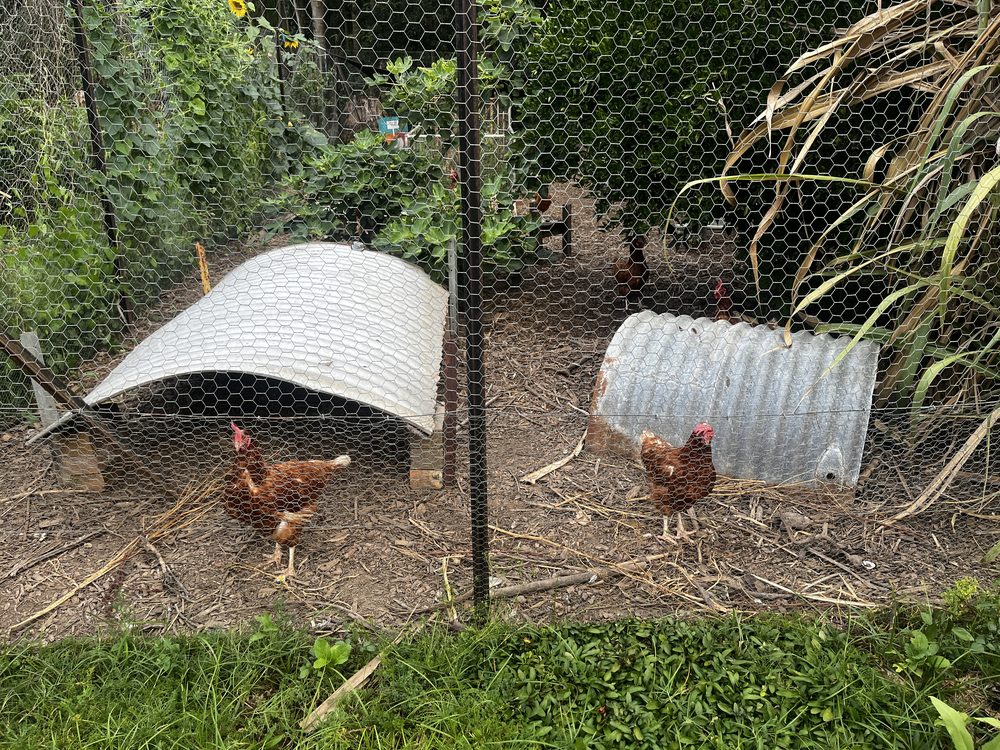
Bantams need roughly two-thirds the space of standard hens, and they love low shelter: curved sheets of corrugated iron or fibreglass, anchored at ground level, make instant weather refuges that small birds duck under all day. Inside a simple mesh pen, two or three of these shelters plus a low coop make a bantam village that looks charming and works hard. Anchor the sheets properly — a loose sheet in wind is a genuine hazard — and bend or cap every cut edge. This layout doubles beautifully as a nursery pen for a broody hen raising chicks, who wants exactly this: small, sheltered and separate.
7. Patio Pen for Two Hens
Many town ordinances allow two or three hens, and a neat patio pen — framed panels with a small coop, set on slabs — keeps the setup clean, movable and neighbour-friendly. Be straight with yourself about the maths: 18 square feet is a bedroom, not a world, so this only works with daily supervised out time on the lawn or a connected chunnel to a garden bed. On slabs, the floor never gets muddy but needs a deep tray of sand or chip for scratching and dust-bathing. A pen this tidy is also the easiest to dismantle if you move — panels unscrew and stack.
8. Compact Coop-and-Run Combo in the Garden
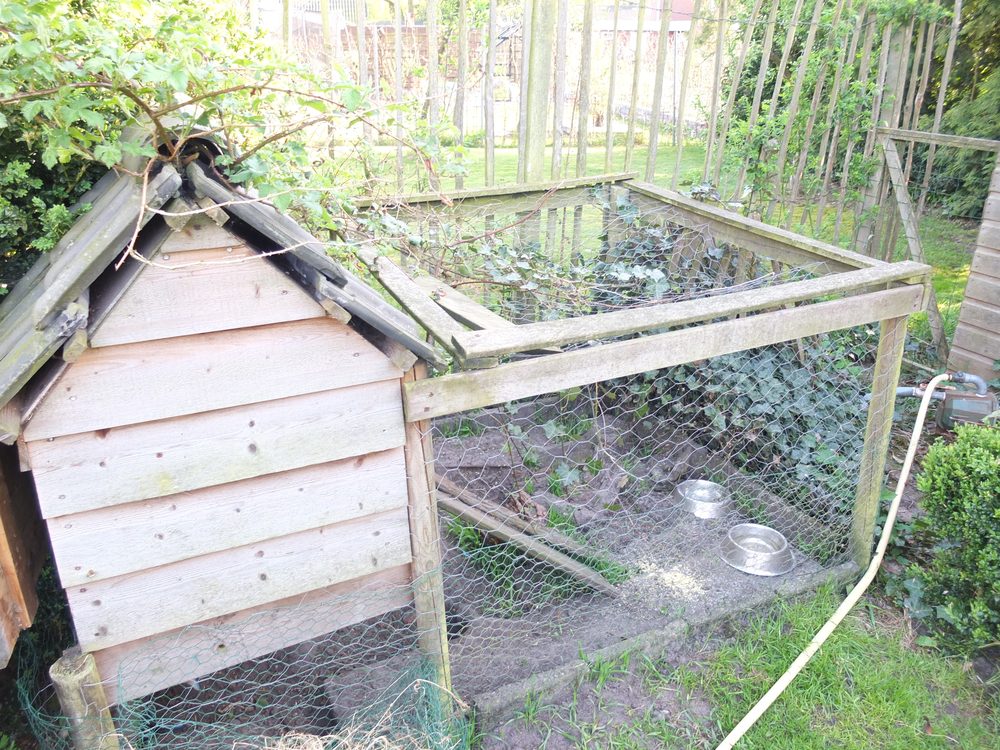
The integrated combo — raised coop at one end, run flowing out beneath and beyond it — is what most small-garden keepers actually end up with, bought as a kit or built from scratch. Built, it beats bought: kit runs are famously optimistic about hen numbers and flimsy about mesh. Keep the run section at least twice the coop's footprint, insist on hardware cloth rather than the thin wire most kits ship with, and raise the whole unit on a slab or gravel pad so the timber never sits in wet soil. Three hens is the honest capacity for the classic size, whatever the box claims.
9. Pallet Micro-Run
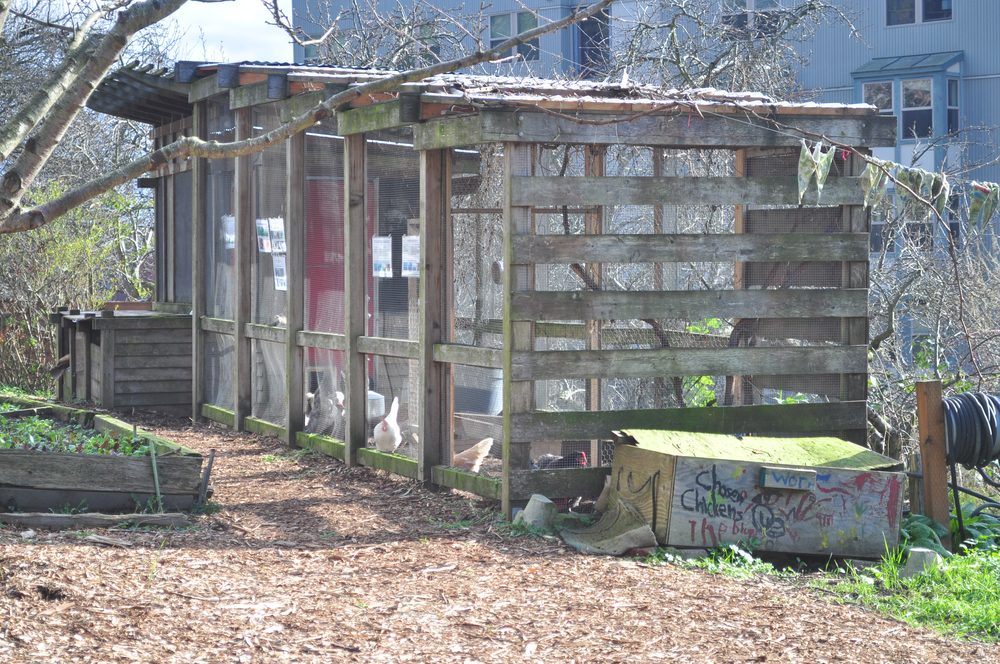
Three pallets stood on edge make three walls of a small run; mesh and a gate make the fourth side and roof. It is the cheapest framed small run you can build, and at this size the usual pallet problems — weight, wonky levels — barely matter. Line the inside with welded wire or hardware cloth, because pallet gaps pass raccoon paws easily, and choose heat-treated (HT) stamped pallets only. Our pallet run ideas cover the stamp check and nine more pallet builds if the free-lumber route appeals. A pallet micro-run is also a fine temporary pen while a bigger setup is built.
10. The Pretty Run: Cottage Style That Passes the Neighbour Test
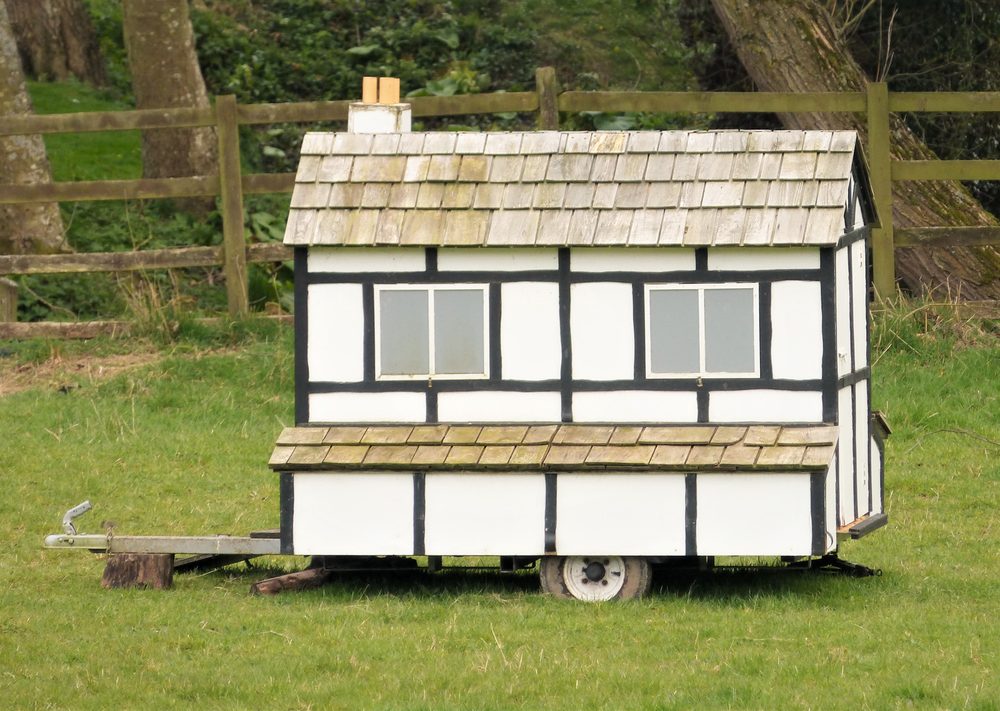
Sometimes the constraint is not space, it is appearances. A cottage-style run — painted timber frame, neat pitched roof on the coop end, mesh panels kept taut and square — reads as a garden feature rather than a farmyard, and that can be the difference between keeping hens and a complaint. The premium is real: paint, trim and tidy roofing add cost without adding a single square foot. Spend it only where it shows (the street-facing side), keep the structure identical to a standard framed run behind the prettiness, and check your local rules first anyway — a beautiful run is still a run in the eyes of an ordinance.
11. Run Under a Deck
The space under a raised deck is roofed, shaded and usually wasted — mesh it in and it becomes the driest small run on this list. Hens love it: overhead cover is exactly what a prey animal wants. Two cautions. Clearance decides everything; under about 3 feet you cannot clean it and neither can they use it well. And drainage runs downhill toward houses more often than away — if the under-deck area puddles in rain, it will puddle worse with hens scratching it, so grade a gravel bed first. Fit the mesh to the deck frame with a proper door, not a flap: you will be under there weekly.
12. Two-Hen City Tractor
A miniature chicken tractor — half mesh run, half shelter box, on two wheels — gives a pair of hens fresh grass every day, which is how a small footprint stays honest: the run is small but the pasture is the whole lawn over a fortnight. Keep it genuinely light, under what one person can lift by the handles without thinking, or moving day quietly stops happening. Our chicken tractor ideas scale this up through thirteen designs. At night in predator country, park the tractor on slabs or fit a mesh floor — a determined fox digs under a tractor faster than under a fixed run.
13. Two-Level Run With a Ramp
A sturdy platform at 2 feet, reached by a cleated ramp, adds a second storey hens genuinely use — for perching, for escaping a bully, for the best dust-bath spot in a tray up top. Platforms do not count toward the 10-square-feet rule in any honest audit, but as enrichment on top of a legal footprint they transform a small run. Build the platform from decking boards with gaps small enough that feet cannot trap, support it like a floor (because hens plus a full waterer is real weight), and put a low rail on the open edge so a startled hen does not launch off it into the mesh.
14. Cold-Frame Winter Sun Run
A garden cold frame — low timber sides, glazed or polycarbonate top — connected to the main run by a pop door becomes a winter sun lounge: out of the wind, warmed by weak sun, and the first dry dust-bathing spot after rain. Prop the lid open a crack even in winter; a sealed glass box overheats on a bright February day faster than you would believe. This is an annex, not a home — it earns its place as the extra room that makes a small main run feel bigger through the worst months. Old windows make the cheapest lids; temper the glass edges with timber battens.
15. Expandable Modular Panel Pen
Chicken maths is real: three hens become six. A pen built from identical framed mesh panels — each 4 feet wide, bolted together — grows one panel at a time without a rebuild, and shrinks back for winter or a house move. Standardise everything: same panel size, same fixings, same door module, and keep two spare panels in the shed for the quarantine pen you will eventually need. The per-panel cost is higher than a one-off frame, which is the honest price of flexibility. When the flock outgrows panels entirely, the same modules become the divider and gates inside a bigger run — nothing is wasted.
How to choose a small run
Match the run to your binding constraint. If it is raw space, the under-coop run (idea 1), strip run (idea 4) and under-deck run (idea 11) harvest square feet you already own. If it is appearances, idea 10 buys peace with the neighbours. If it is budget, pallets (idea 9) win again. If the flock will grow — it usually does — start modular (idea 15) or pair a small run with a plan from our run extension ideas. And if your yard is not just small but awkward, the full-size builds in 15 cheap chicken run ideas mostly shrink gracefully: the A-frame and the chunnel in particular.
Making a small run work harder
Bed it deep. In a small run, the floor is the whole game. A 4–6 inch bed of coarse wood chip over soil absorbs droppings, keeps feet dry and gives hens something to work at all day. Rake it weekly, top it up monthly, and replace it wholesale once or twice a year — the spent bedding is garden gold. Deep, dry litter is also your odour control: a small run that smells is almost always a wet run, not a crowded one.
Rotate the furniture. Small spaces bore hens, and bored hens peck each other. Move the perch, swap the dust-bath tray's position, hang a cabbage at a new height, add a log or a stump. Five minutes of rearranging every week or two resets the territory and breaks up the bullying patterns that form around fixed resources. Two feeding stations, even in a tiny run, stop one hen guarding the only feeder.
Clean little and often. A small run rewards a two-minute daily pass — droppings board scraped, water refreshed, anything wet forked over — far more than a monthly deep clean. It also keeps you in the habit of actually looking at your hens, which is how problems get caught while they are still small problems. In a small yard your neighbours are part of the system too: a run that is visibly tended, dry and quiet is a run nobody complains about.
Small chicken run FAQs
How many hens can I keep in a small backyard?
For most small yards, two to four hens is the sweet spot: enough for eggs and company, few enough for a run that fits honestly. Check your local ordinance first — many set their own hen limit and coop setbacks, and the legal answer beats any guide.
Is 32 square feet enough for 3 hens?
It meets the 10-square-foot minimum if the hens also get some out time, but it is a floor, not a target. If the run is their whole world, aim for 45–50 square feet for three, or add enrichment — platforms, perches, a dust bath — to make the space work harder.
How do I stop a small run getting muddy and smelly?
Roof what you can, bed the rest with coarse wood chip, and keep the stocking rate honest. Smell in a small run is almost always too many birds or a wet floor; fix those two and a small run stays fresher than a big neglected one. More roof options are in our covered run ideas.
Can bantams and standard hens share a small run?
They can, but size the run for the standard hens' needs and add low shelters and escape perches at bantam height. In a genuinely small run, a bantam-only flock is the easier life — they need less room and handle confinement more calmly.
What is the smallest run you would actually recommend?
A 4′ × 8′ footprint for two or three hens, with daily out time or a chunnel to the garden. Anything smaller becomes a cage with good marketing, and the hens' behaviour will tell you so within a month.
How do I keep the neighbours happy with a backyard flock?
Keep the run dry and tended (smell is the main complaint, and it is a management issue, not a hen issue), skip the rooster where rules are tight, site the run away from the boundary if you can, and share eggs. A tidy small run with a tended flock wins over almost every neighbour it is possible to win.
Ready to build one properly?
Our free starter plan — the Backyard Run, 8′ × 16′ — gives you the full materials list, tool list and step-by-step build outline. On a small lot, build just the first 8′ × 8′ half now; the plan's panel layout extends cleanly later.
Pin it for later