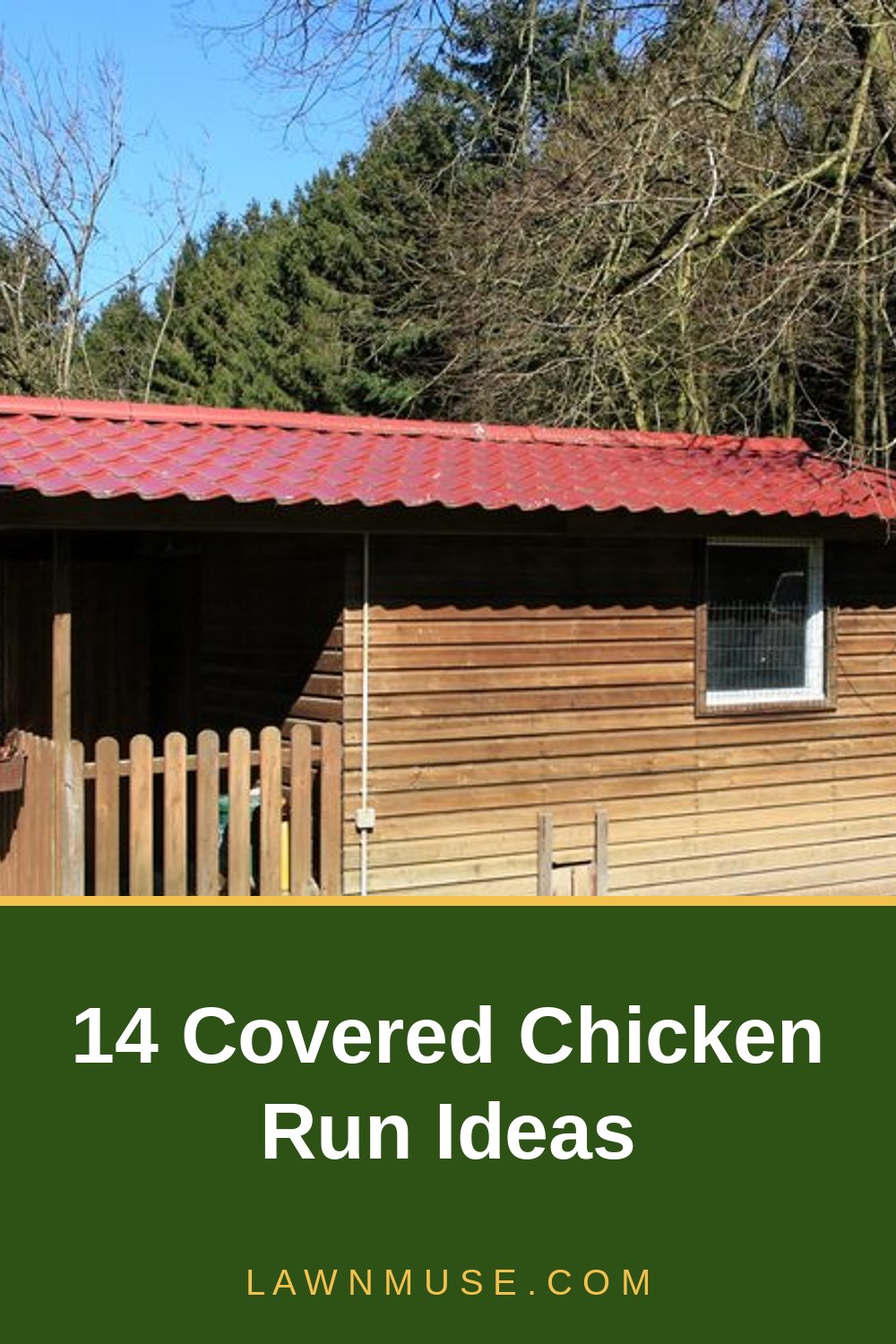
14 Covered Chicken Run Ideas for Shade, Rain and Snow
A roof is the single upgrade that changes a chicken run from fair-weather pen to all-season workspace. Covered runs stay dry, dry runs stay clean, and clean runs mean healthier hens, less smell and eggs that are not caked in mud. These 14 covered chicken run ideas cover every budget — from a $40 tarp to a shingled roof that matches your house — each with a spec card, an honest 2026 cost estimate and the trade-offs nobody mentions.
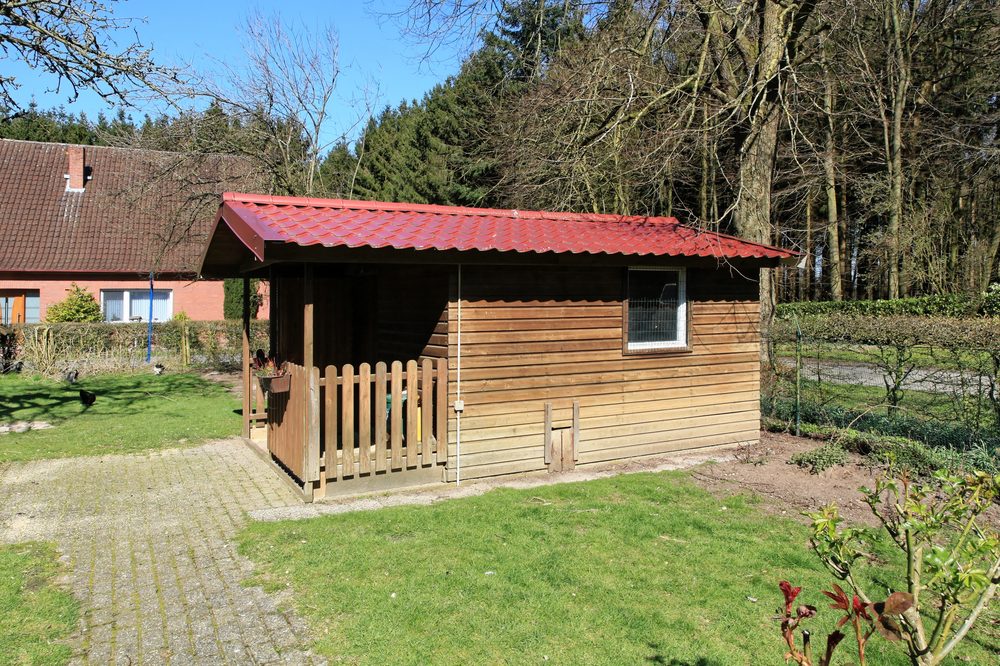
Before the ideas, the principle: you rarely need to roof the whole run. Hens need a dry feeding area, a dry dust bath and shelter from driving rain and midday sun — the rest can stay open sky. Many of the best designs below roof half the run and mesh the rest. Whatever you choose, keep ventilation in mind: a roof traps warm, damp air, so leave the gap between wall top and roof edge open mesh. And any roof needs to meet the predator-proofing standard — a raccoon that cannot climb the walls will happily try the roofline.
The 14 covered run ideas
1. Full Corrugated Metal Roof
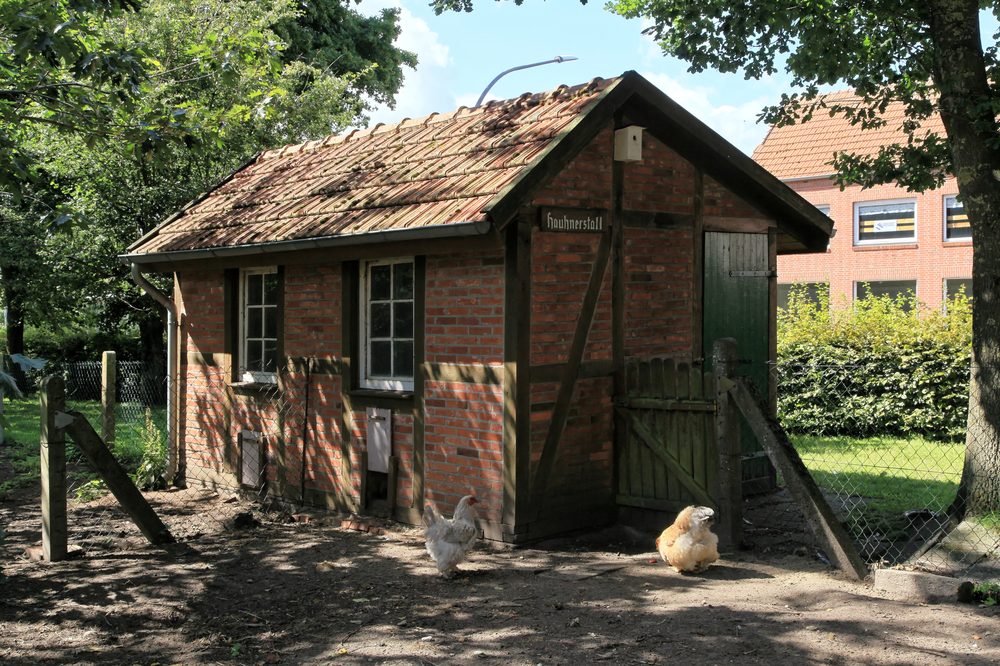
The workhorse roof: corrugated galvanised sheets on purlins over a framed run. It sheds rain, carries snow load that would crush lighter covers, and lasts decades. Fit it with a real slope — at least 2 inches of fall per foot of span if snow is possible — and foam closure strips along the eaves so sparrows and wasps do not move into the corrugations. Metal roofs are loud in hail and heavy rain; hens adapt within a day, but if the run sits under a bedroom window, that drumming is worth thinking about. Condensation drips on still, cold mornings are cured by the open mesh gap at the eaves, not by sealing everything tight.
2. Clear Polycarbonate Roof
Clear corrugated polycarbonate keeps the run dry without turning it into a cave — the hens keep their daylight and the floor still dries after rain. It is the best-looking roof and the quietest in a storm. The known trap is summer: a clear roof over a still, sun-facing run becomes a greenhouse by midday. Site it for afternoon shade, mix clear sheets on the shaded slope with solid sheets on the sunny one, or plan a shade cloth over the top for July and August. Buy UV-stabilised sheets and the proper fixing washers; bargain panels yellow and crack at the screw holes within a few winters.
3. Shingled Roof to Match the House
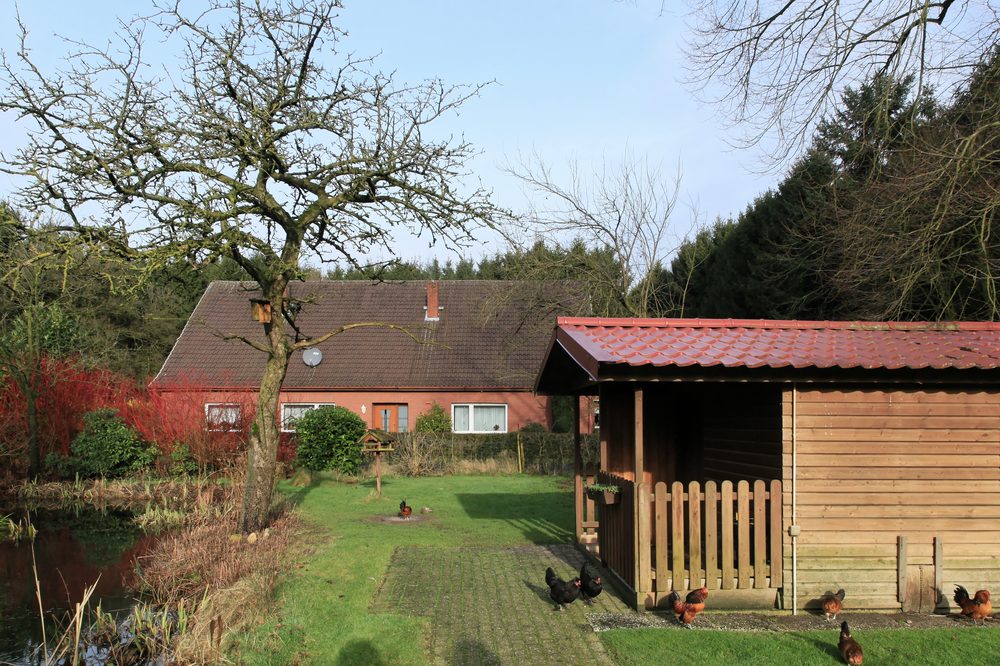
A shingled gable roof over the run, matched to the house or the coop, turns the whole setup into a garden building. It is the heaviest option per square foot — shingles need a decked roof, not just purlins — so the frame underneath must be built like a small shed, with rafters rather than battens. That weight buys quiet, insulation against summer heat, and a roof that will outlast the flock several times over. Leftover shingles from a house re-roof make this surprisingly affordable; a single bundle covers a lot of chicken run. Keep the pitch at 4-in-12 or steeper, as shingles shed water by overlap, not magic.
4. Half-and-Half: Roofed End, Open End
Roof the half of the run nearest the coop — where the feeder, waterer and dust bath live — and leave the far half open mesh. The hens get a dry headquarters and a sunny yard, you get most of the benefit of a full roof for half the materials, and summer ventilation takes care of itself. Put the pop door in the covered half so the hens' first steps out are onto dry ground. This is the layout we recommend most often, and it is how the free 8′ × 16′ starter plan is drawn: roof panels are listed as the staged second step, added when budget allows.
5. Tarp Roof on a Budget
A heavy-duty tarp over a mesh roof is the honest budget answer: it keeps the worst rain off for one to three seasons while you save for panels. The difference between a tarp that works and a flapping disaster is tension and slope — pull it drum-tight over a frame with a real pitch, fix it with bungees or battens rather than rope through eyelets alone, and never let it form a flat pond. A sagging tarp full of water weighs more than the frame under it expects. Expect to replace it; UV eats tarps. Silver or white tarps reflect summer heat noticeably better than the classic blue.
6. Shade Sail Over a Mesh Roof
In hot climates the enemy is not rain, it is radiant heat — and a knitted shade sail cuts it while letting air and some rain pass through. Hens under shade cloth keep laying through heat waves that stop hens in full sun, because a hen that is panting is a hen that is not eating. Fit the sail with proper tension and stainless hardware at the corners; a sail that sags collects water and tears its own fixings out. Take it down before snow — shade cloth is not a snow structure. Combined with a small solid roof over the feeder, this is the complete hot-climate answer for very little money.
7. Living Green Roof
A shallow tray of sedum and tough grasses over a waterproof deck insulates the run in summer, muffles rain noise, and makes the whole structure vanish into the garden from any upstairs window. It is also, honestly, the most engineering on this list: saturated soil is heavy, so the frame needs posts and rafters sized like a shed roof, plus a root-proof membrane and a drainage layer. Keep the pitch low (green roofs like gentle slopes), plant drought-tolerant sedum rather than lawn, and accept that the first year looks sparse. Do not let hens onto the roof itself unless you enjoy replanting — this roof is looked at, not grazed.
8. Roofed Pasture Shelter and Feeding Station
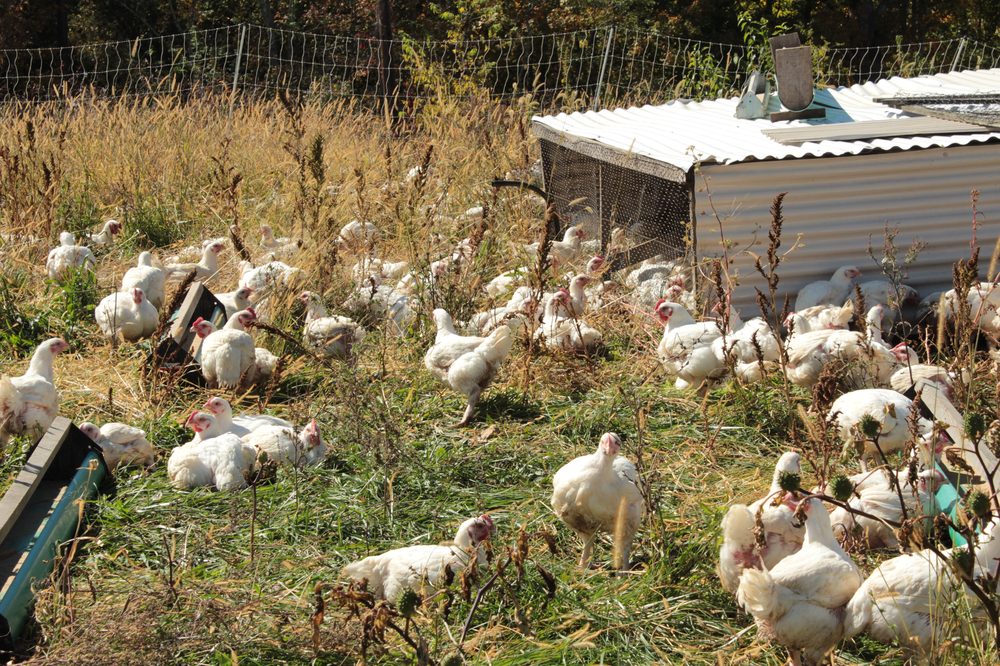
If your hens range a paddock or large yard, the covered "run" they actually need is a field shelter: a simple roof on four posts where the feeder hangs dry, the dust bath stays powdery, and the flock waits out a downpour instead of crowding the coop. Site it on the highest, driest ground in the range and face the open side away from the prevailing rain. A shelter like this also anchors the flock's day — hens organise their ranging around a known safe, dry base, which makes them easier to call home. Skids under the posts let you drag it to a fresh patch each season.
9. Snow-Belt Run: Steep Roof, Covered Sides
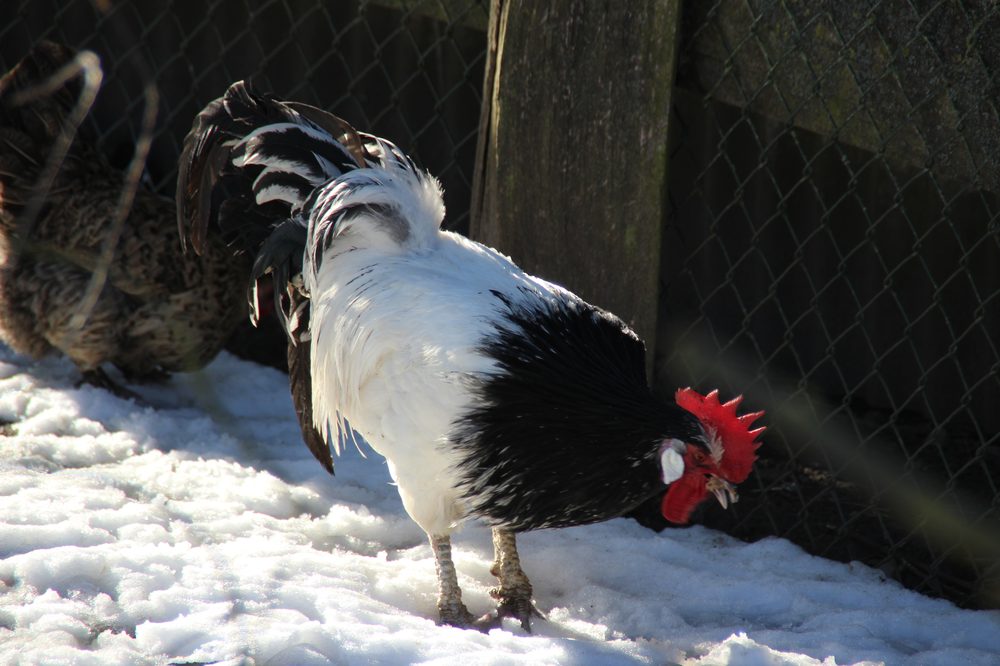
Where winter is the main season, cover means more than a roof: a steep pitch (6-in-12 or more) that sheds snow before it loads the frame, plus clear or solid panels down the windward walls to stop snow blowing in sideways and burying the litter. Hens tolerate cold far better than damp and draughts at roost level, so the goal is dry and still air, not warmth. Leave the lee wall mesh for ventilation — a sealed run in winter grows ammonia and frostbitten combs from humid air. Plan the door swing around snowdrift reality: an outward-opening door on the sheltered side saves a lot of digging.
10. Lean-To Roof Off the Coop
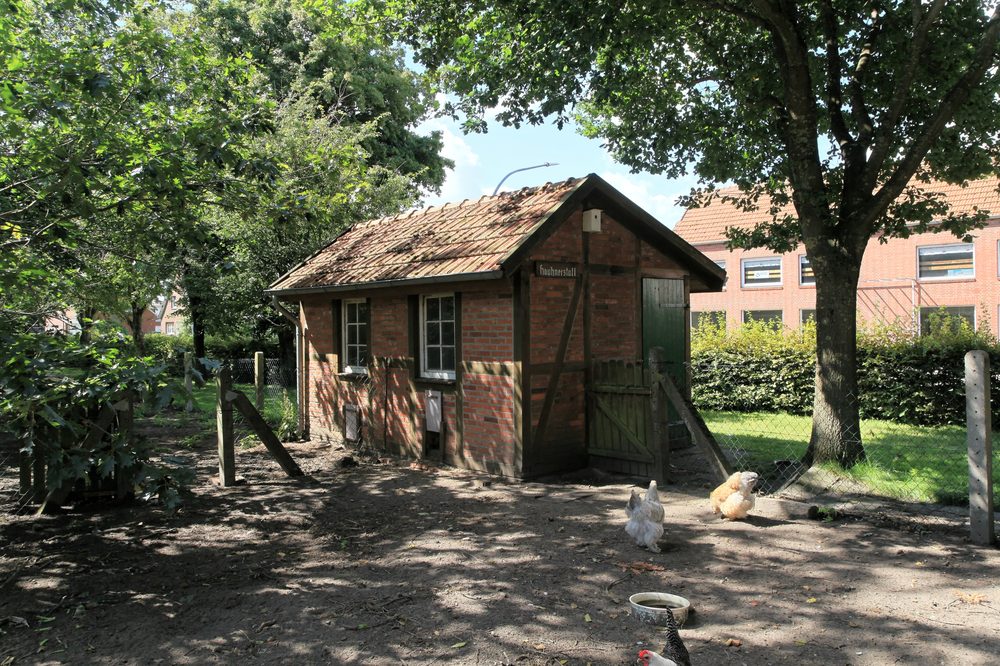
The simplest real roof in chicken keeping: extend the coop's own roofline out over the first stretch of run on two posts and a ledger board. The hens step out of the pop door onto dry ground, feed stays dry, and you get a dry spot to stand in while you open up on a wet morning. Because it hangs off the coop, the structure is minimal — but the ledger fixing must be honest, screwed into framing, not siding. Slope it away from the coop wall and flash the joint; the one place a lean-to fails is a slow leak rotting the coop wall it leans on.
11. Mobile Coop With a Roofed Run-Under
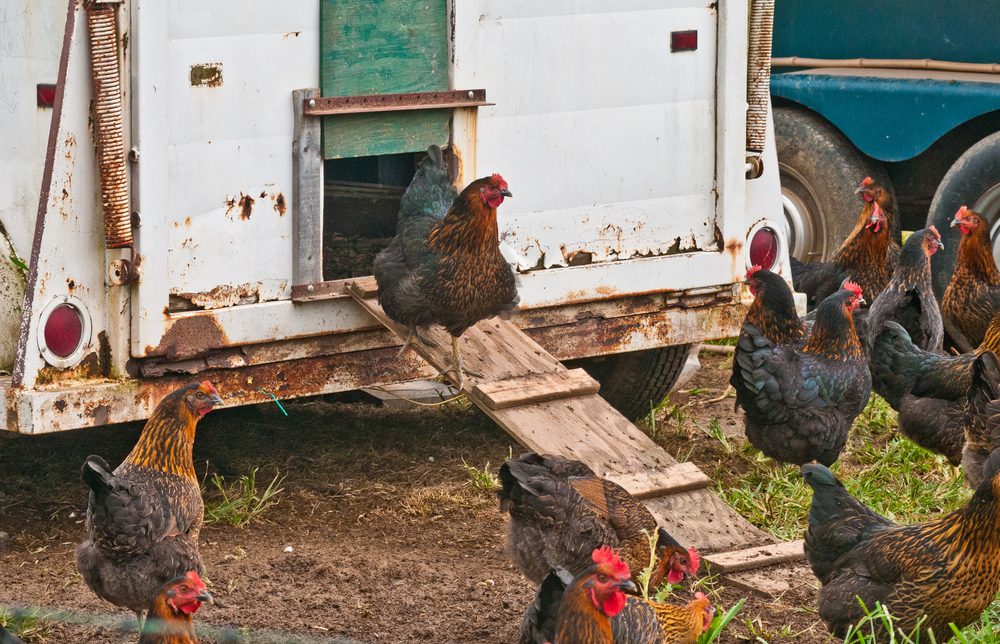
A raised mobile coop gives you a covered run for free: the shaded, rain-shadowed space underneath is where pasture hens spend the middle of the day. Mesh the under-space in and it becomes a secure day pen that moves with the coop — hens come down the ramp in the morning straight into shelter. This is the covered run for people whose "run" is a field: no separate structure, nothing to build twice. Our chicken tractor ideas develop the mobile theme fully. Watch ground clearance — under 18 inches the space is a shelter only, not a run a hen can use properly.
12. Removable Roof Panels
Frame the roof in lift-off panel sections — mesh panels for summer, solid panels that bolt over them for winter — and the run changes clothes with the seasons. It costs a little more framing than a fixed roof and buys the best of both: full airflow in July, a dry run in January. Store the off-season panels flat under the coop or on the garage wall. Number the panels as you build; a roof of near-identical sections that only fit one way each is a puzzle you will curse twice a year. Wing nuts and T-bolts, not screws, for anything removed seasonally.
13. Covered Dust-Bath and Feeding Annex
You do not have to roof the run you have — roof the bit that matters. A small annex, framed off one side of an open run with its own little roof, housing the dust bath and the feeder, delivers most of the covered-run benefit for the price of a weekend. Dry dust is a health tool, not a luxury: hens that can dust-bathe in all weathers manage mites and lice far better. Connect the annex with a pop door you can close, and it doubles as an isolation space for a hen that needs a quiet day. This is the natural first step before committing to a full roof — and a natural companion to the extension ideas.
14. Roof Plus Tree Canopy Combo
Site the run so a deciduous tree shades the roof in summer and drops its leaves to let winter sun through, and a modest roof works twice as hard. The tree handles the heat load; the roof only has to handle rain. Two warnings from experience: falling branches are a real load case, so keep deadwood pruned above the run, and tree roots plus hen-scratching make a lumpy floor — deep wood chip levels it and the hens will happily redistribute it forever. Raking falling leaves out of the run each autumn is the standing chore this design signs you up for; the shade is worth it.
How to choose your cover
Start from your worst weather, not your average. If that is rain, roof at least the feeding half (ideas 1, 4 or 10). If it is heat, shade and airflow beat solid roofing — ideas 6 and 14, plus a roofed annex (13). If it is snow, pitch and structure decide everything (ideas 1 and 9). Budget honestly: a tarp (idea 5) is a fine one-winter answer while you save for panels. And whatever cover you pick, size the run underneath it with the sizing guide first — a roof over a crowded run is still a crowded run. For the uncovered end of the spectrum, compare the open designs in 15 cheap chicken run ideas.
Roofing details that decide whether a cover works
Overlap with the weather, not against it. Sheets and panels must lap so water running down the slope passes over each join, never into it — the uphill sheet goes under the downhill sheet's path, like roof tiles. On a run roof this sounds obvious and is still the most common DIY leak, because the low pitch makes every join a potential capillary path. A bead of roofing sealant at each lap costs little and forgives much.
Fixings matter more than panels. Most budget roofing does not fail in the sheet; it fails at the screws. Use proper roofing screws with EPDM washers, into purlins, at the manufacturer's spacing — and on corrugated sheets, fix through the crown of the corrugation, not the valley where water runs. Under-fixed roofs drum in wind, work their holes oval, and leak by the second winter. A run roof is small: the difference between cheap and correct fixings is a few dollars and an hour.
Plan the water's exit. A 100-square-foot roof in a downpour sheds a bathtub of water in minutes, all along one edge. Decide where it goes before it decides for you — a simple gutter into a water butt (free drinking water for the garden, though not for the hens unless it is kept clean), or at minimum a gravel splash trench along the drip line so the run's edge does not become a moat. And leave the eaves gap open: the few inches of mesh between wall top and roof are what stop condensation raining back down on still mornings.
Covered chicken run FAQs
Does a chicken run need a roof?
It needs cover, which is not quite the same thing. A fully roofed run is ideal in wet climates, but a half roof, a roofed annex, or even a well-tensioned tarp over the feeding area delivers most of the benefit. What hens cannot do without is somewhere dry to eat, dust-bathe and shelter.
What is the best roofing material for a chicken run?
For most keepers, corrugated metal or polycarbonate panels on a sloped frame: durable, light and simple to fix. Metal wins on lifespan and snow; polycarbonate wins on light and quiet. Both beat tarps and felt, which are short-term answers.
Will a roof make my run too hot in summer?
It can, if the run is sealed up. Leave the gap between the wall tops and the roof open mesh, and air flows through under the roof instead of heat building under it. Clear roofs need the most care — shade them or mix in solid panels on the sunny slope.
How much slope does a run roof need?
Enough that water never ponds: a minimum of about 1 inch of fall per foot for smooth panels, more for corrugated sheets, and steeper still where snow must slide off. When in doubt, add slope — nobody has ever regretted a drier run.
Can I add a roof to my existing run?
Usually yes, if the frame can carry it. Lightweight panels on added purlins suit most framed runs; hoop and PVC runs take tarps or shade cloth better than rigid sheets. Check the posts first — a roof adds wind load as well as weight, and tall runs may need bracing before they need roofing.
Do I need permission to put a roof on my run?
Rules vary widely: many places treat a run as a temporary structure, but a permanent roof can bring it under building or HOA rules, and setbacks still apply. The check costs one phone call or one look at your local ordinance — do it before the panels go on, not after a complaint arrives.
Should the feeder and waterer go under the cover?
Yes — feed stays dry and edible instead of fermenting in the rain, and water stays cleaner out of direct sun, which slows algae growth noticeably. Hang or stand both where you can reach them without entering the run if possible, and keep the waterer out of the dust-bath zone: hens will turn any nearby water into soup with one good scratching session, covered or not.
Ready to build one properly?
Our free starter plan — the Backyard Run, 8′ × 16′ — is drawn for a staged roof: build the frame now, add roof panels when the budget allows, with the full materials list for both steps.
Pin it for later