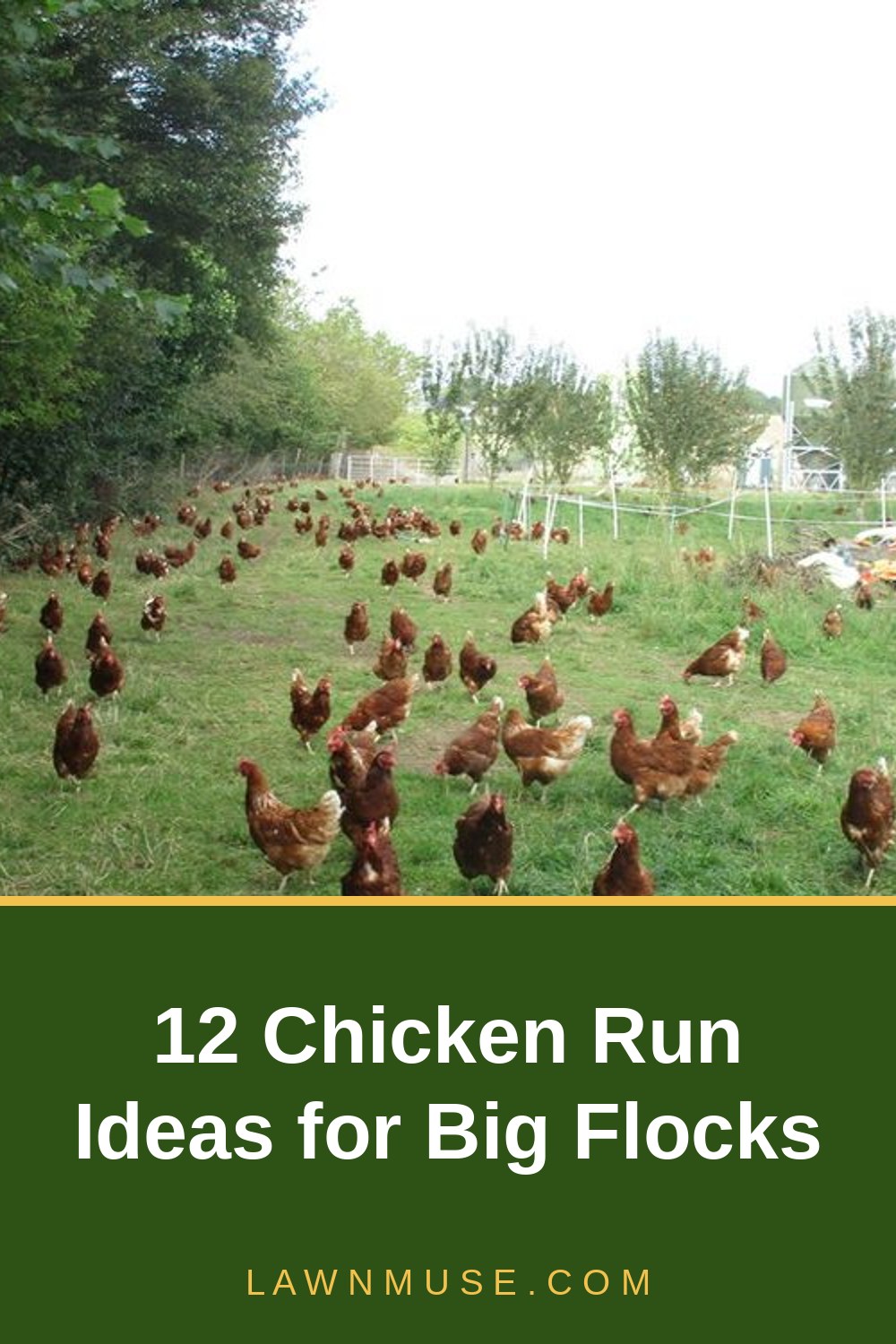
12 Chicken Run Ideas for 10 or More Hens
Somewhere around ten hens, a chicken run stops being a structure and becomes a system. Ten hens need at least 100 square feet by the 10-square-feet-per-hen rule — and in practice, flocks of 10 to 30 do far better with 150 to 400 square feet, ground they can rotate across, and fencing you can reconfigure as the flock grows, shrinks and ages. These twelve ideas are the ones that scale: pasture systems, mobile housing, big simple pens and barn conversions, each with honest footprints and costs.
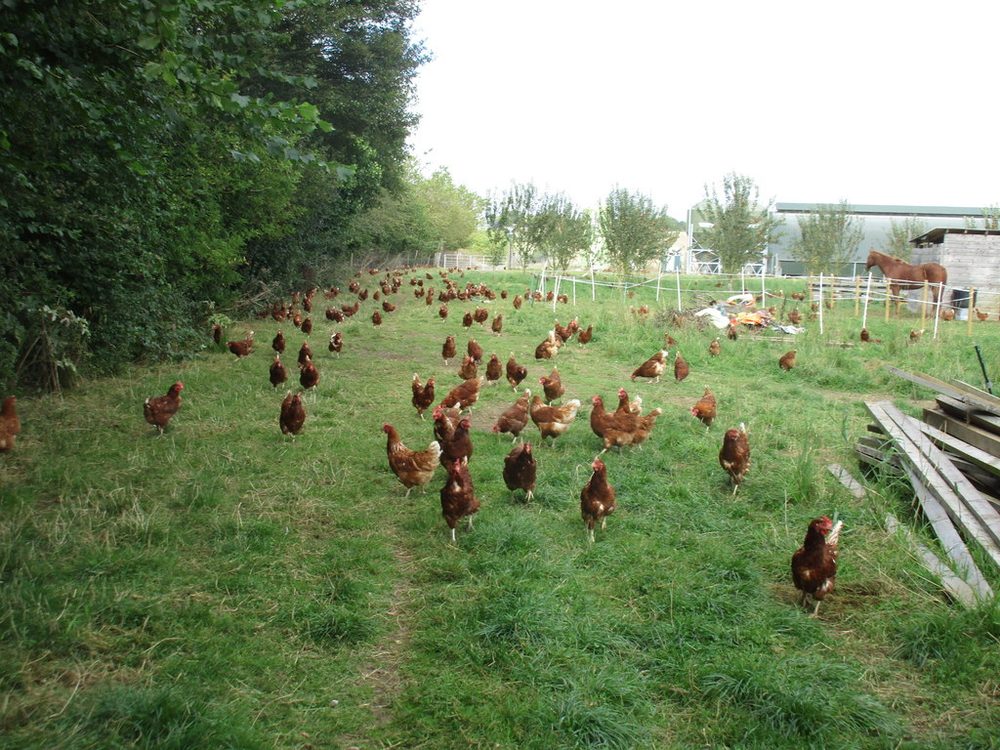
Two warnings before the list. First, big runs fail differently from small ones: the problem is rarely the fencing, it is the worn, bare sacrifice area around the coop door and the mud that follows. The best large-flock designs below all solve that — with rotation, with a hardened high-traffic zone, or with so much space that wear spreads thin. Second, predator-proofing a large perimeter is a different job from predator-proofing a garden run: the standard shifts from "sealed box" to "strong fence, safe night housing, and deterrence", which our predator-proofing guide covers in detail.
If you are growing from a small flock, you do not have to start again — several ideas here are expansions. And if ten hens is still hypothetical, the runs for 4 hens will serve until the flock actually arrives.
1. Pasture Rotation with a Mobile Coop
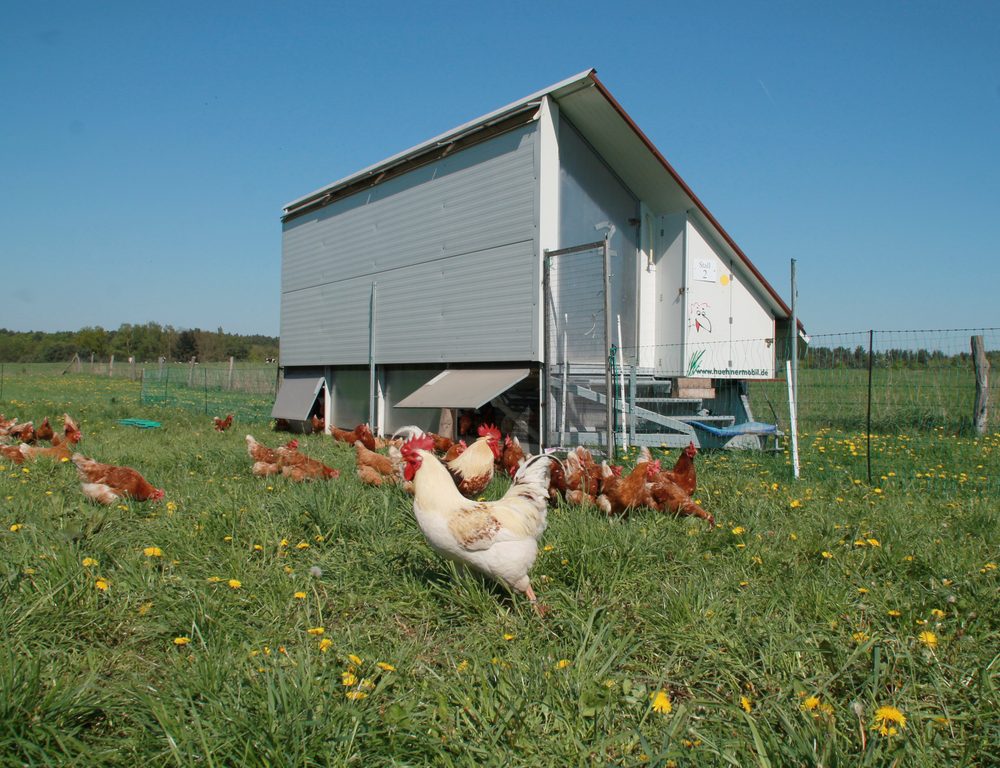
The gold standard for big flocks: a coop on wheels or skids, moved every few days inside temporary fencing, so the flock always grazes fresh ground and the pasture recovers behind them. Hens get the best diet of any system here — grass, clover, insects — and the land gets fertilised in an even spread instead of scorched around a fixed coop.
The moving rhythm is the whole skill. Move too slowly and the flock camps by the coop door and kills that grass anyway; move every two to four days and each paddock rests for weeks between grazings. The coop itself can be a converted trailer, a purpose-built skid house or a big ark — what matters is that one person can move it without a tractor, or you will quietly stop moving it by midsummer. Keep a simple map of the rotation on the coop door — which paddock, which dates — because by August nobody remembers whether the north strip has rested three weeks or five, and the grass keeps the real score anyway.
2. Eggmobile-Style Trailer Coop with Paddock Netting
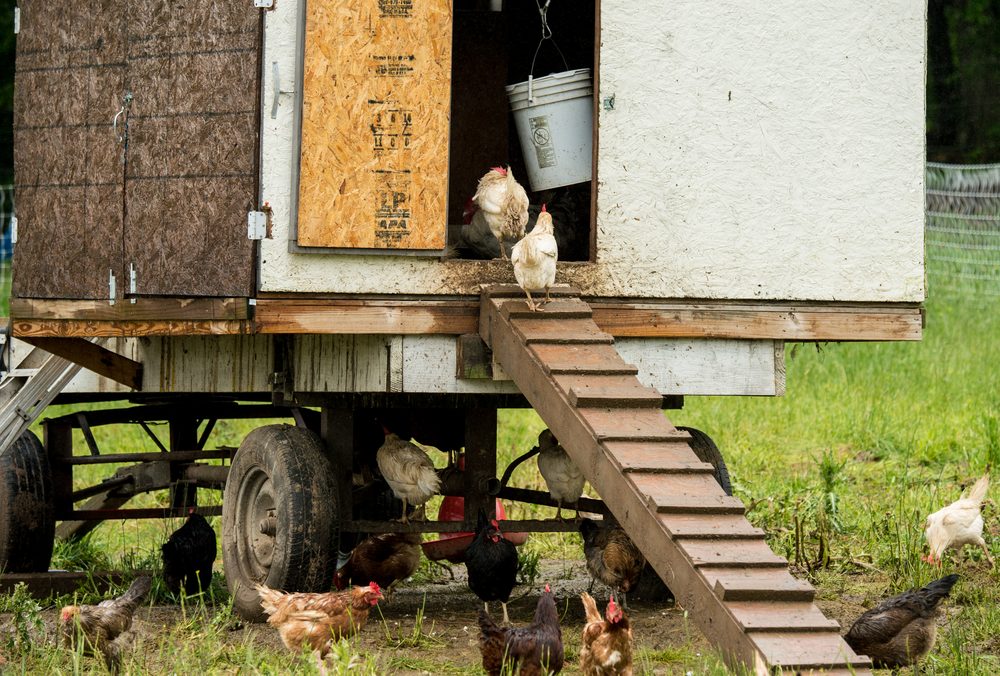
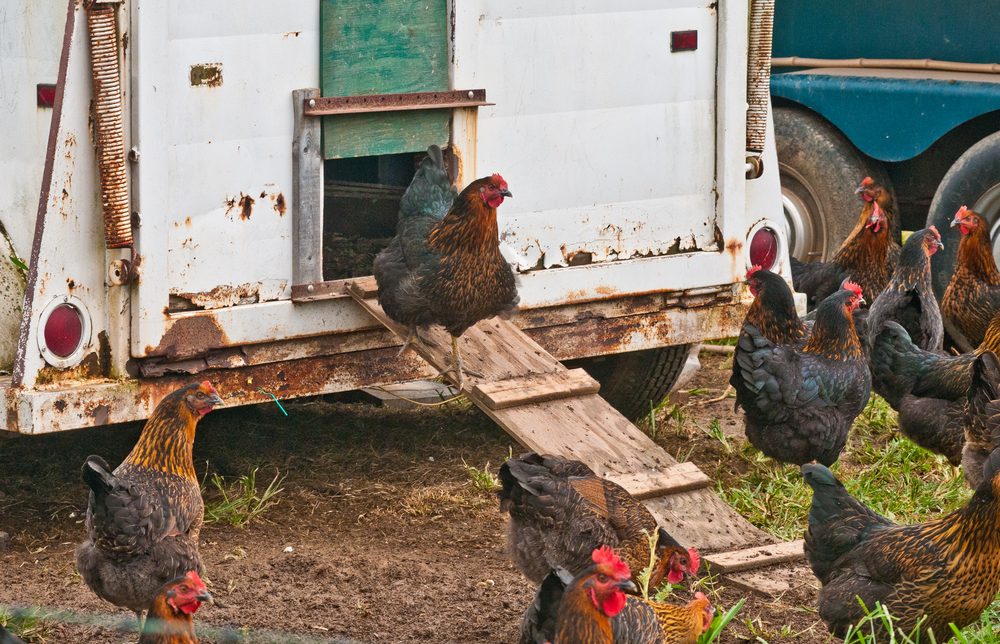
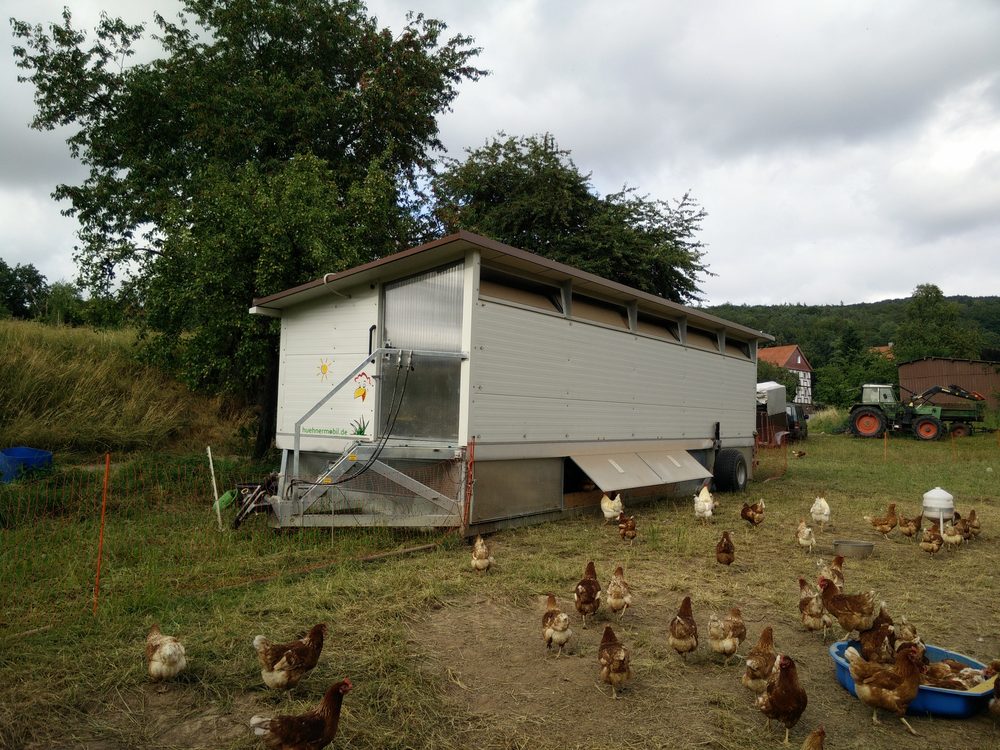
The eggmobile takes rotation further: an old stock trailer or caravan converted into a mobile hen house — roosts and nest boxes inside, a ramp for the hens — that follows a circuit of paddocks fenced with electric poultry netting. It is the system small-scale egg producers use because it combines real capacity with one-person daily labour: open the ramp, move the net every few days, collect eggs from outside-access nest boxes.
Budget honestly. The trailer conversion is the cheap half; the electric netting, energiser and spare reels are the ongoing system cost, and a flock of 40 eats its way through ground fast enough that you need several paddocks' worth of netting from the start. The payoff is pasture-raised eggs and a flock that genuinely ranges — plus a coop that can be towed to winter ground near the house when the far pasture turns to soup. A chalk line on the tyre and a matching mark on the ground tell you at a glance whether the trailer rolled in the night wind.
3. Cattle-Panel Hoop Barn Run
Scale up the garden hoop run and you get the best cheap permanent housing for twenty-plus hens: cattle panels arched between ground rails, covered in hardware cloth, with one end framed for a door and the other for the coop connection. The arch sheds snow, shrugs off wind, and gives walk-in headroom down the middle — enough space for hanging feeders, perch bars and a deep-litter floor.
Panels are the budget miracle here: a 16-foot cattle panel costs less than the lumber for an equivalent framed wall and goes up in minutes. The labour is in the covering — hardware cloth over every panel, seams wired together, edges buried or aproned — and in the ends, which are honest carpentry. Build the door end first, while your enthusiasm is fresh, and the rest feels easy. A tarp or panel roof over the back third keeps a dry zone for dust bathing in wet months.
4. T-Post and Welded-Wire Field Run
The farm answer, at farm scale: steel T-posts every 8 feet, welded-wire fencing unrolled and clipped, a gate at the corner. Nothing else on this list touches it for cost per square foot, and a fit person can fence a quarter-acre feel into a weekend. For a big flock on a budget, this is where the money should go first — space itself is a welfare feature.
Know what it is not: it is not a sealed predator box. Welded wire bends, posts flex, and there is no roof unless you add netting. Run it as a daytime range with a genuinely secure coop for the night, or upgrade the perimeter with a hardware-cloth skirt at ground level and a strand or two of electric wire at nose height outside. Labelled honestly, it is the backbone of half the good large-flock setups — including several others on this page that use it as their outer fence.
5. Geodesic Dome Pen
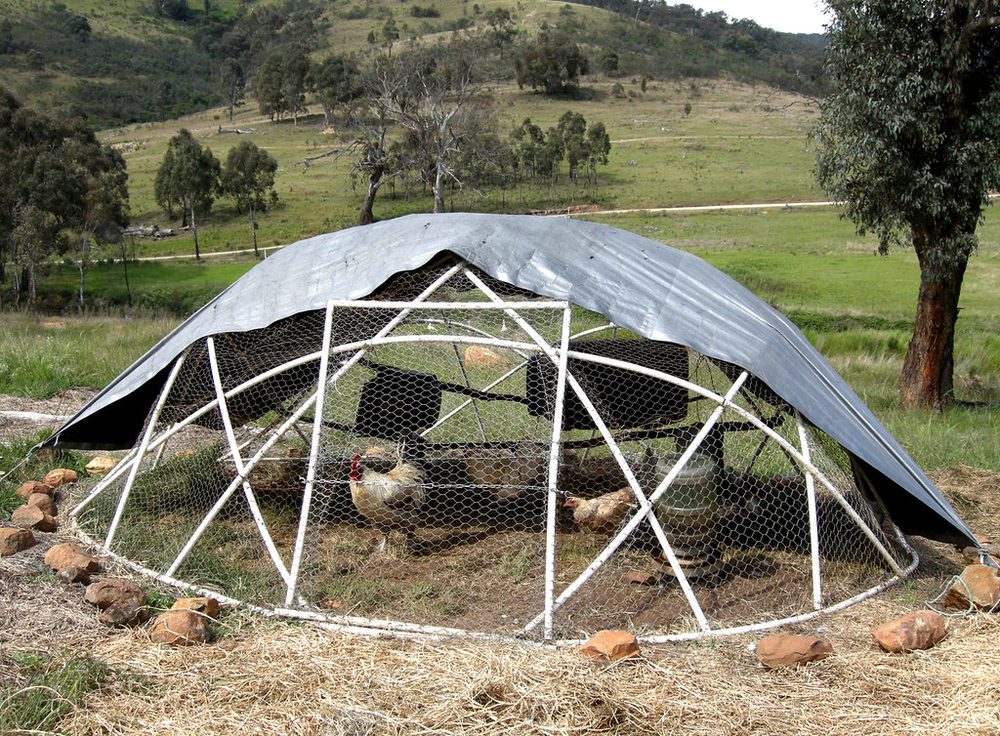
A dome of conduit or timber struts, skinned in mesh, makes a run with no corners for hens to pile into and no flat wall for the wind to push against — which is why dome pens have a following on exposed smallholdings. The structure is light for its size, so a big dome can still be shifted by two people, and the height at the centre lets you hang feeders and add tall perches that use the whole flock's vertical instincts.
Domes are a kit-or-jig project: the strut lengths must be accurate or the geometry fights you, so buy a hub kit or follow a proven calculator rather than improvising. Skinning is the slow part — mesh over a curve means many small fastenings — and the door is a framed flat section let into the curve. In return you get the most weather-proof large pen here and a run that looks like it means business. Anchor it properly; a dome is a kite until it is pegged.
6. Two-Run Rotation System
The simplest cure for a worn-out run: build a second one on the other side of the coop, with a pop door to each, and rotate the flock monthly. While the hens work run A, run B rests, reseeds itself and breaks the parasite cycle that builds up on permanently stocked ground. Each run can be modest — 200 square feet each serves twenty hens in rotation far better than 400 square feet of permanently trashed ground.
The build is just a fence and a second pop door, which makes this the highest-value expansion for an existing setup. Reseed the resting run with a tough grass-and-clover mix if it has gone fully bare, and rest it a minimum of four weeks; eight is better. Keepers who rotate almost always report the same surprise: the flock rushes the fresh side like it is a holiday, and ranging behaviour — the scratching, dust bathing and patrolling that keeps hens content — comes back within the hour.
7. Electric Netting Paddock System
Electric poultry netting is the large-flock keeper's favourite tool: a 164-foot roll fences a generous paddock in twenty minutes, keeps hens in, gives foxes and stray dogs a memorable reason to stay out, and rolls up again when the ground needs rest. Paired with any coop — fixed, skid or trailer — it turns one field into an endless series of fresh runs.
The honest caveats: netting does nothing about hawks, it sags and shorts if vegetation grows through it, and the energiser must stay powered and earthed or the fence is just string. Mow or strim the fence line before moving the net, keep a spare battery in rotation, and accept that determined hens occasionally fly out — clipping one wing on persistent escapees is the traditional, harmless fix. Even with those chores, per square foot of managed ground, nothing else comes close. Carry the fence tester on your rounds twice a week; a net checked at dawn reveals the sagging corner before a fox finds it at dusk.
8. Barn-Side Lean-To Run
A lean-to run along a barn or shed wall borrows the strongest structure on the property: the building gives you one long wall, a roof overhang and usually a concrete apron, and you build a long, roofed gallery run against it. Three hundred square feet of covered, dry, wind-sheltered run is serious winter housing for a big flock — the season when large flocks suffer most in exposed pens.
Face it away from the prevailing rain if you can, and gutter the building roof so its runoff does not pour through the run. The concrete apron, if there is one, is a gift: hose-down cleaning, no digging predators at that edge, and a dry standing zone by the door — cover part of it with deep litter so the hens still have scratching ground. Add pop doors from the barn interior and you have the classic farmyard setup, updated with mesh where the old yards had none.
9. Orchard Run
Fence the orchard and let the flock live in it: hens are the orchard's own pest control, eating fallen fruit, the insects that breed in it and the larvae that would otherwise overwinter in the soil — while the trees give the flock the dappled shade and wind shelter hens prefer above any structure humans build. It is the oldest partnership on this page and still one of the best.
Protect young trees: hens scratch at roots and will ring-bark a sapling's root flare in a week, so guard trunks with mesh collars until trees are established. Rotate or rest sections if the ground under favourite trees wears bare, and keep the flock out during spraying windows if you spray. The fencing can be the simple T-post and wire of idea #4 — in an orchard, the trees do the work that roofs and shade cloth do elsewhere. Rotate the flock out before harvest if fruit drops into the run — windfalls are treats in moderation and a wasp invitation in bulk.
10. Converted Stable or Barn Bay
An empty horse stall, a disused barn bay or a sound old pig pen converts to big-flock housing faster than anything can be built: mesh the open front, hang roosts and nest boxes on the walls, deep-litter the floor, and cut or use a door to an outside yard. The building gives weatherproof night housing for twenty hens, and the yard — even a simple fenced one — gives the day space.
Check the conversion honestly before moving birds in: old barns harbour gaps at eaves and sills that mink and rats treat as doors, and decades of livestock use can leave the floor needing a proper clean-out and fresh litter base. Ventilation matters more than insulation — a stall that was airy for a horse is fine for hens, but a sealed, damp bay is not. The win is speed and capacity: this is how a flock doubles in a single weekend without a single post hole dug.
11. Coop-on-Wheels with a Panel Run
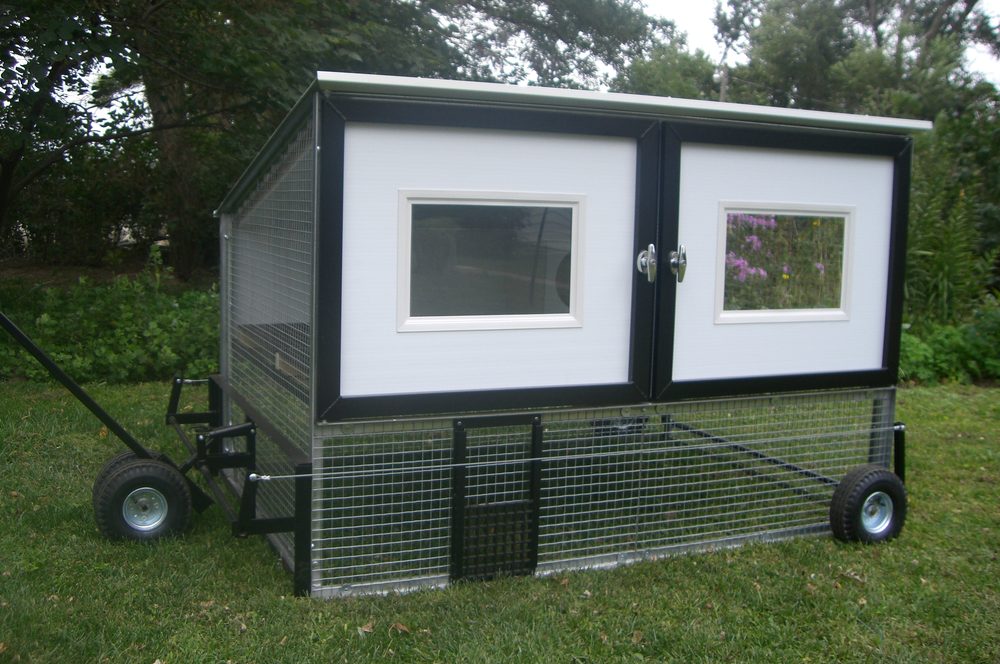
A middle path between the eggmobile and the fixed run: a substantial coop on a wheeled chassis, with a run of bolt-together mesh panels that pins out around it wherever it parks. The coop moves with a tow bar or tractor; the panels lift off in sections and re-form in minutes. Market gardeners use this pattern to put a flock on a finished block, then lift everything away when the block is replanted.
Panel runs are the flexible friend of the big flock — buy more panels and the run grows; lose a few hens and it shrinks. The joins are the weak point for predators, so treat the panel run as a day yard and rely on the coop — which should be a genuinely sealed, lockable box — for the night. It is the same honest split as the T-post run, one level more polished, and for rented land it has the unbeatable feature that everything you own can leave on one trailer.
12. The Permanent Walk-In Run, Scaled Up
Some flocks are not going anywhere, and neither are their keepers. The scaled-up walk-in — the same framed, roofed, hardware-cloth build as our free 8′ × 16′ plan, stretched to 10 × 20 with a mid door and a roofed back half — is the forever answer: 200 square feet of dry, sealed, stand-up-inside run that serves twenty hens in all weathers and asks for a weekend of maintenance a year.
Build it once, build it properly: posts set below the frost line where that applies, a hardware-cloth apron all round, two-step latches, and gutters if the roof is big. The cost is real, and so is the arithmetic — spread over a fifteen-year life it is the cheapest housing per hen-year on this page. If the full build strains the budget, frame and mesh the whole footprint now and roof the second half later; the design stages gracefully, and our predator-proofing upgrades list bolts straight onto it.
How to choose a run for a big flock
Decide first whether your system moves or stays. Moving systems — pasture rotation (#1), the eggmobile (#2), netting paddocks (#7) — give the best ground and the happiest hens, and they cost weekly effort forever. Fixed systems — the hoop barn (#3), lean-to (#8), scaled-up walk-in (#12) — cost money up front and effort almost never. Most good large-flock setups are hybrids: a secure fixed core for winter and nights, and netting or a second run for summer rotation.
Whatever the shape, plan the sacrifice zone. The ground by the coop door will be bare and, in winter, muddy — harden it with gravel or wood chips from day one (the flooring guide compares options), and give the flock a dry dust-bathing corner under cover. And scale the routine, not just the run: ten-plus hens means bulk feed storage, waterers that hold days not hours, and egg collection that does not require entering the run in your good shoes.
FAQs
How much space do 20 hens need?
Two hundred square feet is the minimum at 10 square feet per hen, and 300 to 400 is where a flock of twenty actually relaxes — especially if the run is fixed. In a rotated system, each paddock should offer at least the minimum while occupied. The full maths for every flock size is in our sizing guide.
Is electric netting safe for chickens?
Yes, used as designed: hens learn the fence after one or two contacts and respect it, and the pulse is unpleasant rather than dangerous to birds and predators alike. The real risks are management ones — a flat battery makes the fence decorative, and long grass shorts it out. Check the energiser weekly, keep the fence line trimmed, and never leave young chicks in netting sized for adults.
Can a big flock share one run with a small one?
Flocks merge, but runs should be sized for the merged total and introduced carefully — new birds in an established run get bullied at feeders and roosts. Add extra feeding stations during introductions, and use the two-run system (#6) as the halfway house: a fence between old and new flocks for a week does more for peace than any other trick.
What is the cheapest way to house 15 hens?
A T-post and welded-wire field run (#4) with a sound second-hand coop, run as a day yard with strict night lock-up, is the cheapest honest answer. The next step up — adding a hardware-cloth skirt and electric strand — is where most keepers land within a year. Beware false economies at scale: one fox visit to an under-fenced flock of twenty costs more than the fencing did.
How do I stop a big run turning to mud?
Drainage, cover and rotation, in that order. Site the run so water runs off rather than through, roof or tarp the highest-traffic third, harden the door zone with gravel or chips, and rest or rotate ground before it goes fully bare. Once a run is mud, the fix is a thick wood-chip blanket — the flooring guide has the full rescue routine.
Ready to build one properly?
Our free starter plan — the Backyard Run, 8′ × 16′ — is drawn for up to 12 hens, and its framing, mesh and apron details scale straight up to the 10′ × 20′ forever run in idea #12. Start there, then size with confidence.
Pin it for later