13 Chicken Run Ideas for 4 Hens
Four hens is the classic starter flock — and the easiest flock to house well. At the standard 10 square feet of run per hen, four birds need only 40 square feet outside, which means almost every run style on this site shrinks down to a weekend build. These thirteen ideas are sized honestly for four: big enough that the hens never feel crowded, small enough that you can build most of them in a day or two.
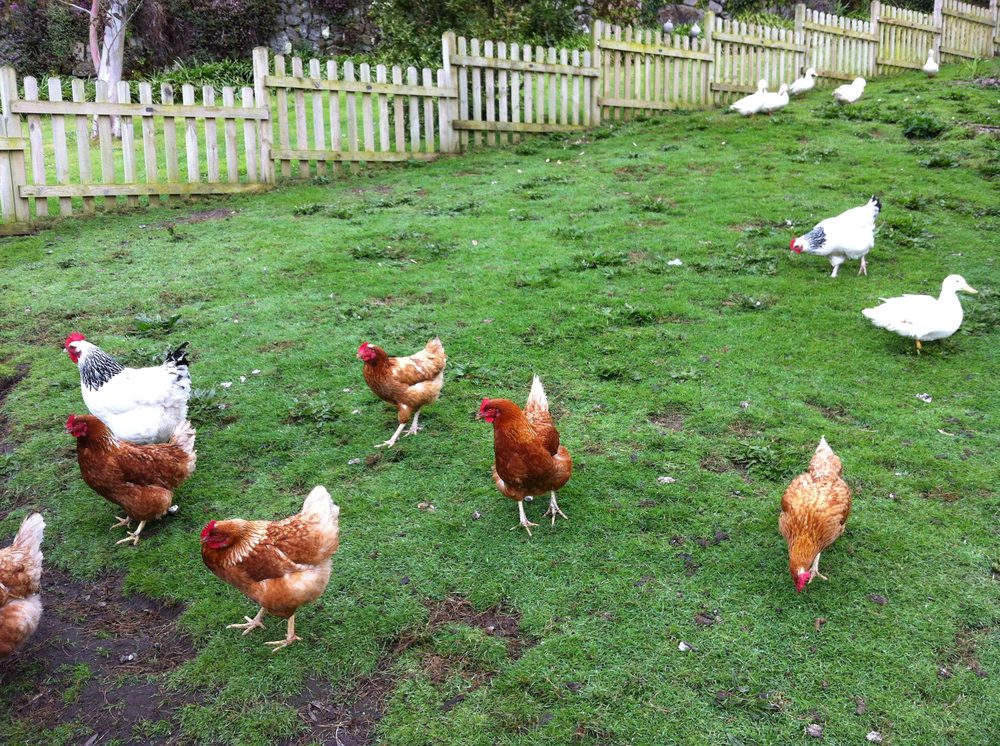
Why not just build bigger? You can, and if there is any chance of chicken maths — the well-known process by which four hens become nine — skip ahead to our run ideas for 10 or more hens and build once. But a right-sized run has real advantages at this scale: it is cheaper, it warms up faster in winter sun, it is easier to keep clean, and a small run on grass can be moved before the ground is ruined. Every idea below lists its true footprint, and every one assumes the run is predator-proofed — four hens are exactly as attractive to a raccoon as forty.
One more thing before the list: four hens still need the full supporting kit. A feeder and waterer take up floor space, hens like a dust-bathing corner even in a small run, and a shaded end matters in summer. The best small runs below all leave room for those basics instead of spending every square foot on open ground.
1. Compact A-Frame Tractor
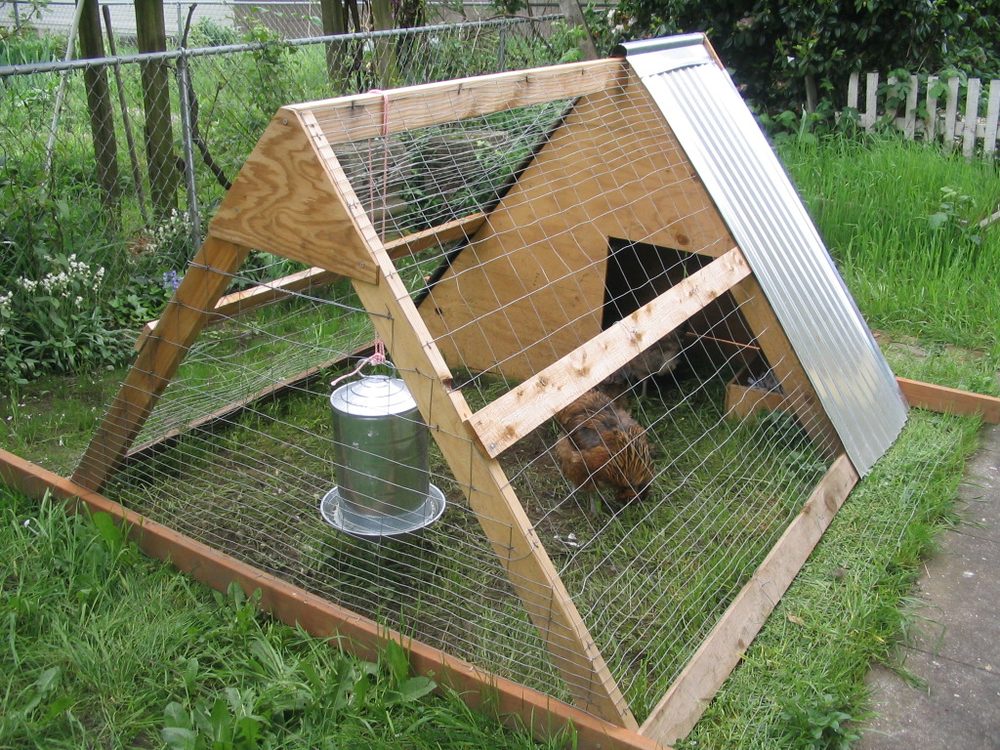
The A-frame tractor is the small flock's best friend: a triangular run with a sheltered sleeping section at one end, light enough to drag a few feet each morning. At 6 × 8 feet it gives four hens their full 48 square feet, and because it moves, those square feet are always fresh grass rather than a worn dirt patch. Hens mow, fertilise and de-bug the strip they are on, and the lawn recovers behind them.
Build it lighter than feels right — 2×2 framing, a corrugated or plywood cap on the sheltered third, and hardware cloth rather than chicken wire on the slopes. Add wheels or rounded skids at the heavy end and a rope handle at the other. The classic mistake is building a tractor so solid that moving it becomes a two-person chore; a tractor that does not move is just a small, badly placed run. In raccoon country, park it at night against the coop or add a mesh floor panel, because a tractor's open bottom is its one weak point.
2. Coop-and-Run Combo Unit
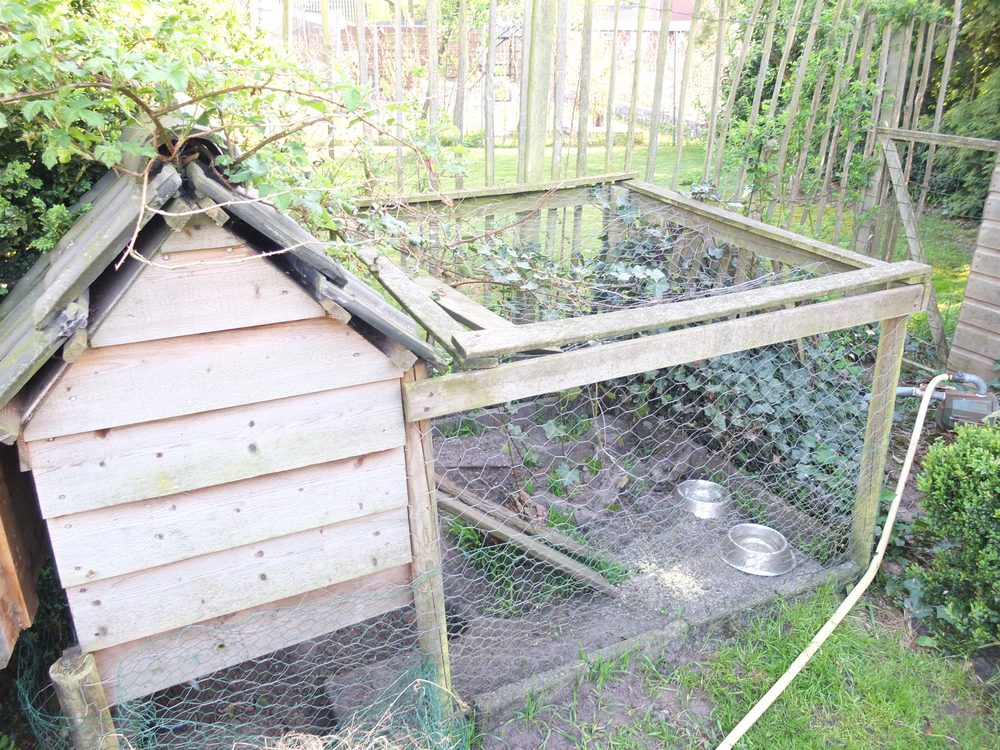
The all-in-one combo — a raised hen house at one end, a mesh run stretching out from it — is what most four-hen keepers actually end up with, bought as a kit or built from a plan. Everything is in one footprint: the hens come down the ramp in the morning, spend the day in the run, and put themselves to bed. For a small garden, that tidiness is worth a lot.
Judge combos by the run, not the coop. Sellers quote the total footprint including the house, so a unit advertised as generous may offer only 25 square feet of actual outdoor run — too little for four hens. Measure the open-air part and insist on 40 square feet or more. Kits also ship with thin mesh and flimsy latches as standard; budget an extra hour and a few dollars to swap the latch for a two-step bolt and line the lower walls with hardware cloth, and a combo becomes a genuinely good small setup.
3. Walk-In Mini Run
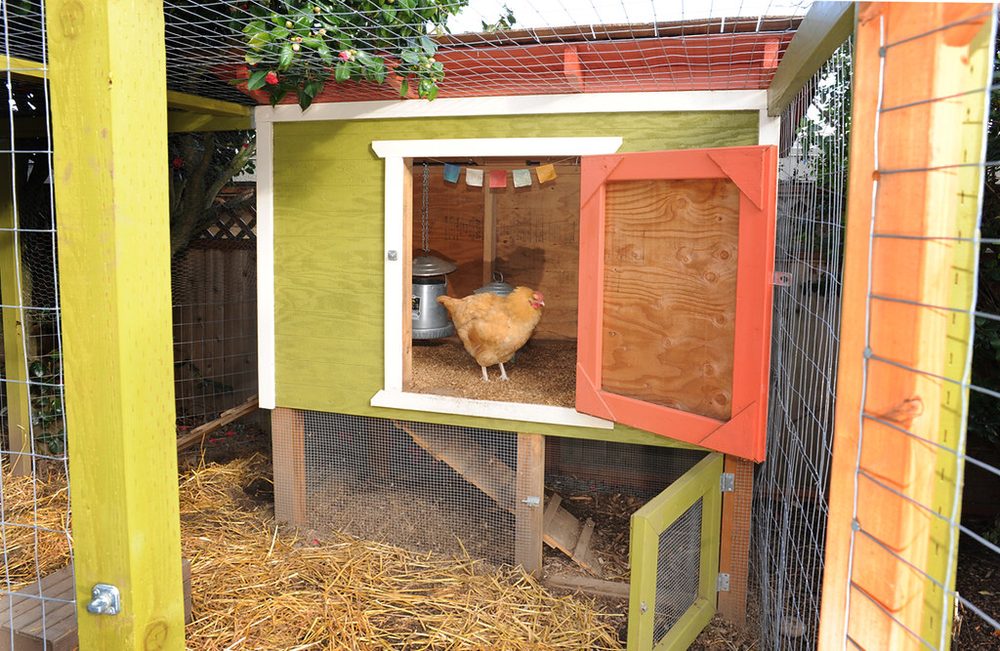
A walk-in run at small scale sounds like a luxury until you have cleaned a low run in the rain. A 5 × 8 frame with a full-height door and a simple sloped roof costs more in lumber than the low options on this list, but you will use it daily for a decade: no crawling to retrieve a hen, no kneeling to change the water, and raking out takes two minutes standing upright.
Keep the structure simple — four corner posts, a door frame, a mid rail, and mesh everywhere including the top. Slope the roof panel enough to shed rain off the back, away from the door side. Because the footprint is the minimum for four hens, use the vertical space: a perch bar across one corner and a wall-mounted feeder free up floor area, and a dust-bath tray tucked under the coop end keeps the middle of the run open.
4. Garden Ark on Wheels
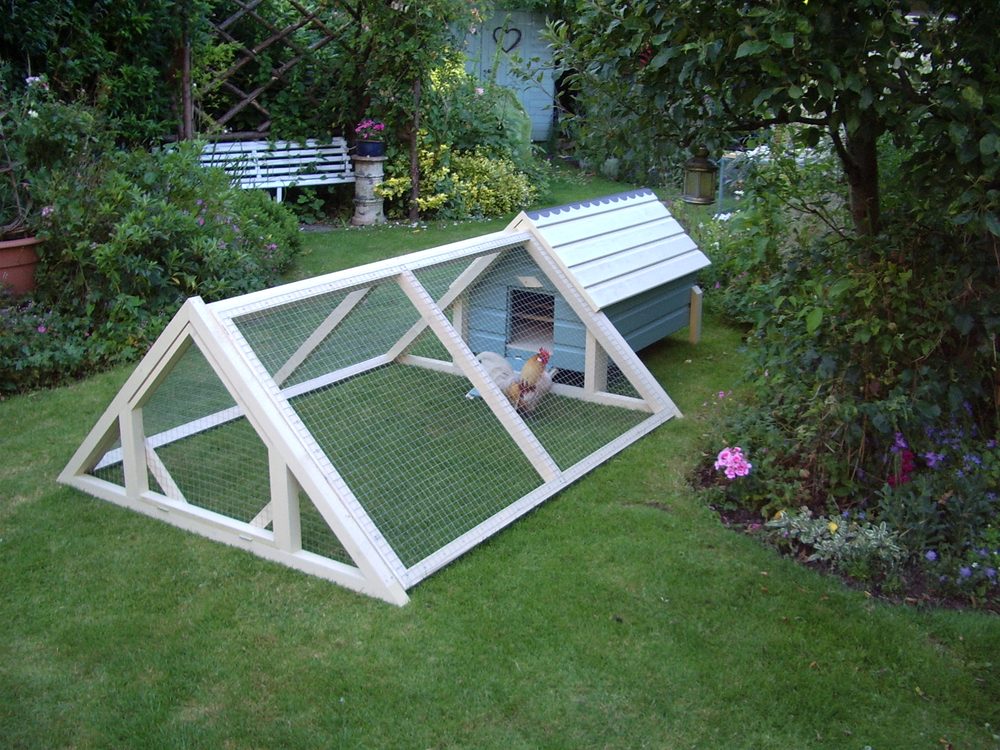
The ark is the tractor's tidier cousin: a low, house-shaped run with handles and small wheels, designed to sit over a garden bed or a strip of lawn. Gardeners love arks because the flock can be parked on a finished vegetable bed for a week — the hens clear the weeds, eat the grubs and leave fertiliser behind — then wheeled to the next bed while the first one is replanted.
Size the ark to your beds if you garden in standard widths; a 4- to 5-foot-wide ark straddles a typical raised bed neatly. Keep the height honest: hens need to stand and flap, so a ridge around 3 feet is the practical minimum for a permanent home, with taller arks better for full-time use. Like every movable run, the ark's weakness is the gap between its bottom edge and uneven ground — check the seal each time you park it, and weight or peg the corners on bumpy lawns.
5. Under-Coop Run with a Short Extension
If your coop stands on legs, the dry, shaded space underneath it is the most underused square footage in the backyard. Enclose it with hardware cloth, add a pop door, then bolt on a short 4 × 8 extension run and a four-hen flock suddenly has a two-room home: a sheltered under-coop lounge for hot afternoons and bad weather, plus open ground for scratching.
The under-coop section needs at least 18 inches of clear height to count as run space, and one side should be a removable panel — hens will lay eggs in the far back corner, guaranteed, and you need a way in. This is also the cheapest idea on the list per square foot, because the roof and two of the walls already exist. Pair it with the sizing advice in our run sizing guide if your coop footprint is unusually small. If the coop sits on legs, screen the windward gap with mesh or a pallet so the under-space stays a shelter rather than a wind tunnel in January.
6. Side-Yard Corridor Run
The strip down the side of the house — too narrow for a shed, too shady for vegetables — is a ready-made run corridor. The house wall forms one side and the boundary fence the other, so you are only building two short ends and a mesh top. Hens do not care that their 42 square feet is long and thin; they patrol it like a garden path, and the house wall gives shade and shelter for much of the day.
Three feet is the minimum comfortable width: hens need to pass each other without a squabble, and you need to walk it with a rake. Check setback rules before building, because some local ordinances measure coop distance from the property line and a corridor run sits right on it. Drainage is the other watch-out — fix any downspout that empties into the strip before the hens move in, or the corridor becomes a moat.
7. Pallet Micro-Run
Four hens is the perfect flock size for a pallet build, because the run is small enough that a single stack of sound pallets covers most of the walls. Stand heat-treated pallets (stamped HT, never MB) on edge, screw them to corner posts, line the inside with welded wire or hardware cloth, and add a mesh roof and a pallet gate. The wood is free or nearly free; you are really only buying mesh and screws.
Our full pallet run guide covers the variations, but the small-scale rules are simple: reject any pallet that is oil-soaked, cracked across a load-bearing board, or stamped with anything you cannot identify. Pallet slats alone are not predator-proof — the gaps are far too wide — so the mesh lining does the real work and the pallets are structure and shade. Expect a pallet run to be a three-to-five-year build rather than a forever one, which at this price is a fair trade.
8. PVC Hoop Run
Bent PVC hoops over a light base frame make the fastest run on this list — most people finish in an afternoon, with no cuts more complicated than pipe lengths. At 5 × 10 it is roomy for four hens, light enough for one person to drag onto fresh ground, and it comes apart with a screwdriver when you move house, which makes it the renter's favourite.
Read our honest PVC run guide before buying pipe, because the limits are real: PVC embrittles in strong sun over a few seasons, and a determined dog can push through a hoop run that would shrug off a raccoon. Use it as a daytime run in low-predator areas, or pair it with a secure coop at night. A shade cloth over one end transforms it in summer — hoop runs have no natural shade, and four hens in full sun will spend the day pressed into the one shadow the waterer casts.
9. Chain-Link Kennel Panel Run
Used dog kennels are the worst-kept secret in backyard chickens: they turn up second-hand constantly, clamp together in an hour, and give four hens a palatial 100 square feet. If there is any chance your flock will grow — and with four hens there usually is — a kennel run is the one idea on this list that never needs rebuilding, just restocking.
The frame is genuinely strong; the chain-link is the weak point. Its diamond gaps let raccoons reach through and let slim young hens squeeze out, so line the bottom 2–3 feet with hardware cloth, cover the top against hawks and climbers, and replace the stock latch with one a raccoon cannot flip. Do those three jobs and this is the best value-per-hour build here. Our budget run breakdown shows where the money goes on conversions like this. Check second-hand panels for bent latches and chain-link stretched loose at the corners before money changes hands — both are fixable, and both are price levers.
10. Raised-Bed Rotation Run
Instead of a run, give four hens a rotation: a simple framed mesh pen that sits over whichever raised bed is resting this month. The flock clears weed seeds and insect pests, scratches in fertiliser, and turns the soil surface — then the pen lifts off and moves to the next bed, and the first bed gets planted into ground the hens have prepared.
The pen itself is the easy part: a lightweight timber or PVC frame with mesh on top and sides, sized to your beds, with a small shelter box clipped to one end for shade and rain cover. The discipline is in the rotation — a bed needs at least a few weeks between the hens leaving and salad crops going in, and beds growing anything the hens should not eat (or that you want to eat first) stay out of the loop. In winter the pen can park on the compost end of the garden, where there is always something worth scratching.
11. Corner Triangle Run
Every yard has a corner that grows nothing but weeds and stored junk. A triangle run claims it: two fence lines form two sides, and you build only the long diagonal — a framed mesh wall with a door — plus a mesh or shade-cloth roof. Two 10-foot sides give roughly 50 square feet, which is comfortable for four hens, and the corner itself becomes the sheltered end where the dust bath and feeder live.
Diagonal framing is simpler than it looks: posts at the two fence ends and one in the middle, rails cut to length, mesh stapled and battened. The trap is the roof — triangles shed water awkwardly, so slope a solid panel over the coop end only and leave the rest mesh, or accept a shade-cloth top and a run that gets wet. Corners also collect leaves and litter against the fences; a twice-yearly clear-out along the fence lines keeps the run sweet and the neighbours happy.
12. Folding Day Pen
Four hinged mesh panels that unfold into a pen and fold flat against the garage wall afterwards: the folding day pen is not a full-time run, and it does not pretend to be. It is for supervised afternoons — the hens get fresh lawn and garden-edge foraging while you are outside anyway, then go back to their secure run when you go in.
Be honest about the security level. A folding pen has no floor, no roof and panel joins a fox could test, so it earns its keep only where daytime predator pressure is low and a human is nearby. Within those limits it is genuinely useful: quarantining the lawn-mowing hour, giving the main run a rest week, or letting the flock work over a patch of ground before you dig it. Build the panels from 2×2 and welded wire, hinge them in alternating directions so the pen folds concertina-style, and add a shade cloth you can clip over one end.
13. Permanent Wood-Frame Run, 6 × 8
The grown-up option: a small permanent run framed like a fence, with posts set properly, hardware cloth on every face, a real door and a roof panel that keeps the ground dry. For four hens it is the most expensive idea here per bird — and the cheapest per year, because a well-framed run asks for nothing but a yearly once-over for a decade or more.
Build it as a scaled-down version of our free 8′ × 16′ starter plan: the same post spacing, mid rail and mesh details, just two-thirds the length. A dry, roofed run changes daily life more than any other upgrade — no mud, far less smell, a dust bath that works in January, and bedding costs that drop away. If the budget forces a choice, build the frame and mesh now and add the roof panels later; the design forgives staging in a way the bargain builds do not.
How to choose a run for 4 hens
Start with your ground, not the catalogue. If the lawn matters and you can move a run daily, a tractor (#1) or ark (#4) keeps four hens on fresh grass indefinitely. If the yard is small and fixed, the walk-in mini run (#3) and the permanent frame (#13) trade money for daily convenience — and daily convenience is what you will actually feel. Renters and the undecided should start with the PVC hoop (#8) or folding pen (#12) and upgrade once the flock proves permanent.
Whatever you choose, hold three lines. First, 40 square feet of genuine outdoor run is the floor for four hens — more is kinder, less causes feather-pecking and stress. Second, the run is only as good as its weakest detail, so spend on hardware cloth and latches before spending on size; our predator-proof run ideas list the upgrades in order. Third, plan the floor: small runs wear to dirt fast, so read the run flooring guide before the ground turns, not after.
FAQs
How much run space do 4 hens really need?
Forty square feet is the working minimum — 10 square feet per hen — and 48 to 64 square feet is noticeably calmer, especially in winter when the flock spends more time close to the coop. Space under a raised coop counts if a hen can stand and flap there comfortably. When in doubt, the sizing maths for every flock size is in our run sizing guide.
Can 4 hens live in a movable tractor full-time?
Yes, if the tractor gives them their full 40-plus square feet, a sheltered sleeping and laying section, and a genuinely secure night setup. The deal-breakers are weight (a tractor that does not get moved is a dirt run within a month) and the open bottom — in raccoon country, add a mesh floor panel or park the tractor inside a secure yard at night.
What is the cheapest good run for 4 hens?
The pallet micro-run (#7), at roughly $40–$90 in mesh and fixings if the pallets are free, is the cheapest build that is still honest about predator-proofing. A second-hand kennel (#9) beats it on value per hour if you find one locally. The false economy is chicken wire: it costs nearly as much as welded wire and keeps nothing out.
Do I need a roof on a small run?
You need a cover — mesh at minimum, to stop hawks and climbing predators — but a solid roof is optional. A solid panel over at least part of the run keeps a dry corner for the dust bath and feeder, which small flocks use heavily in wet weather. Many keepers start with mesh plus a tarp panel and upgrade later.
Will 4 hens destroy my lawn?
Four hens in a fixed 40-square-foot run will wear that patch to dirt within a season — that is normal, and flooring options like wood chips keep it pleasant. Four hens in a moved-daily tractor will not damage a lawn at all; they improve it. The middle path is a fixed run plus a folding day pen for supervised lawn time.
Ready to build one properly?
Our free starter plan — the Backyard Run, 8′ × 16′ — gives you the full materials list, tool list and step-by-step build outline. For four hens, build it at two-thirds length, or build it full-size and let the flock grow into it.
Pin it for later