15 Chicken Run Flooring and Ground Cover Ideas
Ask a room of chicken keepers what ruins a run and nobody says predators first — they say mud. The floor is the part of the run you deal with every single day: it decides whether the run smells, whether eggs come in clean, whether hens dust bathe or huddle, and whether February is a pleasure or a penance. These fifteen flooring and ground cover options cover every climate and budget, each rated honestly on cost, upkeep and drainage so you can match the floor to your ground instead of fighting it.
Three principles before the list. First, drainage beats material: a run that sheds water can succeed on almost any surface, and a run in a hollow fails on all of them — if yours pools, fix the slope or add a drain before spending on flooring. Second, hens want to scratch and dust bathe, so at least part of the floor should be loose and diggable whatever else you choose. Third, the busiest ground — the gate, the pop door, the feeder station — wears out first on every surface, and planning a hard-wearing patch there (see ideas #12 and #14) saves the rest.
Costs below are per 100 square feet of run, materials only, at typical 2026 US prices. Pair this guide with the predator-proofing guide — several floors double as dig protection — and with the budget breakdown if the run is new.
1. Coarse Washed Sand
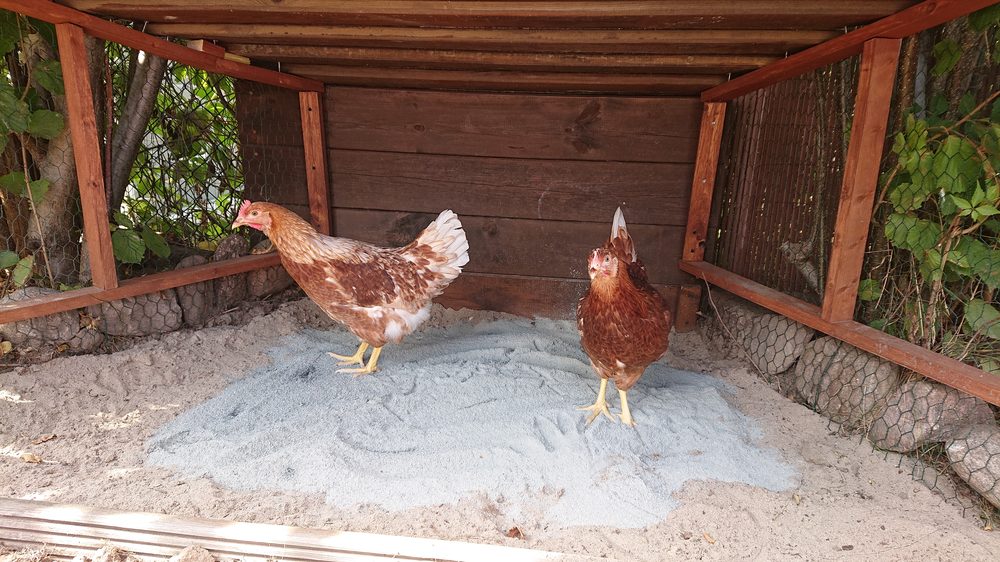
The run floor with the most devoted following, and it earns it: coarse sand drains instantly, dries fast, and can be raked or sifted like a giant litter tray, so droppings come out in minutes and the run stays sweet. Hens love it — sand is a ready-made dust bath everywhere — and in a roofed run it stays workable in weather that turns soil floors to soup.
Choose the right sand or do not choose sand. Play sand and fine builders' sand compact, hold moisture and cake; coarse washed river sand or concrete sand, with varied grain sizes, is the one that drains and rakes. Lay it 4–6 inches deep over levelled ground. In an uncovered run in a rainy climate it still beats dirt, but expect to rake more and top up more often, because rain slowly carries the fines away. Keep a spare bag under cover for topping up the pop-door landing in winter, when traffic concentrates and the sand wears thin fastest.
2. Arborist Wood Chips
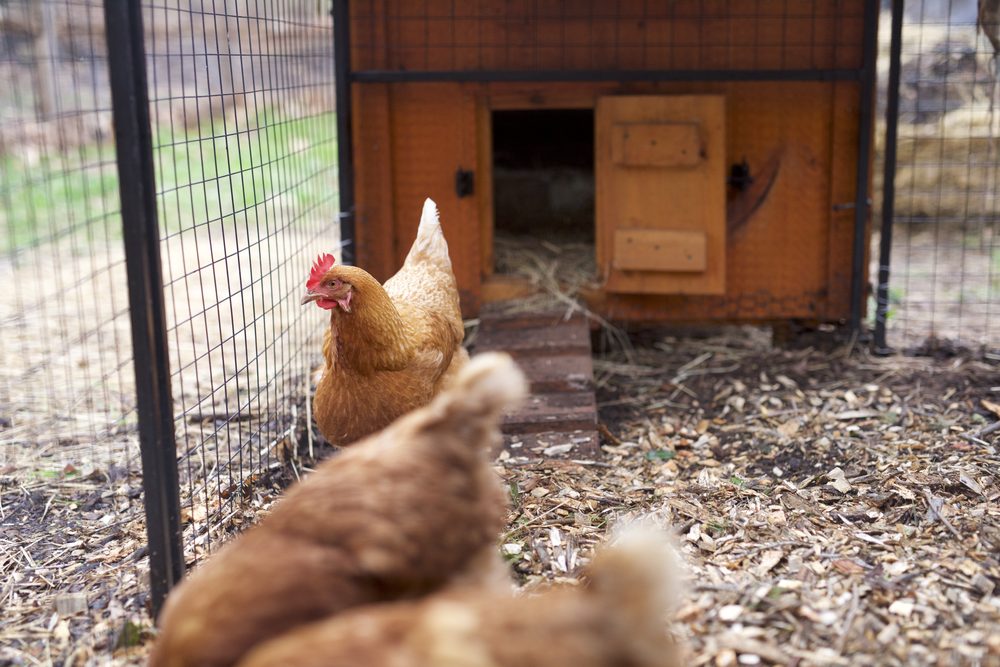
The mud cure. A 4- to 6-inch blanket of coarse wood chips over a muddy run lifts the hens out of the wet the day it is spread, drains freely, and slowly composts with the droppings into a rich, springy litter the flock loves to scratch. Tree surgeons often give chips away or sell them cheaply by the load, which makes this the best-value floor for large runs by a wide margin.
Use coarse, chunky chips — fine mulch and bark fines mat down and hold water like a sponge. Fresh chips are fine for hens despite the folklore; avoid chips from black walnut if you plan to garden with the compost, and never use dyed landscape mulch in a run. As the layer breaks down it will sink, which is the system working: top it up, and fork the finished compost out from the bottom once a year for the garden.
3. Deep Litter (Composting Bedding)
Deep litter is not a material but a method: a bedding layer 8–12 inches deep — shavings, chopped straw, leaves, chips — that you keep adding to and stirring, so the bottom layers compost in place. Done well it is nearly odourless, gives off a little warmth in winter, teems with the microbes that outcompete the nasty ones, and produces a wheelbarrow of superb compost when you finally clear it once or twice a year.
Done badly it is the worst floor here, which is why the conditions matter: deep litter needs a roof (rain saturates it faster than it can compost), a dry base, and the discipline to add carbon — dry bedding — whenever it looks damp or smells of ammonia. If it smells, it is not deep litter, it is a manure pile; add shavings, fork it over, and the balance returns. Start in autumn and the system matures beautifully by spring.
4. Straw
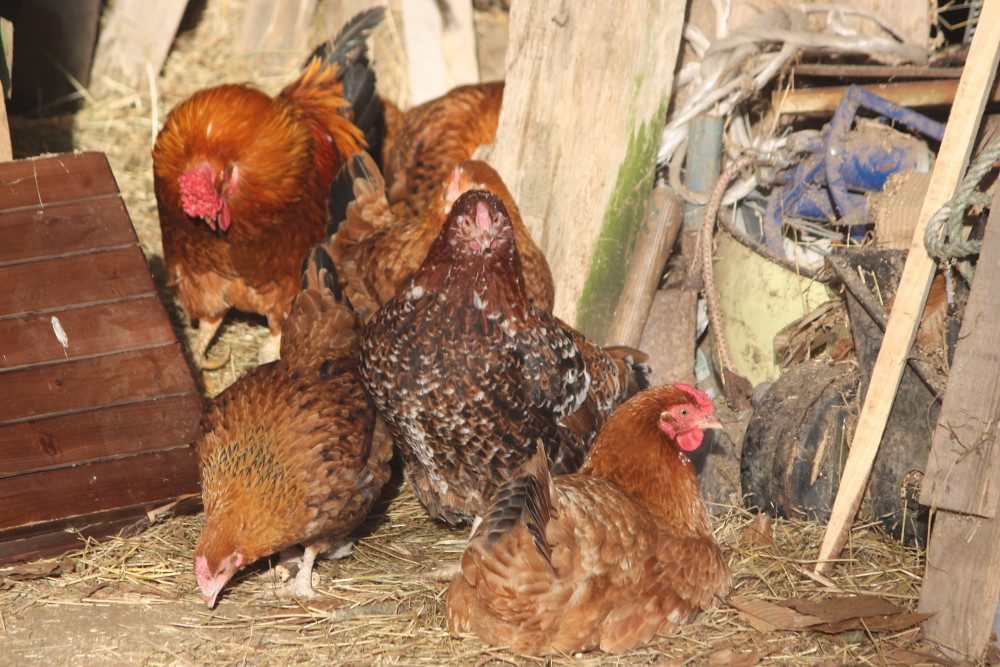
Straw is the traditional run floor and still the cheapest way to cover ground fast: a bale fluffed out over a run gives hens a dry, golden, endlessly scratchable surface, and scattered grain in straw is the oldest boredom-buster there is (see the enrichment ideas). In a covered run in winter, few floors feel cosier.
Its weaknesses are weather and hygiene. Wet straw mats into a slimy mat that seals moisture under it, and whole straw's hollow stems can harbour mites if it sits damp for months — so straw belongs under a roof, in a thin-to-moderate layer you replace rather than accumulate, or as the top dressing on a deep-litter base where drier material does the structural work. Chopped straw behaves better than long straw in every way and is worth the small premium. Buy straw, not hay, for flooring: hay is feed, full of seed heads and nutrition, which moulds faster and costs more, while straw is the dry structural by-product that does the floor's work for less.
5. Living Grass (Rotated)
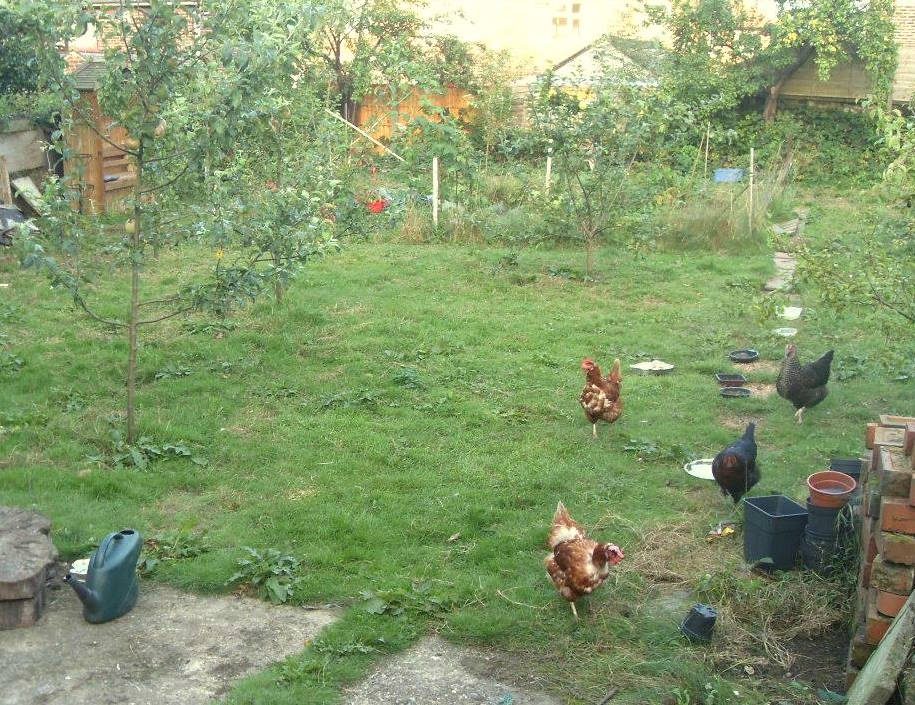
The floor hens would choose: living grass is food, flooring and entertainment in one, and a run on healthy turf in summer is the prettiest sight in chicken keeping. The catch is arithmetic — a fixed flock eats and scratches grass faster than it regrows, so permanent grass only survives where stocking is light, the run is huge, or the ground is rested in rotation.
Make it work with the systems built for it: movable tractors that give each patch weeks of rest, or the two-run rotation from our large-flock ideas, reseeding the resting side with a hard-wearing grass-and-clover mix. Protect reseeded areas until the roots knit — hens dig up seedbeds with professional thoroughness. Where grass fails, it fails honestly, turning first to bare earth (idea #6) — which is manageable if you planned for it. A simple test tells you whether your stocking is light enough: if the run still looks green from the gate in late summer, grass is winning; if it looks green only in photographs from May, it is not.
6. Managed Bare Earth
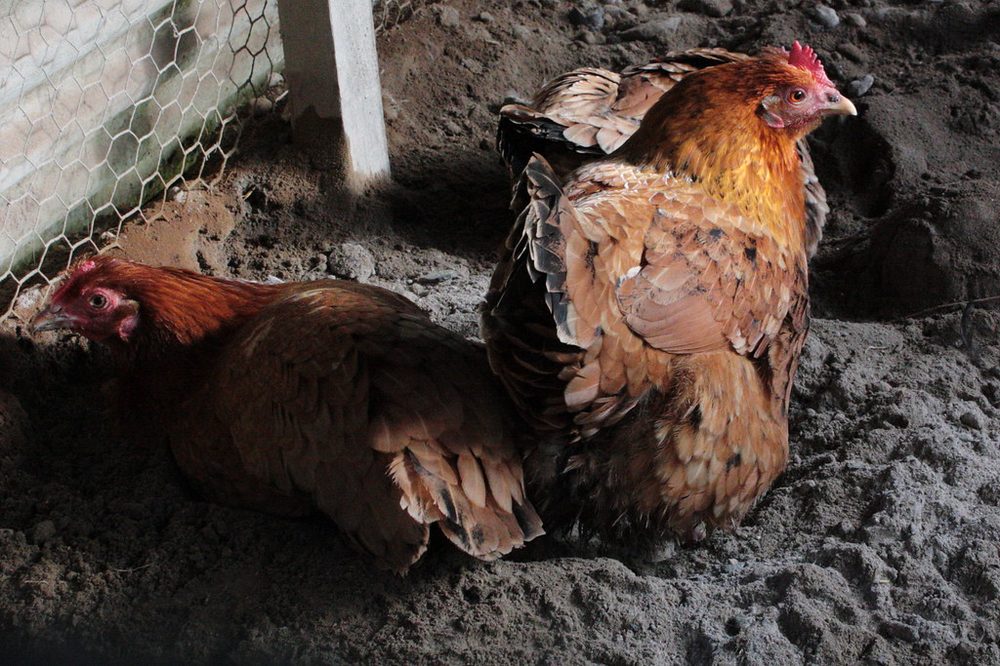
Every fixed run becomes bare earth eventually, and on the right ground that is a perfectly respectable floor: free, dust-bathable, easy to rake, and honest. On free-draining sandy or gravelly soil in a dry climate, managed earth stays firm and clean with nothing more than a weekly rake and the occasional barrow of sand or grit in the hollows.
On clay or in a wet climate, bare earth is the floor that gives runs a bad name — a greasy, smelly quagmire that cakes legs and eggs alike. The management that makes earth work elsewhere: keep it covered at the busy spots, dig a shallow diversion ditch uphill if water sheets across it, and accept the seasonal truth that earth is a summer floor in wet regions. When you tire of it, wood chips (idea #2) spread straight over the top — no preparation needed. A yardstick pushed into the surface after rain tells you how the compaction is going: the harder the push, the sooner the drainage plan matters.
7. Coarse Gravel and Crushed Rock
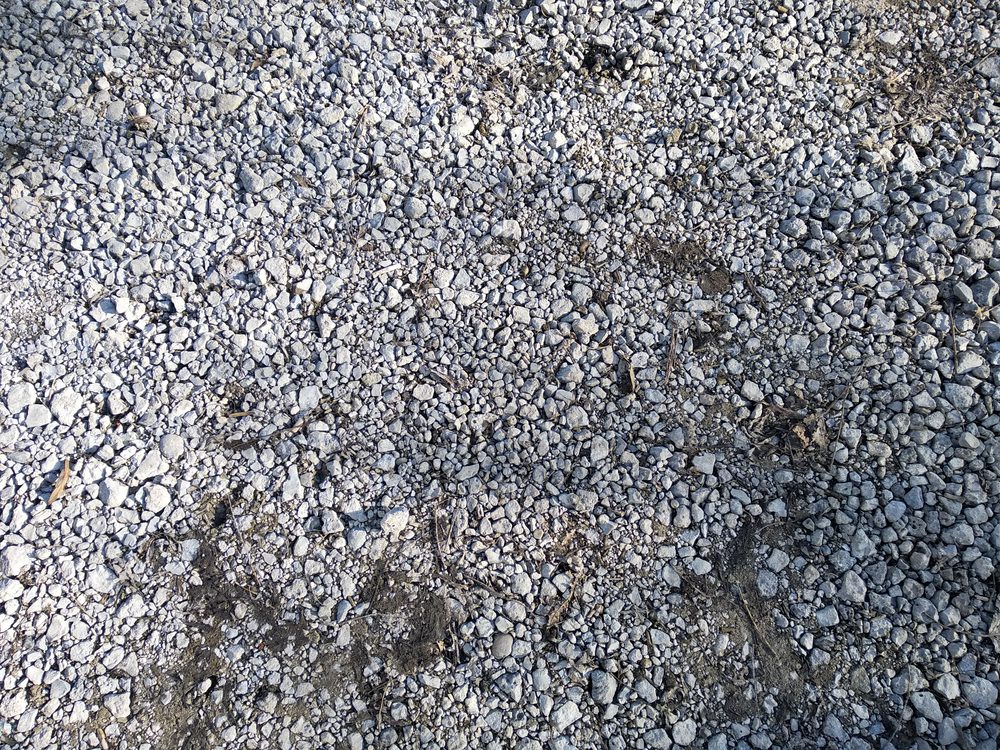
Gravel is the engineer's floor: nothing drains like it, nothing stops mud like it, and nothing is easier to hose clean. A 3- to 4-inch layer of coarse, angular crushed rock over a geotextile membrane gives a permanent, dig-resistant, free-draining surface that also armours the ground against predators trying to dig in at the edges.
As the whole floor it has one real drawback — hens cannot dust bathe in it and droppings lodge between stones, so it works best as part of a system: gravel at the gate, the door zone and the wet end, with a sand or litter area for bathing and scratching. Choose angular rock, not round pea gravel, which rolls underfoot and migrates everywhere; and size it coarse enough (¾ inch) that it does not pack into the hens' feet. Never skip the membrane — gravel without it slowly sinks into soil and vanishes. Order by the bulk bag rather than the sack if the run is bigger than a parking space; the price difference pays for the edging boards.
8. Pine Shavings
The coop bedding most keepers already buy makes a clean, bright, sweet-smelling run floor under a roof: large-flake pine shavings absorb moisture, cushion feet, and are light to fork out when spent. They are the easiest floor to keep looking tidy, which is why they star in so many first-year runs.
Outdoors is where the limits show. Shavings blow, mat when rained on, and break down fast, so in an uncovered run they become a recurring cost and a soggy one. Use them where they shine — covered runs, the coop itself, nest boxes — and buy the large-flake, low-dust bales sold for horses, which are cheaper per volume than small-pet bedding and far less dusty. Avoid cedar shavings in enclosed spaces; pine is the safe standard. Store bales under cover and off the ground — a shavings bale that has taken on rain is heavy, musty and already halfway to the compost heap before it ever meets the run.
9. Hemp Bedding
Hemp hurd — the chopped woody core of the hemp stem — is the premium bedding that has quietly taken over small covered runs: it absorbs several times its weight in moisture, stays remarkably low in dust and smell, and composts faster than shavings when it is done. For a small run near the house, or a keeper with dust sensitivity, the extra cost buys a genuinely nicer daily experience.
Be realistic about scale: at two to three times the price of pine shavings per bale, hemp is a small-run luxury and a big-run extravagance. It also shares bedding's outdoor weakness — rain turns it from absorbent to sodden — so it belongs under a roof, ideally as the top layer of a deep-litter system where its absorbency manages the moisture and cheaper material provides the bulk beneath. If the price stings, use hemp where it touches the hens most — the dust-bath corner and the coop floor — and let cheaper shavings carry the rest of the run; the flock will not file a complaint about the boundary.
10. Leaf Litter and Yard Waste
Every autumn the garden hands you a free run floor by the barrowload. Dry leaves, spent bedding plants, hedge clippings and grass-free garden waste make a deep, springy litter that hens dismantle with joy — a fresh pile of leaves occupies a flock for hours, full of insects and seeds. It is the enrichment floor as much as a ground cover.
Manage it as a flow, not a fixture: leaves rot down in weeks in a busy run, so the system works where supply is continuous — a garden that produces regular green waste. Keep out the genuinely risky additions: lawn clippings in quantity (they mat and can sour), anything sprayed recently, and known toxic plants in bulk. What comes out the bottom each spring is leaf mould and compost of the first quality, which closes the loop nicely. One caution from experience: a thick layer tipped in all at once can warm slightly as it starts to break down, so add leaves in moderate loads and let the hens spread them — they are faster than any rake.
11. Concrete Slab with a Bedding Top
The washable floor: a concrete slab is the ultimate answer to digging predators, burrowing rats and ground that will not drain — nothing gets under it, everything hoses off it, and it lasts as long as the run does. Many keepers inherit one (an old patio or shed base) and build the run on top, which is the cheapest way to own the best floor.
Bare concrete alone is too hard and too bare for hens' feet and behaviour, so treat the slab as a base, not a surface: cover most of it with sand, shavings or deep litter, leave a strip near the door for easy sweeping, and make sure the slab falls gently to one corner so wash water leaves instead of pooling. Poured new, it is the most expensive floor here by far; inherited, it is nearly free. Either way it pairs naturally with the paver thinking in idea #12.
12. Paving Slabs at Gateways and Wet Spots
Not a whole floor — a rescue for the square metre that every run ruins first. The gate, the pop door landing and the ground under the waterer take ten times the traffic of anywhere else, and a few bedded paving slabs there end the mud puddle you step through twice a day. Our predator-proofing ideas recommend the same slabs as armour over the apron at gates, so one job does two duties.
Bed them level on sand, tight together, slightly proud of the surrounding floor so water sheds off them. Hens lose a square metre of scratching and gain a dry place to stand — they will use the slabs as a lookout and a foot-drying station, and you will wonder why you spent a winter without them. Second-hand slabs are constantly given away; this might be the cheapest quality-of-life upgrade in the whole article. Leave finger-width gaps between slabs rather than butting them tight; a slab that can rock will, and rocking slabs trap toes and patience alike.
13. Rubber Stall Mats
Heavy rubber mats — the horse-stall kind — turn a patio, deck or paved corner into a run floor that protects the surface beneath, lifts out for a full hose-down, and goes back in an afternoon. For renters who must leave no trace, and for quarantine or hospital pens that need true washability, mats solve a problem no loose material can.
They are a base, not a complete floor: hens need bedding or sand on top for scratching and bathing, and water that lands on mats must run somewhere, so lay them with a slight fall and expect to manage the edges. They are heavy, they are not cheap, and in full sun they warm up — shade part of the run. Within their niche, though, nothing else is as clean, as reusable, or as kind to the ground underneath. In freezing weather a frozen hose is the mat's one real enemy, so coil a short indoor hose for winter washdowns if your tap allows.
14. Ground Reinforcement Grids (Mud Grids)
Plastic ground grids — interlocking panels filled with gravel or soil-and-seed — were designed to keep cars from churning wet grass, and they do the same job under hens at a fraction of the traffic. Filled with coarse gravel they make a permanent, free-draining, dig-resistant floor that never turns to mud; filled with soil and grass seed in a rested run, they armour the turf so it survives grazing.
The cost is the catch — grids are the priciest loose-floor option per square foot — so most keepers deploy them surgically: the gateway, the pop-door apron, the low corner where water gathers, rather than wall to wall. They install in an afternoon on levelled ground and ask for nothing afterwards. On heavy clay where every other floor has failed, a grid-and-gravel gateway strip has ended more mud misery than any single product we know. Buy one panel more than the plan says; the gateway always grows by spring, and a spare panel beats a muddy gap in the grid.
15. The Layered Floor: Drainage Base + Working Surface
The professional answer combines the list: a levelled base, a geotextile membrane, 3–4 inches of coarse gravel as a drainage and dig-proof layer, then your working surface of choice — sand, chips or litter — on top. Each layer does one job: the membrane stops mixing, the gravel moves water away and defeats digging, and the surface is the part the hens live on, replaceable without disturbing the engineering below.
It costs more than any single loose material and less than concrete, and it is the floor we would specify for a new permanent run in a wet climate — it is, in effect, the floor of the free 8′ × 16′ plan with the layers made explicit. Build it when the run is built; retrofitting under an existing run means emptying it, which is a weekend nobody enjoys. Get the fall right — a gentle 1-in-50 slope toward one corner — and every layer above it works twice as well.
How to choose (and fix) your run floor
Match the floor to the roof first: covered runs can use anything on this list, while open runs in wet climates should shortlist sand (#1), wood chips (#2), gravel (#7) and the layered build (#15) — the absorbent beddings belong under cover. Match it to your soil second: clay demands drainage layers and hard gateways; sand and gravel soils forgive almost everything, including plain earth. And match it to your time last: sand wants a weekly rake, deep litter wants a weekly stir, chips want a quarterly top-up — pick the rhythm you will actually keep.
Already muddy? The rescue sequence is always the same: scrape out any slimy, sealed surface layer; fork in drainage if a corner pools; then spread 4–6 inches of coarse wood chips over the whole run and slabs at the gate. It works the same day, costs the least, and buys you a season to plan the permanent fix. While you are at ground level, check the predator apron and mesh base — the guide shows how floors and defences meet — and consider where the dust bath will live, because the enrichment list starts with one.
FAQs
What is the best all-round chicken run flooring?
For most covered runs, coarse sand: it drains, rakes clean in minutes, doubles as a dust bath and lasts for years with an annual top-up. For most uncovered runs, coarse wood chips: they forgive rain, mud and neglect better than anything else. The honest answer is that the roof decides — pick from the covered or uncovered shortlist above, not from a single winner.
How deep should run flooring be?
Sand: 4–6 inches. Wood chips: 4–6 inches, more over mud. Deep litter: 8–12 inches once established. Gravel drainage layers: 3–4 inches under a surface. Shavings and hemp in a run: 3–4 inches. Too thin is the common failure — a 1-inch dusting of anything disappears into the soil within weeks and leaves you with expensive dirt.
Can I use play sand or builders' sand?
Play sand is too fine and uniform: it compacts, holds moisture and cakes. Fine builders' sand behaves similarly. The sand that works is coarse, washed and varied in grain — sold as river sand, concrete sand or coarse sharp sand depending on your store. Squeeze a handful wet: the right sand crumbles apart; the wrong sand holds a cast of your hand.
Does run flooring stop predators?
Some floors help: gravel layers, concrete and grid systems all resist digging, and every floor pairs with the wire apron at the edges, which is the real defence. Loose floors — sand, chips, litter — stop nothing by themselves. Flooring is for mud, smell and hen comfort; the predator-proofing list is for safety. A good run needs both, and the edges are where they meet.
How do I get rid of run smell?
Smell is moisture plus manure plus no air. Fix the moisture first (drainage, roof, dry flooring), then remove or compost the manure load — rake sand, stir litter, top up chips — and the smell follows the water out. Persistent ammonia smell in a covered run means the litter is saturated: fork in dry carbon bedding, increase ventilation, and it recovers within days.
Ready to build one properly?
Our free starter plan — the Backyard Run, 8′ × 16′ — includes the ground preparation and apron details that make any of these floors work, with the full materials list and build steps.
Pin it for later