17 Chicken Run Enrichment Ideas: Perches, Dust Baths and Boredom Busters
A bare run is a waiting room, and hens stuck in a waiting room entertain themselves the way toddlers do — by picking on each other. Feather pecking, bullying at the feeder and egg eating all trace back, more often than keepers expect, to simple boredom. The fix is not toys in the pet-shop sense; it is a run that offers the behaviours hens are built for: dust bathing, perching, scratching for hidden food, exploring levels, and retreating from flock-mates. These seventeen enrichment ideas deliver exactly that, most for a few dollars and an hour of your time.
You do not need all seventeen. A run with a dust bath, two heights of perching, one food puzzle in rotation and somewhere to hide is a rich run by hen standards — the rest is variety you can add across a season. Each idea lists what it costs, how long it takes to make and how much space it asks for, so you can plan a small run as carefully as a big one. And if the run itself is still on the drawing board, the main ideas list and the free plan will give these finishing touches somewhere to live.
1. The Dust Bath Box
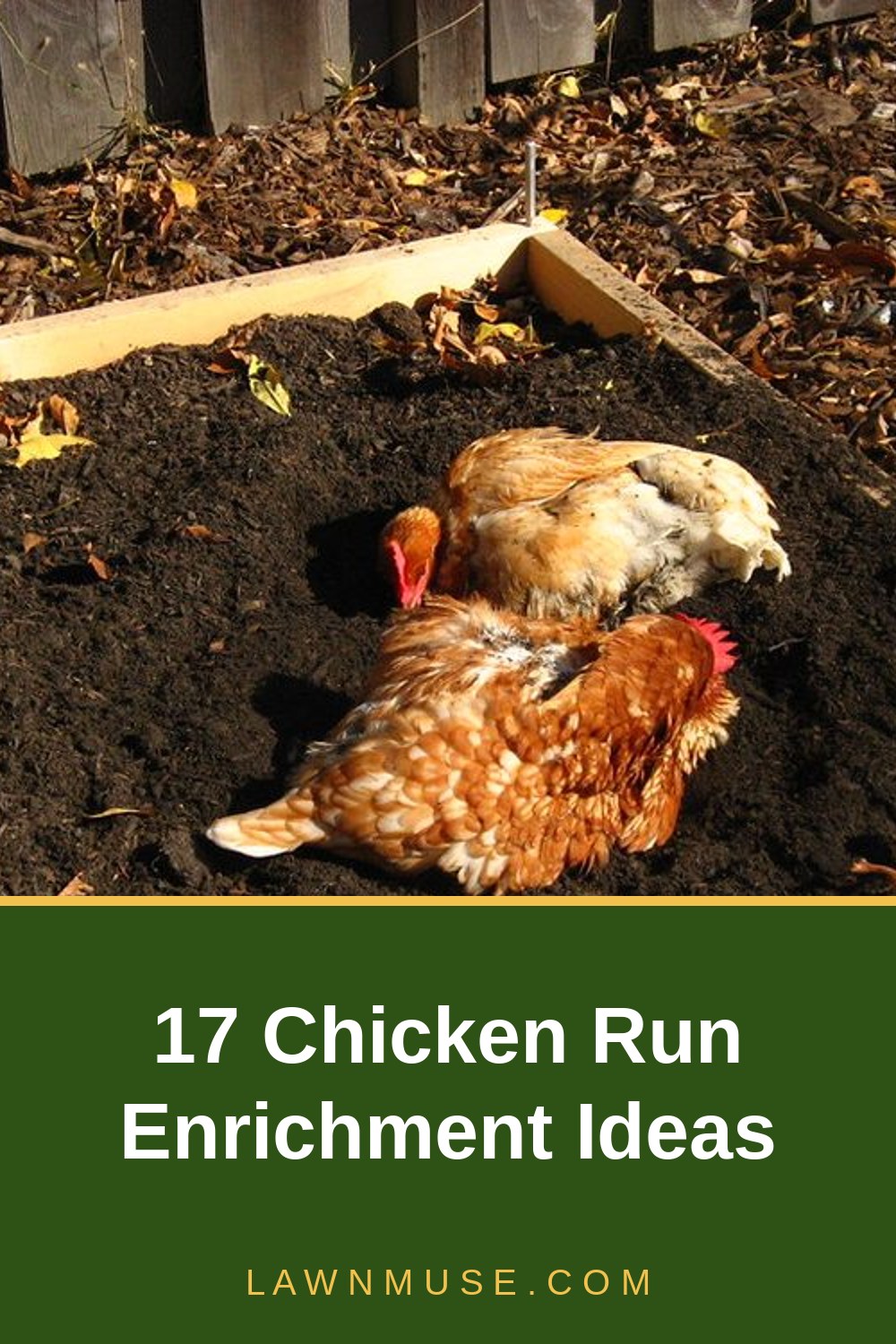
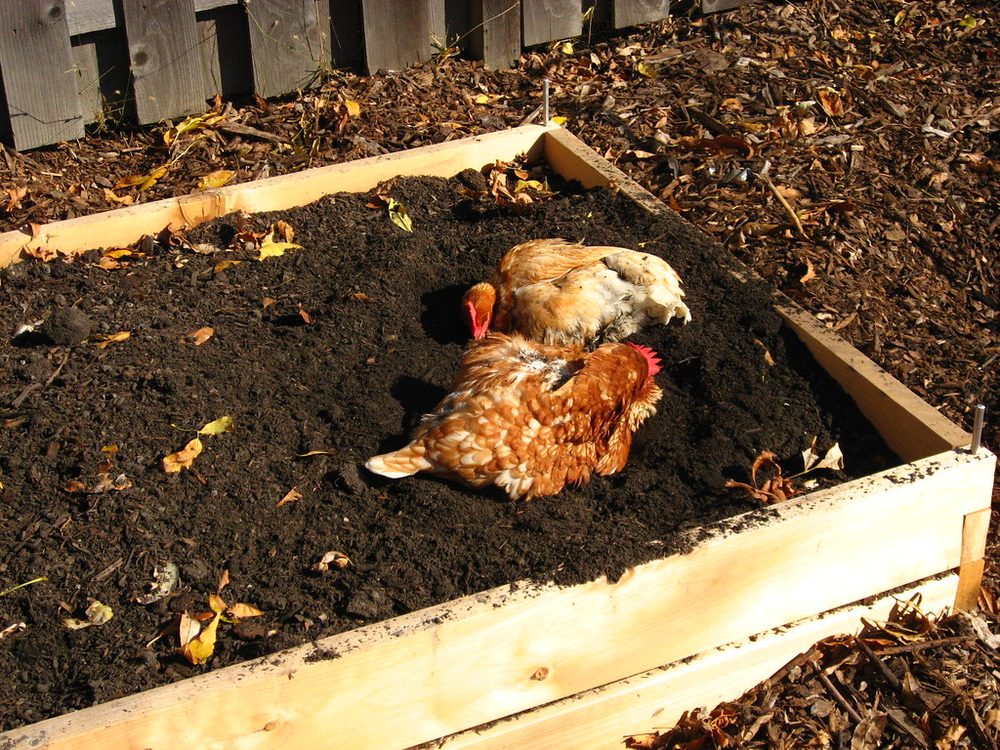
Dust bathing is not a luxury behaviour; it is how hens clean their feathers and manage skin parasites, and a flock without a dry bathing spot will dig one in the worst place available. A simple box — four boards, a tyre, a shallow crate — filled with dry soil, sand and a little wood ash gives them a designated spa that stays dry if you site it under the roof or the coop overhang.
Make it at least 12 inches deep in fill and big enough for two hens at once, because bathing is social and queue-jumping causes more arguments than the bath solves. Top up the fill when it gets scattered, sift out droppings weekly, and refresh the ash monthly. If your run floor is already sand, the box matters less — but in a chip or litter run it is the single highest-value enrichment you can add.
2. A Natural Dust Hollow in a Sunny Corner
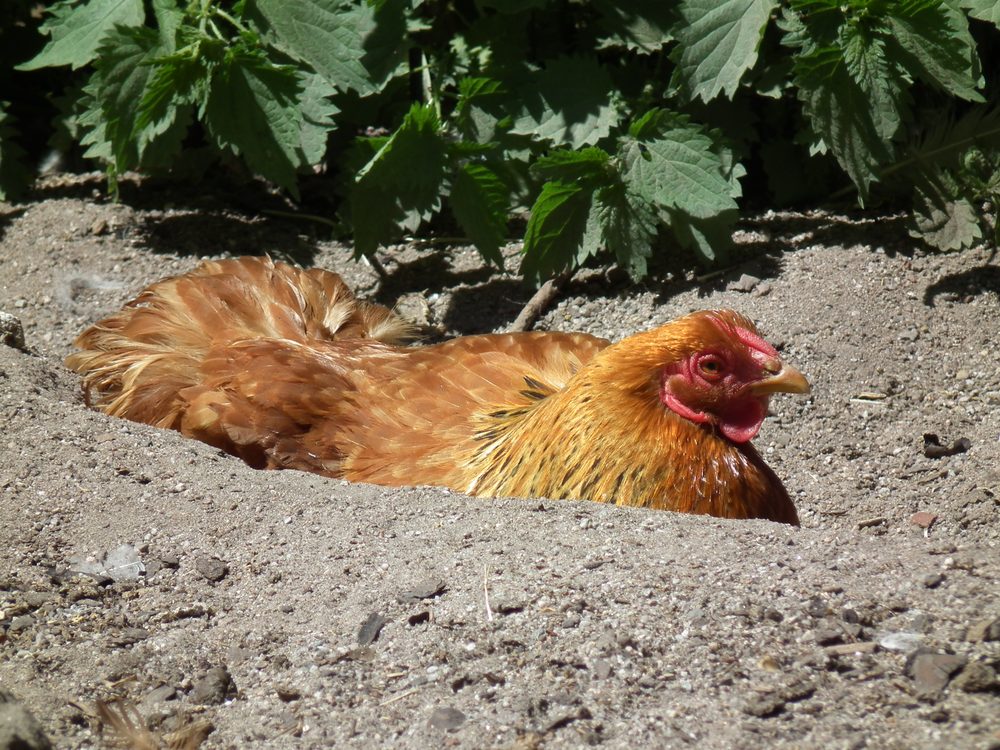
The zero-cost version of idea #1: pick the driest, sunniest corner of the run, loosen the soil with a fork, stir in sand and ash if you have them, and let the hens excavate. They will shape the hollow to themselves within a day, and a sunny bathing spot gets used in every season — hens actively seek the warmest dust in the yard.
The hollow fails only when it floods, so dig it on the highest ground you have and mound the edges slightly to shed water. In winter it may still go dormant for weeks; that is what the covered box in idea #1 is for. Many keepers run both — the hollow for summer, the box for the wet months — and the flock migrates between them like holidaymakers. Rake the hollow over every few days in a busy season; fresh-turned dust is what the hens are queuing for, and turning buries the droppings that accumulate where everybody bathes.
3. Branch Perches at Two Heights
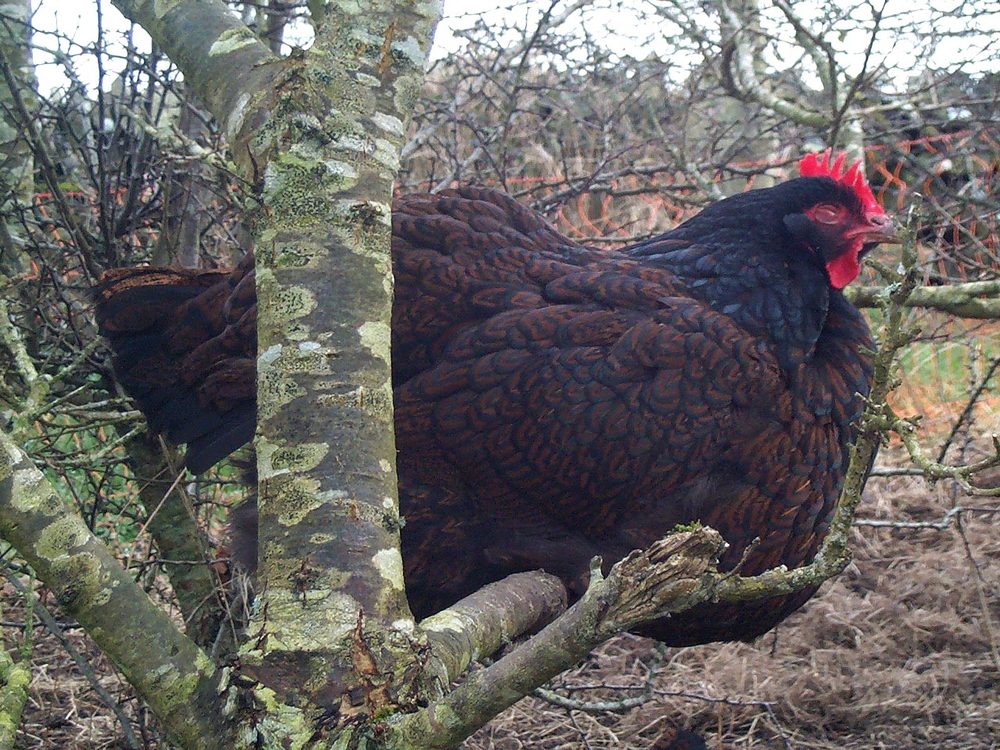
Hens read a run in three dimensions even when keepers furnish it in two. Two sturdy branches — one at about 18 inches, one at 3 feet — wedged or screwed across a corner give the flock lookout posts, sunbathing spots and, just as importantly, escape routes: a hen being pestered who can hop up and out of reach rarely gets pestered twice.
Choose branches 2–3 inches thick with the bark on for grip, and fix them so they cannot roll — a rolling perch teaches hens to distrust all perches. Space the two heights far enough apart that the lower one is not directly under the higher, for obvious dropping-related reasons. Prunings from fruit trees are perfect, free, and replaceable each season when they weather. Expect the top branch to be claimed by the top hens within the hour — that is not a problem to solve but the system working, since the lower perch then becomes the refuge that keeps the peace.
4. A Roost-Style Day Bar
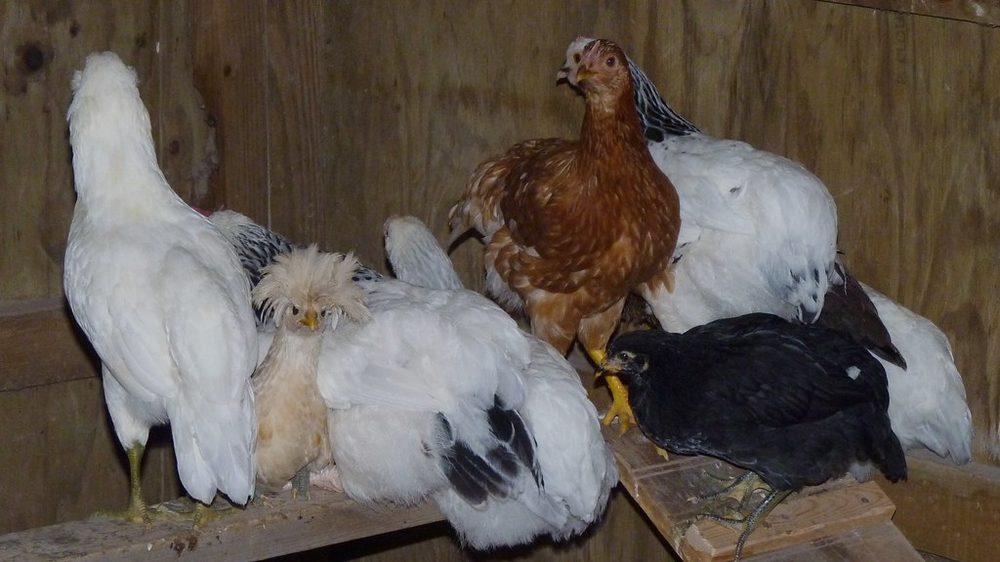
The night roost has a daytime cousin: a single smooth bar, mounted along a run wall at knee height, where hens queue up to survey the yard. It sounds like nothing, and it will be occupied within the hour — perching in a row is a deeply social hen behaviour, and a day bar gives subordinate hens somewhere legitimate to be that is not the feeder or the dust bath.
Use the same profile as a roost bar — a 2×3 or 2×4 with the wide side up and edges softened — and mount it rigidly enough for six hens landing at once. Put it somewhere with a view out of the run if you can; hens watch the world with genuine attention, and a bar facing the garden or the house is the one they will choose. Add a second bar at a different height and you have built the run's bleachers.
5. Supervised Tree Time
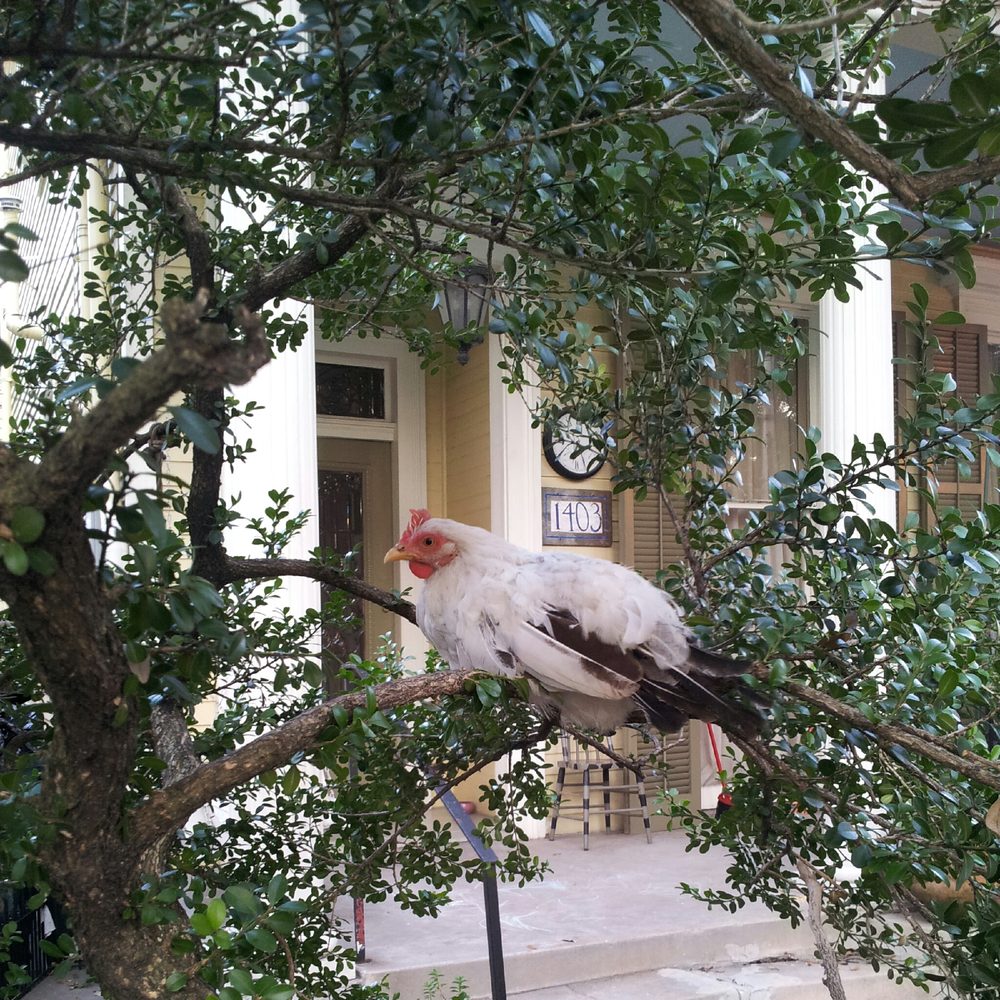
If a tree grows in or over your run, its low branches are enrichment you did not have to build: hens flutter up, settle, preen and watch the yard from the height their instincts keep asking for. A branch at 3–4 feet is the sweet spot — high enough to feel safe, low enough for heavy breeds to reach without injury.
Manage the risks honestly. Tree access must not become fence access: trim any branch that gives a hen a launchpad over the fence, or a predator a walkway in. And a tree in the run drops shade, leaves and (from some species) fruit the hens will gorge on — mostly blessings, occasionally a bellyache. If your run has no tree, ideas #3 and #4 are the same instinct in built form. Photograph the tree's shade at noon in midsummer before you commit the run to it: the best enrichment tree shades the run in the afternoon heat and lets the morning sun through to dry the ground.
6. The Chicken Swing
A length of branch or a short plank hung from two ropes at about knee height: the chicken swing is the internet's favourite hen toy, and the honest verdict is that some flocks adore it and some ignore it for a month and then adore it. Hens are neophobes — a swing that moves is suspicious until the bravest bird rides it and survives, after which it is furniture.
Hang it low (a hen should step on, not jump), let it barely clear the ground so the motion stays gentle, and fix the ropes wide apart so the bar cannot spin. Introduce it when the flock is calm and let them discover it rather than placing hens on it, which teaches the opposite lesson. Even flocks that never ride it use it as one more perch with a view — so the twenty minutes is rarely wasted. Start the branch low — six inches — and raise it a link a week; confidence, like the swing itself, builds gradually or not at all.
7. Hanging Cabbage on a Skewer or String
The classic boredom buster, and still the best value on this page: a whole cabbage (or cauliflower, or a corn cob) hung at hen-head height so the flock has to work for every peck. A hanging treat cannot be scratched into the dirt, lasts hours instead of minutes, and turns feeding into the flock's afternoon project — keepers call it cabbage tetherball, and watching it, you will see why.
Use a purpose-made poultry skewer, a screw-in hook through the core, or strong string in a net — and hang it so it swings just out of easy reach. Treats should stay treats: a cabbage between four hens once or twice a week is enrichment; daily cabbages unbalance the diet and the laying suffers. Retire the string and skewer when the core is eaten, before anyone eats the equipment instead. Butt ends and outer leaves from your own kitchen cabbages work just as well as whole heads for a shorter session — the flock does not grade the produce, only the resistance it offers a peck.
8. Scatter Feeding in Deep Litter
The simplest foraging game there is: instead of putting the day's scratch grains in a dish, broadcast a handful across the litter and let the flock find them. Scratching and searching for scattered food is what hens are anatomically and mentally built to do for hours a day, and two minutes of your time buys an hour of it.
It works best on the floors designed for it — deep litter, wood chips, straw (see the flooring ideas) — and worst on sand or concrete, where grains sit visible and the game ends in seconds. Keep quantities small (a handful per few hens), scatter just before you leave the run so it becomes the parting gift, and skip it in wet weather when grains would mould in the litter rather than being found. Vary the scatter zone — the litter today, the log corner tomorrow, the dust-bath edge on Friday — because a predictable treasure map is only treasure the first two times the flock follows it.
9. A Log and Stump Cluster
Three or four logs and stumps of different heights, clustered in a corner, give a run what furniture gives a room: places to stand, hide behind, jump between and investigate. Roll a log over after a week and the underside is a beetle buffet the flock will strip in minutes — the cluster is both playground and slow-release treat dispenser.
Use untreated hardwood if you can (it lasts and harbours the most invertebrates), sink stumps a few inches so they cannot tip, and rearrange the cluster every month or so — novelty is half the value, and the ground underneath gets a rest. In a small run, even two stumps at different heights change the traffic patterns enough to ease crowding at the feeder. Hens will also use the cluster as a screen — a hen who can break a flock-mate's line of sight with a stump can end a chase without leaving the run, which is precisely what run furniture is for.
10. An Old Tyre Dust Bath
On a hard-floored run — patio, deck, concrete — hens cannot dig a bath, and a tyre is the classic container that solves it: heavy enough to stay put, round enough to hold a deep fill of soil and sand, and free wherever old tyres gather. Fill it to the rim; hens will excavate the middle and the tyre's ring keeps the fill from migrating across the yard.
Drill drainage holes in the bottom sidewall if it lives outdoors, or the first storm makes soup. A tyre bath in the sun warms beautifully and dries fast after rain. It is less pretty than the wooden box of idea #1 and arguably more practical — and if looks matter, a coat of exterior paint in a garden colour settles the argument in an afternoon. Set the tyre where you can reach it with the wheelbarrow; a dust bath that is easy to refresh gets refreshed, while one at the far end of the garden quietly becomes a planter.
11. A Small, Secure Mirror
Hens are fascinated by the stranger in the mirror: they posture, chatter and keep returning to check on her. A small acrylic (never glass) mirror fixed at hen height on the run wall is cheap novelty enrichment — most valuable for a hen alone in a hospital pen, where the "company" genuinely seems to settle her, and as a rotating novelty in the main run.
Manage expectations and fixings. Interest fades after a week or two in a full flock, so treat the mirror as part of the rotation (idea #17), not a permanent feature. Fix it flat and rigid — a flapping or tilting mirror can pinch — and use shatterproof acrylic sold for animal use. It is a garnish on this list, not a staple, but for the price of a coffee it earns its fortnight. Roosters, where kept, may court or challenge their reflection with great seriousness — harmless, brief, and by most keepers' accounts the funniest free show in the garden.
12. Peckable Planters at the Fence
Plant the outside of the run fence with things hens may safely peck through the mesh — herbs like oregano, mint in a pot (it escapes), nasturtiums, or a sacrificial row of lettuce — and the fence line becomes a living salad bar that the flock grazes without destroying. The mesh rations the pecking, so plants survive being eaten, which no unprotected garden bed ever does.
The same trick protects your real beds in reverse: a run fence planted on the outside keeps beaks busy at home. Grow a chicken garden patch in spring — a tray of wheatgrass or a square of clover rested until established, then offered — and you have the fresh-greens version of scatter feeding. Keep quantities treat-sized, and check any new plant against a reliable chicken-safe list before it goes within reach. Chicken-wire guards bent over the planter tops for the first weeks let roots establish before the grazing begins — after that, the fence-line mesh alone rations the flock to leaf tips.
13. A Shade Corner Done Properly
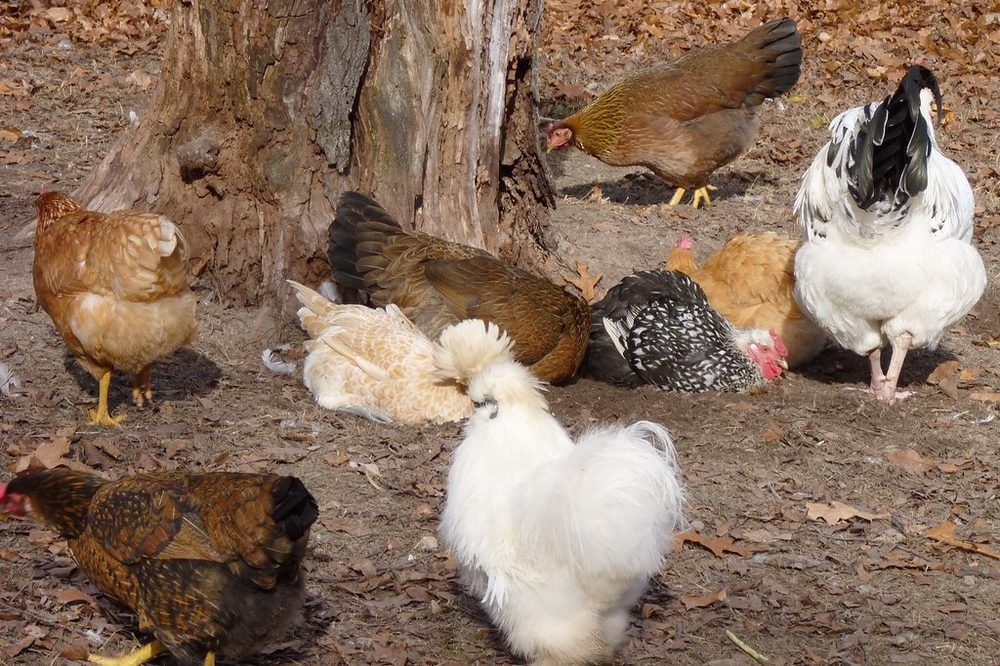
Shade is enrichment and welfare in one: hens regulate temperature by moving between sun and shade, and a flock with a real shade corner — a tarp, shade cloth, a lean-to board or a planted shrub — spends hot afternoons bathing and dozing instead of panting in the open. If your run has no natural shade, this idea outranks everything else on the page except the dust bath.
Make the shade deep enough for the whole flock at once and low enough to feel like shelter — hens read overhead cover as hawk protection, so a shade corner doubles as the run's safe room. Combine it with the dust bath (idea #1) and a perch (idea #4) and you have built the corner where your hens will spend most of their lives. In winter the same structure, given a windbreak side, becomes the sheltered corner they need just as much.
14. A Garden Perch by the Beds
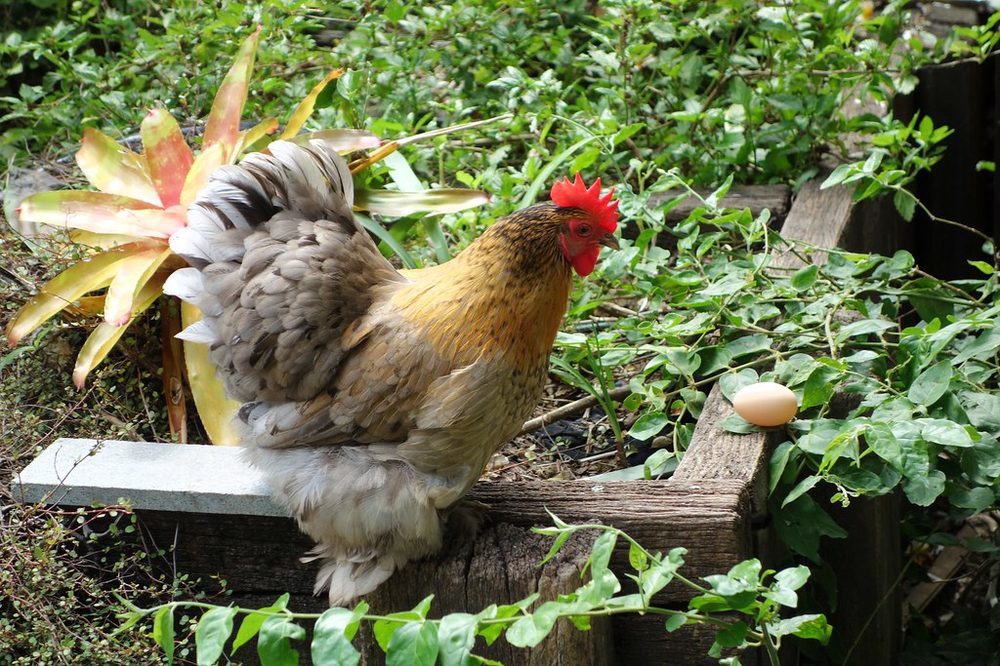
A single low perch along the run's garden edge — a rail on two short posts, a sawhorse, a retired ladder laid at an angle — sounds like a repeat of ideas #3 and #4, and the difference is location: hens are spectators, and a perch with something to watch (you, gardening; the dog; the world) gets ten times the use of a perch facing a wall.
Site it deliberately: facing the garden if the run borders one, facing the house path if not. It also serves the keeper — a flock lined up on the garden perch is a flock you can inspect at a glance, feet, feathers and all, without catching anyone. The cheapest observation deck in animal keeping, and the hens think it was their idea. On wet days the perch doubles as a foot-drying station off the mud, and you will notice the flock queuing for it after rain with the air of commuters who have seen this service before.
15. A Climbing Ramp and Platform
A low platform — 18 inches up, reached by a cleated ramp — is the run's mezzanine: hens climb it to survey, sunbathe and escape ground-level squabbles, and the space underneath becomes a shaded hideaway. In a small run it effectively adds a second floor, which is why platforms punch above their cost in the under-60-square-foot runs from our 4-hen ideas.
Build it stout and grippy: cleats every few inches on the ramp, a platform of decking boards or thick ply that cannot flex, and edges a hen cannot trap a toe in. Keep the height modest — heavy breeds landing from height injure legs, and 18 inches is plenty for the psychological benefits. A pallet on blocks with a ramp plank is the fifteen-minute prototype; if they use it (they will), build the tidy version. Put the platform where it catches morning sun and afternoon shade if the run's shape allows — a platform that is only comfortable at noon in November is a platform used at noon in November.
16. Frozen Treat Pans for Heatwaves
On the worst summer days, enrichment and cooling merge: freeze water with sweetcorn, peas or berries in a shallow pan or muffin tray, turn it out in the shade, and the flock gets an hour of pecking at something cold that also hydrates them as it melts. It is the rare treat that is mostly water, so it can appear on consecutive hot days without unbalancing anything.
Shallow is key — hens peck surfaces, not depths — and shade is essential, or the treat is soup in ten minutes. A plain pan of cool water with a few floating greens does a simpler version of the same job. Watch the flock the first time: the bold hens monopolise, so two smaller pans beat one big one in a flock with strong personalities. Remove whatever is left after an hour in serious heat: a melted treat pan is just warm water with ambition, and the flock's real waterer should always be the cleanest drink in the run.
17. The Weekly Novelty Rotation
The meta-idea that keeps the other sixteen working: hens habituate, so enrichment is a rotation, not an installation. Keep a small stock of swap-ins — a pecking block, the mirror, a treat ball, a new log, a tray of turf — and change one thing each week. The run stays interesting because it keeps almost changing, which is exactly how a hen's world works in nature.
Keep a note of what your flock actually uses; every flock has preferences (some ride swings, some only ever want another dust bath), and the rotation should drift toward their favourites while still offering surprises. Retire anything ignored three times. This five-minute habit, more than any single object, is the difference between a run that was enriched once and a flock that is enriched. The rotation also protects your favourites: even the beloved dust bath works better for a flock whose week included a new log, a cabbage day and one morning of scattered grain in an unexpected corner.
How to use these ideas in your run
Build the foundation first: a dust bath (#1 or #2), perching at two heights (#3 or #4), and shade (#13) cover the behaviours hens need daily, and every flock should have them whatever its size. Then add one food game — hanging cabbage (#7) or scatter feeding (#8) — and one structure — the log cluster (#9) or platform (#15) — and run the weekly rotation (#17) over the top. That is a complete enrichment programme for under $50 in most yards.
Watch for the two failure modes. The first is clutter: a small run stuffed with objects loses floor space and creates ambush corners where bullied hens get trapped — keep at least half the floor open, and check that every structure has two ways out. The second is hygiene: treats and toys that live in the run get filthy, so anything food-related rotates out and washes, and dust baths get sifted like the litter trays they are. Enrichment pairs naturally with the chicken tunnel ideas — a chunnel is, in the end, the biggest boredom buster of all — and with a floor from the flooring list that gives the games somewhere to happen.
FAQs
How much enrichment does a chicken run actually need?
Less than the internet suggests, but more than a bare box: a dust bath, perching at two heights, shade, and one rotating food puzzle covers the behavioural essentials for most flocks. Add objects gradually and watch what gets used — a run furnished for the hens you have beats a run furnished for a photograph.
Why are my hens still feather-pecking with toys in the run?
Enrichment helps, but check the basics first: space (under 10 square feet per hen causes stress no toy fixes), protein in the diet, light levels in the coop, and whether one bird is a habitual bully rather than bored. If pecking draws blood, separate the victim, treat the wound, and add hiding places and extra feeding stations while you work through the causes.
What should go in a dust bath?
Dry soil or coarse sand as the base, with wood ash and a little food-grade diatomaceous earth mixed in if you like — keepers disagree about the extras, and the hens mostly care that it is dry, loose and deep enough to work into their feathers. The one non-negotiable: it must stay dry, which is why the covered box outperforms the open hollow in wet climates.
Are chicken swings safe?
Hung low, wide and stable, yes — the injuries associated with swings come from high, tippy installations hens must jump for. A bar that barely swings, at step-on height, with ropes that cannot tangle a leg, is as safe as any perch. Introduce it and let the flock choose; a swing nobody rides is garden art, not a hazard.
Can enrichment reduce how much feed they eat?
No — and be wary of anything that promises to. Foraging games and garden pecking supplement the diet and occupy the mind, but laying hens need their formulated feed freely available regardless. Treats and enrichment foods should stay under roughly a tenth of what the flock eats, so the balanced feed does the nutritional work.
Ready to build one properly?
Our free starter plan — the Backyard Run, 8′ × 16′ — leaves room for the dust bath, perches and shade corner from this list, with the full materials list and step-by-step build outline.
Pin it for later